Hey there! If you’ve ever wandered into a school classroom at the start of the year or during a midterm chaos, you’ve probably noticed how much the desks and chairs make a difference—way more than just being places to dump notebooks and backpacks. As a classroom desk and chair set supplier, I talk to teachers, facility managers, and even school admins all the time about what actually goes into these pieces. It’s not just grabbing some random plastic or wood (though those are common); there’s a ton of thought put into every material, especially when you’re dealing with kids who spill soda, scrape things, and climb on everything (don’t lie, we’ve all snuck a quick climb on a chair as a kid). Let’s break down the most common materials, what works, what doesn’t, and why schools stick to some old staples while testing new stuff. Classroom Desk and Chair Set

First up, let’s talk about the one you see in like 70% of elementary schools worldwide: high-density polyethylene (HDPE) plastic. Yeah, it’s that smooth, matte, almost unbreakable plastic that’s not the flimsy stuff you get from a dollar store. HDPE is the MVP for a reason, right? It’s super durable—we’ve had sets that got dropped down hallways, marker stains scrubbed off, and even a kid who tried to carve their name into it (spoiler: it didn’t work). It’s also non-porous, so if someone spills juice, glue, or even water, you just wipe it down with a disinfectant wipe and it’s good. That’s huge for schools, especially post-pandemic when everyone’s all about cleanliness. The best part? It’s lightweight, so custodians can move sets around for group work or assembly lines without throwing out their backs. Wait, but is it all perfect? No—if you leave HDPE out in the sun too long (like a classroom window seat that’s never covered), it can fade a little, and it’s not as “warm” as wood. But for most K-5 settings, it’s the go-to. We actually just switched to HDPE that’s made with 25% recycled plastic last year, and schools love it because it’s eco-friendly without cutting corners on strength.
Next, there’s solid wood, which you’ll find in a lot of middle and high school classrooms, maybe even some older elementary spots. Not the cheap particleboard that falls apart after a year—we’re talking solid oak, maple, or pine, usually. Solid wood has that classic, sturdy feel; it can handle a lot more weight than plastic, which is why it’s great for older kids who might stack books, laptops, or even backpacks full of textbooks on their desks. It’s also customizable—you can sand it, stain it, even engrave small things (though schools usually skip the engrave part because of districts’ no-mess rules). The downside? It’s porous, so spills like red ink or coffee can soak in if you don’t clean them fast, and it needs a little more upkeep—like occasional waxing to keep it from drying out and cracking. Also, solid wood is heavier, so moving a whole classroom set takes a bit more effort, which is something facilities teams have to plan for. But a lot of schools still love it because it has that timeless, “built-to-last” vibe that feels more permanent than plastic.
Wait, let’s not forget engineered wood, because it’s a middle ground that’s super popular with budget-conscious districts. Engineered wood is stuff like medium-density fiberboard (MDF) or particleboard, pressed together with resin and wood fibers. It’s cheaper than solid wood and comes in lots of finishes—like laminate that looks like real wood, or even durable plastic veneers. The big win here is the cost, which is a huge factor for most schools, especially post-2008 when budgets have been tight. But the catch is MDF is super susceptible to water damage—if you spill a bucket of water on it, it’ll swell up and get soft fast. Particleboard is even less durable; chips and cracks easily, and if it’s not sealed right, it can fall apart within a few years. We usually recommend engineered wood only for classrooms that are really careful with spills, or for temporary settings like portables. It’s a good short-term solution, but not the best long-term.
Then there’s metal—specifically steel, used for the frames of desks and chairs, sometimes the sides of the desks too. Metal frames are basically non-negotiable if you want a set that lasts more than a decade. You can have plastic or wood tops, but the frame is almost always steel. Why? Because it doesn’t bend, warp, or break if a kid leans too hard on the desk, or if a chair gets dragged across the floor. We coat all our steel frames with a powder coating, which is like a tough paint that doesn’t chip easily and resists rust. That’s key, especially in areas with high humidity, like near pool classrooms or schools by the coast. The only downside with metal is it can get cold in winter (no fun for a kid who rests their arm on the desk) and it’s a little heavier than plastic, but the durability makes it worth it. Some newer sets even have metal frames that adjust in height, which is perfect for growing kids—one of our best-selling lines right now is adjustable height, so you don’t have to replace a whole set every time a grade level moves up.
Lately, we’ve been seeing a lot more interest in hybrid materials, too. Like, a desk with a HDPE top and a steel frame, or a chair with solid wood legs and a plastic seat. That’s the sweet spot, right? You get the easy cleaning of plastic or the sturdiness of wood, paired with the unbreakable frame of metal. We worked with a district last year that wanted desks for their 6th graders—they wanted something that could handle rough use, be easy to sanitize, and not cost a fortune. We gave them hybrid sets: plastic tops that are stain-resistant, steel frames that adjust height, and they’ve been using them for two years now with barely any scratches. Another big trend is eco-friendly materials, which I’m stoked about. Schools are asking for more recycled content—we make some HDPE sets with 40% post-consumer recycled plastic, and we’ve started testing bamboo tops, which is a renewable resource. Bamboo is super strong, grows fast, and has a nice, smooth finish, but it’s still new for classroom sets, so we’re working out the kinks with water resistance right now.
Wait, I should also mention what materials we don’t use much anymore, just to be real. Formica? Yeah, that’s old school, laminate that scratches way too easy. We used to work with sets that had Formica tops in the 90s, and by year three, they looked like garbage. Vinyl seats? Same thing—rips super fast, and smells weird when it gets hot. We also avoid cheap particleboard that doesn’t have a good seal, because we’ve seen too many schools go that route and regret it when they have to replace half the set every two years. At the end of the day, it’s all about balancing three things: durability, ease of maintenance, and cost. You can have the fanciest material in the world, but if it’s $500 a desk, no public school is gonna buy it. And you can have the cheapest plastic, but if it breaks in six months, that’s a waste of money too.
I get it, as a supplier, I might be a little biased, but I’ve seen firsthand what works and what doesn’t. The best classroom desk and chair sets aren’t just pretty—they have to handle 150+ kids a day, different classes, different teachers, and whatever chaos the school year throws at them. Whether you’re a teacher looking for a new set for your 2nd grade class, a facilities manager ordering for a whole district, or an admin trying to stick to a budget, the material is the first thing you should think about. Don’t just go for what looks good online; think about how often the room gets cleaned, how rough the kids are, and how long you want these sets to last.
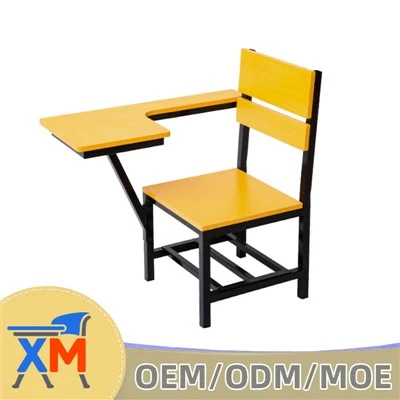
If you’re in the market for new classroom desk and chair sets, or you just have questions about what material would work best for your school, hit us up to chat. We can walk you through all the options, share case studies from other schools, and even help you put together a quote that fits your budget. No pressure, just real talk about what works for classrooms. Let’s make sure the next set of desks and chairs lasts longer than one school year.
Classroom Desk and Chair Set References
- National Education Association. (2022). Facility Conditions in U.S. Public Schools 2021–2022. Retrieved from educational facilities research database
- American Academy of Pediatrics. (2021). Healthy Classroom Environments: Materials and Design for K-12 Settings. Journal of School Health
- Plastic Industry Association. (2020). HDPE Applications in Educational Furniture: Durability and Safety. Annual Material Usage Report
- Wood Furniture Manufacturers Association. (2019). Solid vs. Engineered Wood for Commercial Furniture: Longevity and Maintenance Guidelines. Commercial Furniture Standards Report
- Steel Framing Alliance. (2022). Metal Components in K-12 Classroom Furniture: Strength and Sustainability Insights. Educational Construction Quarterly
Shanghai Xinmu Industrial Co., Ltd.
We are one of the most professional classroom desk and chair set manufacturers and suppliers in China. With abundant experience, we warmly welcome you to wholesale customized classroom desk and chair set at competitive price from our factory. If you have any enquiry about pricelist, please feel free to email us.
Address: 3rd Floor, NO.5# Building, No. 288 Rongxing Road, Songjiang District, Shanghai
E-mail: sales@xinmugroup.com
WebSite: https://www.xinmufurniture.com/
