A few months back, I got a call from a small solar farm owner in the desert outside Phoenix—they’d installed a 500-kilowatt lithium energy storage system to smooth out midday sun dips, but their grid connection fees were killing their bottom line after sunset, and their backup generator (a clunky diesel unit) had broken down mid-heatwave, leaving their inverter bank offline for 12 hours. “I keep hearing about hydrogen fuel cells,” he said, frustrated, “but switching entirely would mean dumping my lithium, which I just paid for. Is there a way both of these are useful?” That question stuck with me, because it’s the exact debate our team here at the lithium energy storage supplier grapples with every week—we don’t sell one over the other; we sell solutions that fit real, messy energy needs, and that means asking if energy storage lithium batteries and hydrogen fuel cells can work in tandem, not against each other. Energy Storage Lithium Battery
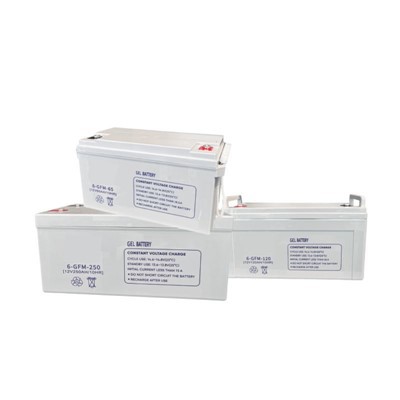
Let’s start with the basics, because a lot of the confusion comes from oversimplifying what each technology actually does. Energy storage lithium batteries—think lithium-ion, the stuff that powers your phone, electric car, and our industrial-grade storage units—are the sprinters of the energy world. They charge fast (we can get our grid-scale lithium systems fully juiced in 4 hours, half the time it takes for most hydrogen electrolyzers to produce enough fuel for a 100-kilowatt run), discharge quickly (they can crank out 100% of their rated power in 10 seconds, perfect for sudden spikes like a factory adding a new assembly line or a cloud blowing over a solar array), and cycle efficiently (about 90% of the energy you put in comes out, with minimal loss over daily use). Hydrogen fuel cells, by contrast, are the long-distance runners. They store energy in the form of compressed hydrogen gas (or liquid, for specialized uses) that’s produced when excess renewable energy is used to power an electrolyzer splitting water into H2 and O2. Fuel cells convert that hydrogen back to electricity via a chemical reaction, with zero tailpipe emissions, and they can run for days or even weeks on a single fill-up—something no lithium battery can do without being prohibitively large.
For years, the energy sector framed these two as competitors. Lithium was for short-term, high-frequency storage; hydrogen was for long-term, grid-scale seasonal storage. But that’s a false dichotomy, especially as more renewables come online and grids get stretched thin by extreme weather. Let’s break down the most practical use cases for combining them, starting with the one that’s resonated most with our customers: microgrids for remote communities or critical infrastructure. A rural hospital in Wyoming that’s 60 miles from the nearest grid had this exact problem last winter. Their existing lithium system could power the ER, operating rooms, and refrigerated vaccine storage for 36 hours during a blizzard, but when the blizzard stretched to 5 days, the lithium died. Adding hydrogen fuel cells as a secondary storage layer meant they could store excess wind energy produced in the fall (when wind is high and demand is low) as hydrogen, then use the fuel cells to top off the lithium batteries during extended outages. The lithium handled the sudden, high-power demand of the MRI machine or emergency power start-ups, while the fuel cells provided steady, long-duration power to keep critical systems running when the lithium was drained. The hospital’s operations manager told us this cut their annual diesel use (they’d had a backup generator too) by 75% and reduced their outage-related costs by 80%. That’s not just a nice-to-have—it’s life-saving infrastructure, and it only works because the two technologies play to their strengths.
Another area where this combination shines is grid-scale renewable integration, specifically addressing the “duck curve” problem that’s been plaguing grids across the U.S. and Europe. The duck curve refers to the steep drop in energy demand after sunset, when solar production plummets, leaving grids scrambling to make up the difference without relying on fossil fuels. Our lithium storage systems are already used to charge midday when solar is abundant, then discharge in the early evening to offset that demand drop. But as we add more solar, that midday surplus grows, and the amount of energy we need to store long-term to cover nights that are cloudy for multiple days becomes too much for lithium alone. That’s where hydrogen comes in. When lithium storage is full, we redirect excess renewable energy to electrolyzers to produce hydrogen, which is stored in salt caverns or dedicated tanks. Then, during extended cloudy periods or peak evening demand, we use a portion of that hydrogen to power fuel cells, which feed into the grid alongside the lithium discharge. A recent project in Denmark—home to some of the highest renewable penetration in the world—used this exact setup: 100 MW of lithium storage paired with 50 MW of hydrogen fuel cells. The project cut grid reliance on coal and gas by 22% in its first year, and because the system uses both technologies, it’s more flexible than either alone. The grid operator can adjust how much power comes from lithium (fast response for sudden demand spikes) vs. hydrogen (steady, low-cost power for long periods) in real time, which is a huge win for stability.
Wait, but what about efficiency? I’ve heard critics say that combining these two means losing too much energy to make it worth it—you use renewable energy to charge lithium, then use some of that energy to make hydrogen, then convert it back to electricity. That’s a fair concern, but it’s rooted in comparing the efficiency of hydrogen fuel cells to lithium, not the efficiency of storing long-duration energy. Lithium is great for storing energy for a few days, but beyond that, the energy density drops sharply: a lithium system designed to store 100 MWh for 7 days would be twice as big and 30% more expensive than a system that uses lithium for the first 2 days and hydrogen for the remaining 5. The total round-trip efficiency of the combined system is around 60-70%, which is lower than lithium alone, but that’s the cost of storing energy for weeks or months—something lithium can’t do at scale. For renewables, the goal isn’t to store energy with 95% efficiency for short periods; it’s to have energy available when the wind isn’t blowing and the sun isn’t shining, even for weeks at a time. That’s where the combination makes sense.
Now, let’s talk about the practical hurdles, because this isn’t a silver bullet. The biggest one is infrastructure: you need space for electrolyzers, hydrogen storage, and fuel cells, as well as the lithium systems. For residential or small commercial users, that might not be feasible yet, but for industrial sites, microgrids, and grid-scale projects, it’s becoming more affordable as both technologies mature. Another hurdle is cost: lithium battery costs have dropped 90% in the last decade, while hydrogen fuel cell costs are still falling, but they’re not as cheap as lithium for short-term use. But when you factor in the long-term value of hydrogen storage—no degradation over time, no need to replace cells every 10 years—it starts to even out. For example, a remote mining operation in Australia that we partnered with uses lithium for its day-to-day power needs and hydrogen fuel cells to power its off-grid camp during the dry season, when solar output is low. The total cost of ownership over 15 years is 25% lower than if they’d used lithium alone or diesel generators, because the hydrogen is stored when energy is cheap (excess solar) and used when it’s expensive.
I want to be clear, as a lithium energy storage supplier, we’re not here to hype hydrogen over our core product—far from it. We’ve seen that customers who try to replace lithium with hydrogen run into problems: hydrogen is less predictable for sudden demand, more prone to supply chain issues if you don’t have your own electrolyzer, and much heavier for portable uses. But when you pair lithium’s fast response and high cycle life with hydrogen’s long-duration storage and high energy density, you get a system that’s more reliable, more flexible, and more cost-effective than either alone. That’s the mistake a lot of people make: they treat these as mutually exclusive, but they’re complementary, like a quarterback and a wide receiver—each has their own role, and together they’re better than either could be alone.
Looking ahead, this combination is only going to get more important as we transition to a 100% renewable grid. The International Energy Agency projects that by 2030, hydrogen could account for 10% of global energy storage, and lithium will continue to dominate short-duration storage. The most innovative projects right now are the ones that bridge the two: a data center in Texas that uses lithium to power its servers during peak demand, and hydrogen fuel cells to run its backup power for up to a month during hurricane season; a utility in Germany that uses excess wind energy to produce hydrogen, then uses fuel cells to top off lithium storage for evening peak hours. These aren’t experiments—they’re working, and they’re showing that the old “lithium vs. hydrogen” narrative is dead.
For our team here, that means we’re not just selling lithium batteries. We’re selling integrated energy solutions, and that includes working with hydrogen fuel cell providers to design systems that meet each customer’s unique needs. If you’re a small business looking for backup power that runs on lithium, we can do that. If you’re a utility needing to balance grid load with long-term storage, we’ll help you pair lithium with hydrogen. If you’re a remote community tired of diesel costs, we’ll design a system that uses both to keep the lights on, the water running, and the most important systems operating, no matter what the weather brings.
At the end of the day, energy isn’t one-size-fits-all. There’s no single technology that can solve all our energy challenges, whether that’s short spikes in demand, long outages, or seasonal gaps in renewable supply. Lithium batteries are incredible for what they do, and hydrogen fuel cells are game-changing for their own use cases. When we stop seeing them as competitors and start seeing them as partners, we build energy systems that are more reliable, more affordable, and more sustainable. That’s the future we’re working toward, and we’re excited to partner with anyone who wants to be part of it. If you’re looking to design an energy storage system that combines lithium batteries and hydrogen fuel cells, or just want to talk through what works for your project, we’re here to help. Reach out to our team to start the conversation about your next energy storage solution.
Power Lithium Battery References
International Energy Agency. (2023). Global Storage Outlook 2023. IEA Publications.
U.S. Department of Energy. (2022). Lithium-Ion and Hydrogen Storage: Synergies for Grid Resilience. DOE Office of Energy Efficiency and Renewable Energy.
Denmark Energy Agency. (2023). Grid-Scale Renewable Integration Project: Lithium-Hydrogen Hybrid System Performance Report. Danish Ministry of Climate, Energy and Utilities.
World Bank. (2022). Remote Microgrids: Hybrid Lithium-Hydrogen Solutions for Rural Communities. World Bank Group.
Shandong Yaoqian Energy Storage International Trade Co., Ltd.
We’re well-known as one of the leading energy storage lithium battery manufacturers and suppliers in China, featured by quality products and good price. Please rest assured to buy customized energy storage lithium battery made in China here from our factory.
Address: Lithium Battery Industrial Park, Xingcheng Street, Zaozhuang High-tech Zone, Shandong Province, China
E-mail: boss@yaoqiansmart.com
WebSite: https://www.yaoqiansmart.com/
