If you’ve ever stood in the parking lot of a busy downtown office on a hot afternoon, squinting as exhaust fumes sting your eyes, or breathed a sigh of relief after stepping away from a wood-burning fireplace during winter, you’ve interacted with air quality on a personal level. For most people, air quality feels like a vague, newscast-about-it topic—something that affects public health but is hard to quantify in daily life. But behind every reliable air quality reading, from the data that tells a city to issue a smog alert to the results that help a homeowner pick an air purifier, are unsung heroes: specialized reagents. As a supplier of reagents and supporting supplies, I’ve spent years walking environmental tech teams, municipal lab workers, and industrial air quality specialists through the tools that make these measurements accurate, consistent, and actionable. Today, I want to pull back the curtain on what those reagents actually are, why they matter, and how choosing the right ones makes all the difference. Reagents and Supporting Supplies
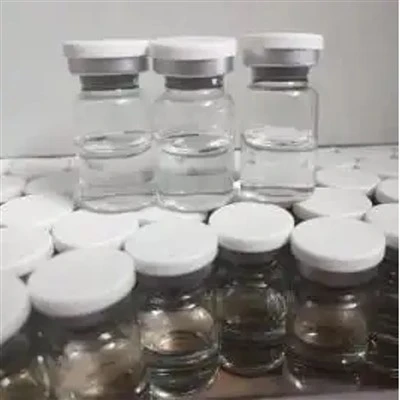
Let’s start with the basics: air quality testing isn’t a one-size-fits-all task. When a lab tests for particulate matter (the tiny, lung-deep dust particles that come from construction or wildfires), they use a different set of reagents than when they test for nitrogen dioxide (the toxic gas from car tailpipes) or formaldehyde (the volatile organic compound, or VOC, that seeps from new furniture or building materials). Even the method of testing matters—there are grab-and-send samples for short-term testing, and passive samplers that sit outside a building for weeks to collect long-term exposure data. Each of these scenarios relies on specific reagents designed to react only with the target pollutant, without throwing off the results by reacting with other, common airborne chemicals.
First, let’s talk about gaseous pollutants, which are often the most heavily regulated. Nitrogen dioxide (NO₂) is a prime example. This gas is a byproduct of fossil fuel combustion, and high levels are linked to asthma attacks and reduced lung function. The standard method for measuring NO₂ in both field samplers and laboratory analysis is the Griess-Saltzmann reaction. The core reagent here is a solution of sulfanilamide and N-(1-naphthyl)ethylenediamine dihydrochloride (NEDD), dissolved in dilute phosphoric acid. When NO₂ passes through a sampler coated with this reagent, it first forms nitrous acid, which then reacts with sulfanilamide to create a diazonium salt. That salt pairs with NEDD to form a bright purple azo dye, and the intensity of that dye is directly proportional to the amount of NO₂ present. I’ve seen first-hand how inconsistent reagent batches can throw off this measurement: a few years back, a small municipal lab ordered a cheap off-brand sulfanilamide that had degraded in storage, leading to readings that were 15% lower than actual NO₂ levels. It took them months to track down the issue, and the problem was entirely preventable with high-purity, validated reagents.
Next, sulfur dioxide (SO₂), another combustion byproduct from power plants and industrial facilities, has its own go-to reagent: the pararosaniline method. The reagent here is a solution of pararosaniline hydrochloride, formaldehyde, and tetrachloromercurate (TCM) buffer. When SO₂ reacts with TCM, it forms a stable complex, which then binds with the pararosaniline-formaldehyde mix to produce a bright red color. Like the NO₂ reaction, color intensity is measured with a spectrophotometer to calculate concentration. For field testing, many teams also use passive samplers pre-impregnated with this reagent, so they don’t have to handle liquid reagents on-site. That’s a huge win for safety—handling concentrated pararosaniline requires proper PPE, so pre-impregnated samplers cut down on lab exposure risks for small teams that might not have dedicated safety officers.
Volatile organic compounds (VOCs) are a trickier group. These are thousands of different chemicals, from benzene (found in gasoline) to formaldehyde (as I mentioned earlier), to the compounds that make new carpet smell. Total VOC (TVOC) testing is often used for indoor air quality, while targeted testing looks for specific carcinogenic VOCs like benzene. For TVOC, the most common method is gas chromatography (GC), and one of the key reagents here is the sorbent material in the sampling tube. The gold standard sorbent is Tenax TA, a porous polymer that adsorbs VOCs without retaining water vapor, which would skew results. For more polar VOCs like formaldehyde, we recommend XAD-2 resin-coated tubes or, for grab samples, impingers with a 2,4-dinitrophenylhydrazine (DNPH) reagent. DNPH reacts with formaldehyde and other aldehydes to form hydrazones, which are then separated and quantified via GC. I recently worked with a school district that was testing for formaldehyde in newly installed classroom cabinets—they had previously used a generic sorbent tube that adsorbed too much water, so their results were all over the place. Switching to DNPH-impregnated filters cut their testing error rate by nearly 20%, and they were able to confirm the cabinets were within safe limits without delaying their opening.
Particulate matter (PM) testing is another area where reagents play a critical role. PM2.5 and PM10—particles smaller than 2.5 microns and 10 microns, respectively—are measured gravimetrically most of the time: you pull a known volume of air through a filter, weigh the filter before and after sampling, and the difference gives you particle mass. But even here, reagents come into play. Pre-burning filters (usually quartz or Teflon) at high temperatures to remove organic contaminants before sampling is a standard lab step, but for more advanced chemical analysis of what’s in the particles, we offer reagents like ion chromatography (IC) eluents to extract ions like sulfate, nitrate, and ammonium from the filter. These ions are key components of fine particulate matter, and measuring them tells you where the PM is coming from—whether it’s from car exhaust, industrial emissions, or agricultural dust.
Wait, let’s not forget about ozone (O₃), the primary component of smog. Ozone ground-level is a major health hazard, and its measurement relies on the indigo disulfonic acid (IDS) method. The reagent here is IDS, which reacts with ozone to break down the dye, and the decrease in color intensity is measured to calculate ozone concentration. Unlike some other reagents, IDS is sensitive to light, so samplers using this reagent need to be kept dark during transport and storage. That’s why we supply light-proof sampling boxes as supporting supplies for these reagents—small details that end up making or breaking test results.
Now, I want to be honest with you: not all reagents are created equal. The air quality industry operates on very tight tolerance levels—regulatory limits for pollutants like NO₂ are often in the parts-per-billion (ppb) range, so even a tiny impurity in a reagent can lead to a reading that’s off by a huge margin. For example, a single molecule of residual water in a sulfanilamide reagent solution can interfere with the NO₂ reaction, leading to incorrect dye formation. That’s why our team tests every batch of reagents we sell against EPA (Environmental Protection Agency) and ISO (International Organization for Standardization) standards before they leave our warehouse. We also provide detailed lot-specific certificates of analysis, so our customers can track exactly what’s in every bottle, which is a requirement for most regulatory reporting.
I’ve been in this reagents and supplies business for over a decade, and I’ve seen firsthand how even small choices about reagents can impact lives. I remember a small town in Ohio a few years back that was dealing with higher than expected NO₂ levels, but their initial testing results were inconsistent. It turned out they were using a batch of Griess-Saltzmann reagent that had been stored in a hot warehouse, causing the NEDD to degrade. When they switched to our validated, temperature-stored reagents, their results aligned with data from the state’s official air quality monitoring network, and they were able to identify a faulty gas pipeline as the source of the emissions, preventing further exposure for the town’s residents.
For anyone working in air quality—whether you’re a lab tech running regulatory tests, an industrial hygienist monitoring a factory, or a homeowner testing your indoor air to protect your family—knowing what reagents you’re using, and that they’re reliable, isn’t just a nice-to-have. It’s the foundation of trustworthy data. That’s why we don’t just sell reagents; we provide support too. Our team can help you pick the right reagent for your specific testing needs, whether you’re doing a short-term residential test or a long-term industrial monitoring program, and we can advise on storage and handling to keep reagents effective.
If you’re looking to upgrade your current air quality testing reagents, or if you’re just starting out and need guidance on what supplies you need, we’re here to help. We work with labs, municipalities, industrial facilities, and research teams of all sizes, and we understand that accurate air quality data starts with high-quality reagents and the right supporting supplies to go with them. Reach out to our team to talk through your needs, and let’s make sure your next air quality test gives you the reliable, actionable results you need.
Lose Weight Peptides References
U.S. Environmental Protection Agency. (2020). Air Quality Monitoring: Reagent and Method Validation Guidelines.
ISO 16000-6:2021. Indoor air—Part 6: Determination of concentration of volatile organic compounds in indoor and test chamber air by active sampling on Tenax TA sorbent, thermal desorption and gas chromatography using MS or MS-FID.
Saltzmann, B. E. (1954). Colorimetric microdetermination of nitrogen dioxide in gases. Analytical Chemistry.
Ruypeptide Biotechnology Co., Ltd.
Ruypeptide Biotechnology Co., Ltd. is one of the most professional reagents and supporting supplies manufacturers and suppliers in China. With abundant experience, we warmly welcome you to buy discount reagents and supporting supplies in stock here and get pricelist from our factory. Quality products and reasonable price are available.
Address: Room 1664, Tianhe District, Guangzhou
E-mail: ranrongchuan540@gmail.com
WebSite: https://www.gslifepharma.com/
