A few years back, I sat across from a small bakery owner in Portland who’d just spent six months troubleshooting a half-used commercial mixer he’d bought from an online auction. “It was cheap,” he’d told me, rubbing his temples, “but I’ve paid twice the repair cost in extra downtime already.” That conversation stuck with me—not because it was about a bad deal, but because it highlighted a question every food processing operator faces long before they pull out their wallet: new vs. used food processing equipment. As a supplier who’s spent 12 years walking walk-ins through warehouses and fielding late-night calls about machine hiccups, I can tell you the cost differences go far beyond the sticker price. They dig into your utility bills, your compliance risks, and even your production consistency—stuff that doesn’t show up in a 30-second auction description. Food Processing Equipment
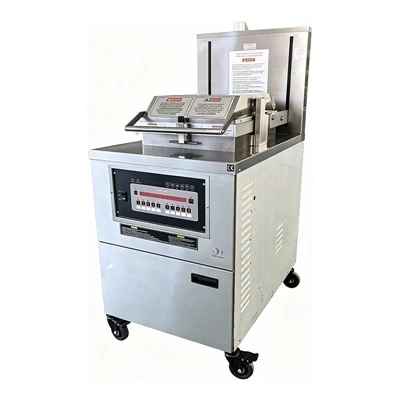
Let’s start with the numbers everyone fixates on first: upfront purchase cost. Last quarter, a stainless-steel tray cooler (standard for many produce and snack processing lines) sold for $18,200 brand new. The same model, 5 years old with 1,200 hours of operation, went for $5,700 at a local used equipment liquidation. That’s a 68% discount, and it’s the pitch that makes used equipment feel like a no-brainer for tight budgets. But here’s the catch: not all used equipment is the same. A 10-year-old meat grinder pulled from a shuttered plant that ran it 24/7 will cost less than a unit that’s only 2 years old and was reserved for small-batch artisanal jams. We see this all the time at our warehouse—clients show up thinking a $3,000 vacuum sealer is a steal, only to realize it has a cracked gasket that will need replacement, and a stripped drive motor, adding $800 to $1,500 in hidden parts costs before it even runs a full shift.
Beyond the initial price, the next big line item is utility and operational efficiency, and this is where the gap between new and used gets wide enough to sink a small business. New food processing equipment is built to meet today’s energy standards, which are way stricter than they were a decade ago. For example, a 2024 multi-head weigher (used for packaging snacks, frozen fruit, and nuts) uses 22% less electricity than a 2015 model, per data from the International Food Protection Association (IFPA). Let’s do the math: a small nut processor runs its weigher 10 hours a day, 6 days a week. At a national average industrial electricity rate of $0.12 per kWh, the new weigher would cost around $1,800 a year in power, while the used model would run $2,300. Add in water costs—new blanchers (used to prep vegetables for freezing) have closed-loop systems that cut water use by 35% compared to older open-loop units. For a plant running a 1,000-pound batch of green beans a day, that’s $1,200 to $1,700 a year in water savings with a new machine, vs. $3,200 for a used equivalent. I’ve had clients come to us after 2 years of running used equipment and say, “The energy savings alone would have covered the difference between what I paid for the used unit and the new one.” That’s a truth no auction listing spells out.
Then there’s compliance, a part of food processing that’s non-negotiable, and one where used equipment often has hidden costs. The FDA’s Food Safety Modernization Act (FSMA) and SQF certification standards change every few years, and equipment has to meet current food contact material rules, sanitization protocols, and safety features. A stainless-steel mixer from 2010 might look identical to a new one, but if it has a painted frame (instead of a food-grade powder coat) that chips over time, or lacks a built-in safety interlock that stops the blade if the lid is open, it can’t pass a routine inspection—meaning downtime until you retrofit it. Retrofitting a used mixer to meet 2024 FSMA standards can cost 10% to 15% of the original purchase price, per the National Equipment and Parts Association (NEPA). For a 500-pound capacity mixer that’s $20,000 new, that’s $2,000 to $3,000 in retrofitting fees you never planned for. Last year, we worked with a craft sauce maker that bought a used batch kettle to avoid a $15,000 price tag on a new one. They failed their first inspection because the kettle didn’t have temperature monitoring logs required for acidified foods, and the retrofit cost them $2,200—plus three days of downtime waiting for a technician. “I thought I was saving money,” the owner told me, “but I almost lost my certification before I even sold a single batch.”
Downtime and maintenance add another layer. Used equipment comes with no factory warranty in most cases, and any repairs require sourcing parts that might be hard to find for older models. A client of ours in Wisconsin bought a used apple peeler in 2022, and when the drive shaft broke, the part had to be custom machined because the manufacturer had stopped making that model 6 years prior. The repair took a week, and they lost 1,200 pounds of apples that they couldn’t process in time for a fall farmer’s market order. New equipment, by contrast, usually comes with a 1- to 3-year factory warranty, and parts are in stock at distributors. Even if something breaks, a technician can have the machine up and running in 24 to 48 hours, not 5 to 7 days. For small to mid-sized food processors, downtime doesn’t just mean lost product—it means lost revenue, missed contracts, and damaged relationships with retailers who expect consistent delivery.
Don’t get me wrong—used equipment has a time and place. A startup that’s just launching a small line of pickles and is working out their recipe before scaling? A lightly used, 2-year-old kettle might be perfect for them. Or a plant that’s adding a small second shift and has a tight budget for a line extension? A high-quality used conveyor system could work. The key is knowing the limits, and the extra costs, before you buy.
So how do you cut through the numbers and make the right call? First, get a third-party inspection for any used machine before you sign. A good food equipment inspector will test motors, check for leaks, measure wear on parts like blades and seals, and confirm it meets current compliance standards—usually for $200 to $300, a small cost to avoid thousands in surprises. Second, calculate the total cost of ownership, not just the upfront price. Add in projected utility costs, planned maintenance, potential repairs, and compliance retrofits over 3 to 5 years, and compare that to the new machine’s total cost (including financing, if you need it).

At the end of the day, food processing equipment is the backbone of your operation—cheap equipment might feel like a win in the moment, but it can become a drain on your business long-term. If you’re weighing your options between new and used equipment, or want to walk through the numbers for your specific line, we’re here to help. Reach out to discuss your production needs, budget, and long-term goals, and we can walk through the tradeoffs that matter most for your business.
Spiral Mixer References:
IFPA (International Food Protection Association). 2024. Energy Efficiency Standards for Commercial Food Processing Equipment.
NEPA (National Equipment and Parts Association). 2023. Hidden Costs of Used Food Equipment Retrofits.
FDA FSMA (Food Safety Modernization Act). 2024. Current Food Contact Material and Safety Requirements for Food Processing Machinery.
Hangzhou Joy Kitchen Equipment Co., Ltd.
As one of the most professional food processing equipment manufacturers and suppliers in China, we also support custom service. We warmly welcome you to wholesale advanced food processing equipment from our factory. If you have any enquiry about cooperation, please feel free to email us.
Address: Building1, Tongrenessence Building, Xihu District, Hangzhou, Zhejiang Province, China
E-mail: tyler@equipmentjoy.com
WebSite: https://www.joykitchenequipment.com/
