If you’re reading this, chances are you’ve heard of by machining—maybe you’ve used parts for a tool that went rogue, a custom component for a vintage car that’s hard to replace, or even a medical device part that just didn’t fit off-the-shelf. For over a decade, I’ve been running a small by machining shop, watching clients come in with a sketch on a napkin and a deadline that makes their eyes twitch, asking the same question: “Can this whole process not be so manual?” By Machining
Let’s cut to the chase here. I get it. By machining isn’t just cutting metal or plastic—it’s the stuff that makes the impossible, well, possible. But it’s also the kind of work that’s tied to a human being standing at a lathe for 12 hours, holding a caliper, adjusting a feed rate, and hoping the vibration doesn’t ruin the part. So, can it be automated? Short answer: Yes, but not in the way you’d think if you only see the big corporate machining shops dropping six-figure robots on their floors. And no, it won’t replace the human touch—that’s the secret no one tells you about automation in our side of the industry.
First, let’s talk about what “automated by machining” actually means, because most folks mix it up with full lights-out factories where machines run 24/7 without anyone touching them. That’s for high-volume stuff, like engine parts that get made 10,000 times a month. By machining is usually low-volume, high-complexity. A client might want 5 custom brackets for a prototype drone, or a replacement gear for a 1972 sewing machine that’s no longer in production. You’re not doing the same thing 100 times. You’re doing 10 different things in a week.
That’s where traditional automation falls flat. A robot arm programmed to drill 10 identical holes isn’t going to help when you have to machine a weirdly shaped titanium block with 3 different angles and a tolerance so tight, a human hair would throw it off. But what about the small, incremental automations we’ve already been using in our shop for the last 5 years? Let’s break it down. We’ve got CNC machines that run on G-code now—wait, no, hold on. I know, everyone says CNC is “automated,” but for a lot of by machinists, it’s just fancy computer-controlled manual work. You still have to set the material, test the tool, adjust the code when the machine’s off, and fix the part if it’s warped. But we started using offline programming software a couple years back. That’s when you design the part on your laptop, write the code there, and send it straight to the machine. No more standing by the lathe, typing in code one line at a time. That’s automation, right? Small scale, but it cuts our setup time by 30%—big deal when we’re working on tight deadlines.
Then there are the tools that handle the boring, repetitive stuff. We used to have a machinist spending half his day measuring parts with calipers to check tolerances. Now we have digital comparators that automatically scan the part and flag if anything’s off. It’s not a robot, but it’s automation that takes the tedious work off our plates so we can focus on the parts that actually require skill—like figuring out why a titanium part is warping mid-cut, or adjusting a tool path to avoid a weird grain in the material. That’s the stuff automation can’t do, because it requires context that only a human who’s worked with 100 different materials can pick up.
But here’s the thing: We’ve tried the big robot arms. Last year, we took a workshop on collaborative robots (cobots) that are supposed to work right next to humans. We set up a cell that loads raw material into the CNC machine, removes the finished part, and even changes tools when they wear out. For about a week, it worked. Then we got a part that was a weird shape—sort of a triangle with rounded edges and a hole offset by 0.002mm. The cobot couldn’t pick it up consistently. It was programmed for rectangles and blocks. By the time we re-programmed it, we could’ve loaded the parts ourselves and finished the job. So we scrapped that cobot for our small shop. It’s not worth it for low-volume, one-off work. That’s a lesson most of the big automation companies don’t tell you—automation only pays off when the work is consistent and repetitive. By machining is rarely that.
Wait, but let’s not act like automation hasn’t changed our game at all. What about when a client sends us a 3D model of a part, instead of a hand-drawn sketch? We can import that model straight into our software, generate the tool path in 10 minutes, and run the part. A few years back, we’d have to have a machinist manually measure the sketch, calculate the angles, write the code, test it on a scrap piece, then run the real part. That’s 4 hours of work, now it’s 30 minutes. That’s automation, just not the flashy kind with robots. It’s the automation of the design and coding steps that used to be the bottleneck for small shops like ours.
And let’s talk about quality, because that’s what our clients care about most. When a human does all the work, there’s room for error—fatigue, a missed adjustment, a bad day. Automation eliminates a lot of that, but only if you set it up right. We had a job last month where a new machinist set up the CNC code wrong, and the first 3 parts were off by a full millimeter. If we’d run that on a hand-operated lathe, we might have caught it after one part. Automation isn’t a set-it-and-forget-it deal. It’s a tool that still needs a human to babysit it, adjust it, and fix the mistakes it can’t even see.
Here’s the part most people don’t get: By machining’s superpower is its flexibility. You can make anything, from a tiny sensor part to a large steel bracket, in small quantities. If we automated the whole process—making every part the same, like a factory—we’d lose that. A client called us last week with a part that needed to be machined from a scrap piece of old steel they had in their garage, because the new steel had a different grain and wouldn’t work for their vintage tractor. A robot can’t find, load, and machine a random scrap piece of steel. A human can. That’s the value of by machining, and it’s why full automation will never take over our industry. At least not for the small shops. The big companies can automate high-volume stuff, but the stuff that makes by machining meaningful? That’s human work.
But that doesn’t mean we can’t use automation to make our work better. We’re testing a new tool right now that automates the heat treatment step for small parts, so we don’t have to send them out to a third party and wait a week. It’s a small unit, costs less than $5,000, and cuts our turnaround time by half for those parts. That’s the sweet spot for automation in by machining—small, targeted tools that eliminate the stuff no one wants to do, while keeping the human control over the stuff that matters.
I know some folks will read this and say, “Automation is taking all the jobs.” But in our shop, it’s the opposite. When we got that offline programming software, we didn’t lay anyone off. We re-trained our machinists to focus on complex jobs, not writing code. We actually hired two more people last year, because we could take on more jobs with faster setup times. The boring, repetitive work was holding us back. Automation freed us up to do more of the work clients actually need—custom, one-off parts that can’t be bought anywhere else.
So, to circle back to the original question: Can by machining be automated? Yes, but not fully, and not the way the tech companies want you to think. It’s not about robot arms replacing machinists. It’s about using small, smart tools to take the tedious stuff off our plates, so we can do what we do best: problem-solve, adapt, and make parts that matter. The future of by machining isn’t all robots and lights-out factories. It’s machinists sitting at computers, using automation to get the boring work done, and putting their skills to use on the parts that actually require a human touch.

If you’ve got a by machining job, whether it’s a one-off prototype, a replacement part no one else can make, or a small batch of custom components, don’t let anyone tell you automation will make it impossible. We’ve got the tools to speed things up, cut costs, and keep the quality you need. If you’re ready to talk through your project, hit us up—we’d love to hear what you’re working on and how we can help.
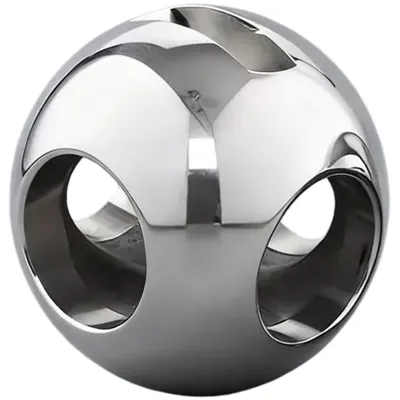
Valve Balls References
- By Machining Association. (2023). Small-Scale Automation Trends in Custom Machining.
- Industrial Robotics Industry Report. (2022). Cobots in Low-Volume Manufacturing.
- Journal of Precision Machining. (2021). Tolerance Control in Hybrid Human-Automation Machining Systems.
- Custom Parts Magazine. (2023). Flexibility vs. Automation: The By Machining Advantage.
Zhejiang Jigong Valve Co., Ltd.
Address: Dongou Industrial Park, Oubei Subdistrict, Yongjia County, Wenzhou City, Zhejiang Province (within Zhejiang Yinhe Machinery Manufacturing Co., Ltd.)
E-mail: Sales@cnzjsk.com.cn
WebSite: https://www.ball-china.com/
