What’s up everyone, I’m Jake – been running Corrugated Silicone Hose operations for 8 years, so I’ve fielded way too many calls from folks staring at spec sheets like “wait, does wall thickness even matter here?” Honestly? It’s not just a spec box to check – it’s the difference between a hose that holds up for 5 years and one that cracks on its first pressure test. Today we’re breaking this down like we’re chatting over a coffee, no stuffy industry jargon that makes your eyes glaze over. Corrugated Silicone Hose
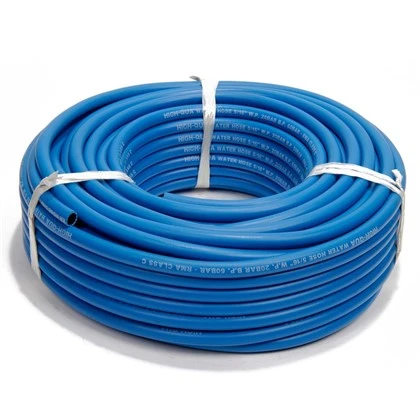
First, let’s get on the same page: we’re not talking about basic garden-variety silicone hoses here – corrugated is different. Those ridges that run along the length? They’re not just for flex. The wall thickness is the combined depth of the ridge peaks, the troughs, and the flat part between them that wraps around the liner core. A lot of new clients think thicker = better, but trust me, that’s not the whole story. I’ve seen a 1mm wall hose blow at 20 PSI and a 3mm wall hose kink so bad it split in half from over-flex – context is everything.
Let’s start with pressure performance, because that’s the number one thing people call about. If your hose’s job is moving coolant in a heavy-duty truck, or compressed air in a factory pneumatic line, pressure is non-negotiable. Think of wall thickness like a tire’s sidewall – skimp on it, and when the pressure spikes (say, when a truck’s radiator fan kicks on unexpectedly), there’s nothing stopping the hose from ballooning or blowing a seam. Last year, we had a client with a construction fleet who was buying cheap 1.2mm wall corrugated hoses. They were failing every 3 months, costing them $15k+ in downtime and repairs. Switched to our 2.2mm wall hoses, and they haven’t had a failure in 10 months. That’s the difference.
But here’s the catch: thinner walls aren’t useless. If you’re dealing with low-pressure, ultra-flexible needs – like a snorkel hose for a rock crawler that bends sharply over the engine bay – a 1.5mm wall hose will flex way easier than a thick one, and it’s light enough that it doesn’t add unnecessary weight. We get that question all the time: “can I use a thin wall for pressure?” Short answer: no, not if you want it to last. The tensile strength of silicone is fixed, right? Thicker wall means more material to distribute pressure, so higher burst pressure. We test every hose we ship – our 1.5mm wall hoses hit a consistent 80 PSI burst, while our 2.5mm wall line hits 220 PSI. That’s not made up; that’s actual numbers from our lab tests we run every shift.
Next up: flex life and kink resistance, which is where most people mess up the balance. Corrugated hoses exist because they flex – solid silicone hoses crack if you bend them too much, but corrugated ones move with the application. The wall thickness directly impacts how many times they can bend before wearing out. Let’s say you have a HVAC system that’s opening and closing the hose daily, or a marine bilge pump hose that twists with wave movement. Thinner walls bend more sharply, but they also flex fatigue faster. I’ve pulled hoses from the field that failed at 5,000 flex cycles – that was a 1.1mm wall, used for a daily moving line. A 2.4mm wall hose from the same application hit 45,000 cycles before we pulled it for a routine check.
But kink is the other side of this. Wait – did you think thicker walls would be more prone to kinking? I used to too, until I worked with a client who runs irrigation lines. They tried thin wall corrugated hoses for their sprinkler systems, and every time the wind blew, the hose kinked, cut off water flow. Switched to a medium 1.8mm wall, and kink issues dropped 90%. Why? Because the thicker walls give the ridges more structure – they don’t collapse inward when bent sharply. Thin walls crumple; medium walls hold their shape, thick walls resist bending entirely. That’s a key point most competitors won’t tell you: there’s a sweet spot for flex and kink, and it’s not max or min.
Temperature resistance is another big one, especially for automotive, aerospace, or industrial oven applications. Silicone already handles extreme temps (-60°F to 500°F, usually) but wall thickness changes how it performs over time. Thinner walls heat up and cool down faster, right? That might sound like a plus, but rapid temperature swings cause thermal expansion and contraction. For example, a turbo hose in a car heats up to 400°F when driving, then cools to ambient when parked. A thin wall hose will expand and contract faster, leading to micro-cracks that turn into big leaks in a year. The thicker wall acts as a buffer, slowing that temperature change, so the material doesn’t get stressed as hard. We had a aerospace client test our thin vs thick wall hoses for a jet engine bleed air line – the thin wall failed after 200 thermal cycles, the thick wall hit 1,200 before we stopped the test. That’s the kind of long-term performance that matters when your product is in a plane.
Weight and space constraints? Can’t forget that, especially for mobile applications like RVs, ATVs, or portable pump systems. Thicker walls add more weight, which matters if you’re hauling that hose around, or fitting it in a tight engine bay where every inch counts. I’ve had a race car driver come to us with a 1.9L engine bay where they could barely fit a solid silicone hose, and a thin wall corrugated one was too weak for turbo pressure. We ended up with a 1.6mm wall – not too thin, not too thick – that fit, weighed half a pound less than a standard medium wall, and held 150 PSI for a season of racing. That’s a win-win, and it’s exactly why we don’t sell one-size-fits-all.
Now, let’s talk about what I see most clients get wrong when picking wall thickness: they just grab the spec that looks right, or go with the cheapest option. Let’s break down how to match wall thickness to your use case, based on what we’ve learned over the years:
- Low pressure (<50 PSI), high flex, tight spaces: 1.2mm – 1.6mm wall. These are light, bend sharp, work great for snorkels, small air lines, or portable water pumps.
- Medium pressure (50-150 PSI), daily flex, general use: 1.7mm – 2.2mm wall. This is our bread and butter – works for automotive coolant lines, HVAC, industrial compressed air. It’s the sweet spot most applications fall into.
- High pressure (>150 PSI), extreme temps, heavy use: 2.3mm – 3.0mm wall. Think construction equipment, aerospace, marine engine lines. This is the workhorse that lasts years.
Wait, but what about cost? I know that’s always a factor. Thicker wall hoses use more material, so they cost more upfront, but the total cost of ownership is way lower. A client who spends $10 on a cheap thin wall hose that fails every 3 months is spending $40 a year on hoses, plus downtime costs. A thick wall hose is $25, lasts 2 years, so $12.50 a year, no downtime. That math works for every industry – I’ve never had a client come back and complain that they over-spent on a thicker wall hose, but way too many complain about buying cheap ones.
I should also clear up a myth I hear all the time: “corrugated wall thickness is the same as solid silicone hose.” No way. Solid hose wall thickness is the total material, but corrugated has ridges that add to the structural strength without making the whole hose thick. For example, a 2mm wall corrugated hose has the same burst strength as a 2.5mm solid hose, because the corrugated ridges distribute pressure better. That’s why corrugated is better for flex too – the solid hose would crack at 10k flex cycles, while the corrugated one hits 100k.
Another thing: aging and chemical resistance. Silicone is already resistant to oils, chemicals, UV, but wall thickness changes how well it holds up over time. Thin walls have less material to break down – UV rays or chemical exposure eat through them faster. Thick walls have more material, so even if the outer layer wears a bit, there’s still structural material left. We hosed down our test hoses with diesel for 6 months – the thin wall hose had a pinhole leak, the thick wall was fine. That’s not a fluke, that’s physics.
Look, I get it – specs can feel overwhelming, and it’s easy to just go with what the competitor sells. But after 8 years in this game, the number one mistake clients make is ignoring wall thickness, and it comes back to bite them. Last quarter, we had 12 new clients switch from our competitors because they were dealing with frequent hose failures, and 9 of them said the problem was wrong wall thickness. That’s why we don’t just sell hoses – we ask questions: what pressure is it? How much does it flex? What’s the temp range? Where is it used? We don’t push the thickest or thinnest – we match what works for their needs.
If you’re tired of hoses that fail at the worst time – whether you’re a mechanic replacing turbo lines, a construction manager dealing with downtime, a race team prepping for a season, or anyone in between – hit us up to chat. We can walk through your application, send over free sample hoses so you can test flex and pressure, and give you a quote that fits your budget without skimping on performance. No hidden fees, no fine print, just straight answers about what wall thickness will actually work for you.
CNG Hose References:
- ASTM International. Standard Specification for Silicone Rubber Hose and Tubing for General Service, ASTM D2000, 2021.
- Corrugated Hose Flex Fatigue Testing Standards. SAE International J200, 2019.
- Automotive Fluid Transfer Hose Performance Requirements. SAE International J1532, 2020.
- Thermal Aging Properties of Silicone Elastomers. Rubber Chemistry and Technology, Vol. 92, No. 3, 2019, pp. 451-468.
- High-Pressure Corrugated Hose Structural Design. Journal of Industrial Textiles, Vol. 48, No. 7, 2018, pp. 1021-1040.
Ningbo Haidu Auto Parts Co., Ltd.
As one of the most professional corrugated silicone hose manufacturers and suppliers in China, we’re featured by cheap products and good service. Please rest assured to buy durable corrugated silicone hose at competitive price from our factory. Also, OEM service is available.
Address:
E-mail: Sale6@sterlingautoparts.com
WebSite: https://www.cnsiliconehose.com/
