If you’ve ever stood next to a welding bay as a project winds down, you’ve probably heard both ends of the same conversation: one welder cursing about spatter that takes 20 minutes to grind off a structural beam, another bragging about a 50-foot run that came out smooth, crack-free, and passed its first non-destructive test with zero rework. The difference between those two outcomes? More often than not, it’s not the welder’s skill (though that matters) — it’s the cored wire running through their welding gun. Cored Wire
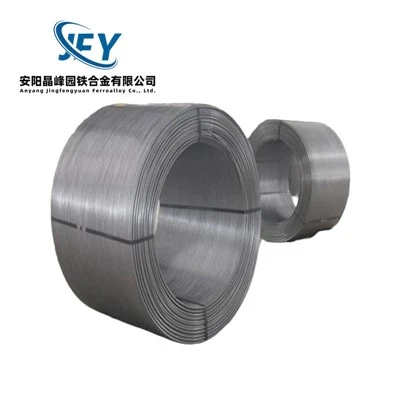
I’ve spent 12 years on the floor of our cored wire plant, watching batches come off the line, talking to welders who’ve used our product on everything from highway bridge trusses to offshore oil rig pipelines, and listening to maintenance teams complain about weld quality mistakes that could’ve been avoided. Too many people still treat cored wire like a “commodity” — a piece of wire that feeds through a gun and melts. But if you dig into how it works, it’s not just wire. It’s a carefully engineered product, and that engineering directly translates to the kind of consistent, high-quality welds that keep jobs on schedule and structures safe.
Let’s start with the basics that make cored wire different from solid wire. Solid wire is a single metal rod, right? When it melts, it’s just that rod hitting the base metal. Cored wire is a tube — usually steel, aluminum, or stainless steel — filled with a precise blend of flux, alloys, deoxidizers, and sometimes rare earth elements, wrapped tightly around a core powder. That core is the secret sauce. A lot of welders don’t realize that when they use solid wire, they have to add most of those additives manually: flux core from a separate flux-cored gasless setup, deoxidizers to clean up porosity, alloys to strengthen the weld metal. With cored wire, all that stuff is pre-measured, mixed, and sealed into every single foot of wire. No more guessing how much flux to add, no more inconsistent mixes that change batch to batch.
The first and most visible improvement is reducing defects that cause rework. Porosity — those tiny, pinhole-sized bubbles trapped in the weld — is one of the most common headaches. Solid wire can draw in moisture or air if it’s not stored perfectly, leading to porosity. With our cored wire, the flux core acts as a gas shield as it melts. When the wire arcs, the flux vaporizes, creating a cloud of inert gas that pushes atmospheric oxygen and nitrogen away from the molten weld pool. That cloud is more consistent than a manual gas shield, too — especially in windy outdoor jobsites, like when you’re welding a bridge deck in a field where gusts blow away a standard argon gas shield. I remember a crew in Ohio that switched from solid wire to our mild steel cored wire on a highway overpass project. Before, they had to rework an average of 12 linear feet of weld per 100 feet because of porosity. After switching? That dropped to less than 1 foot per 100. The foreman said they saved 3 days of grinding and re-inspection over the course of the job.
Spatter is another big one. Weld spatter is the tiny, blobby melted metal that splatters onto the base metal or gun during welding. It’s not just a nuisance — it takes hours to grind off, can leave weak spots if it’s embedded, and slows down every job. The flux in our cored wire reacts with the molten metal as it solidifies, lowering the surface tension so it doesn’t splatter. I’ve got a photo on my phone from a shipyard customer who switched to our high-strength steel cored wire last year. They used to go through 4 grinders a week, replacing blades that got gummed up with spatter. After switching, they’re going through 1 grinder every 3 weeks. That’s not just less time grinding — that’s less downtime, less tool cost, and welds that look consistent from start to finish, even on long runs.
But quality isn’t just about less mess. It’s about the strength of the weld itself. That’s where the alloy blend in the cored wire’s core comes in. When you use solid wire, adding extra alloys like manganese, chromium, or nickel means either adding separate wire or hand-feeding alloy powder — which almost always leads to inconsistent mixes. One batch might have too little manganese, leading to a brittle weld that cracks; another might have too much, making the weld too hard and prone to breaking. With cored wire, we test every batch of core powder before it’s loaded into the tube, so every 100 feet of wire has the exact same ratio of alloys. For structural welding, where welds have to meet specific yield strength and tensile strength standards (like AWS D1.1, the American Welding Society code for structural steel), that consistency is non-negotiable. A refinery customer in Texas told me last quarter that their welds made with our high-alloy cored wire consistently tested at 85,000 psi tensile strength — 10,000 psi above the required minimum — with zero instances of weld cracking during testing. Compare that to when they used solid wire, where 2-3% of welds would fail the tensile test. That’s thousands of pounds of product that doesn’t have to be scrapped, and days of rework avoided before the unit leaves the shop.
Another often-overlooked quality improvement is how cored wire handles different base metals and environments. Let’s say you’re welding on old, rusty steel — something contractors deal with all the time, especially on renovation projects. Solid wire will burn through that rust, leading to porosity and weak welds because the rust introduces carbon and oxygen into the mix. The flux in our cored wire is formulated to clean up mill scale, rust, and even minor oil contamination on the base metal, acting as a sort of built-in cleaner. We had a team working on a 50-year-old warehouse renovation in Michigan that had to weld over rusted I-beams that hadn’t been touched in decades. They were using solid wire and getting welds that failed 1 in 5 tests. Switching to our general-purpose cored wire cut the failure rate to 1 in 100. They didn’t have to sand blast every beam before welding, saving them 2 weeks of prep time and thousands of dollars in sand blasting costs.
Outdoor environments, like offshore rigs or wind turbine towers, are another area where cored wire shines. Offshore welding has to handle saltwater, high humidity, and wind — all things that mess with solid wire’s gas shield and lead to defects. Our subsea-rated cored wire is formulated with extra deoxidizers and a flux that creates a very stable gas shield, even in 20+ knot winds. A wind turbine manufacturer in the Netherlands uses our cored wire for tower sections that are welded on-site at altitudes of 300 feet, where wind speeds can shift dramatically. They told me that since switching, their on-site weld pass rate has gone from 92% to 99.5% — meaning almost every weld passes first-time inspection, no rework needed after the crew is done working 100 feet in the air.
I know what some welders are thinking: “Cored wire is more expensive per pound than solid wire. Why would I pay more?” Let’s do the math. A standard structural welding job will spend 20-30% of their time on rework: grinding spatter, fixing porosity, re-inspecting failed welds, replacing parts on their welding guns from spatter. When you use cored wire, that rework time drops by 70-80%. Add to that the fact that our cored wire feeds more consistently through the gun than solid wire, so there’s less stop-start, leading to a smoother, more uniform weld. We’ve had customers that say even though the wire costs 15% more per pound, they end up saving 25-30% on total job costs because of less rework and faster welding times. It’s not just about the price of the wire — it’s about the total cost of quality.
But here’s the thing: not all cored wire is the same. A lot of smaller suppliers mix their core powder cheaply, or use thin tube that can buckle in the welding gun, leading to inconsistent feed and uneven welds. At our plant, we test every spool of wire before it leaves the facility: we check the core density to make sure there’s no gaps (which would lead to uneven flux coverage), test the alloy mix with X-ray fluorescence to confirm the ratios are exact, and do trial welds to check for porosity and spatter. We also formulate our cored wire for specific applications — we don’t sell a one-size-fits-all product. We have wire for mild steel, high-strength steel, stainless steel, even wire for welding aluminum. Each is engineered to solve specific quality problems for that use case.
Last month, I was talking to a welding foreman at a construction company that builds hospital wings. They told me their biggest fear was weld defects on critical structural beams — if a weld fails on a hospital wing, it’s not just rework, it’s delay on a project that’s supposed to be open for patients in 6 months. They were having consistent issues with solid wire leading to porosity on their job sites in rainy, humid Florida. We sent them a trial spool of our humidity-resistant cored wire, and after 2 weeks, they called to say their first 500 linear feet of weld had zero defects, and their inspection team didn’t find a single pinhole. That’s the kind of quality that matters — not just for a fast job, but for a structure that’s safe for people to walk into every day.
At the end of the day, welding quality boils down to consistency. A welder can be the best in the world, but if their wire is inconsistent — if one foot has too little flux and the next has too much — they can’t make a perfect weld every time. Cored wire removes that inconsistency by putting all the right additives in every single foot, tailored to the job. It cuts down on defects that waste time and money, creates stronger welds that meet code, and works better in the messy, real-world conditions most welders face — not just the perfect workshop.
If you’re tired of rework eating into your project timelines and your profits, if you’re ready for welds that pass inspection on the first try, it’s worth looking at how cored wire can change your welding process. Our team works with every type of welding operation, from small job shops to large structural contractors, to find the right cored wire for your specific needs — whether you’re welding steel for bridges, pipelines, or heavy equipment. We don’t just sell wire; we talk through your common pain points, test our wire against your current process, and make sure you’re getting a product that actually improves your weld quality, not just costs more.
To learn more or discuss your specific welding application and quality goals, reach out to our team to talk through your needs and get more details on how our cored wire can help.
Alloy References
AWS A5.20: Specification for Carbon Steel Flux-Cored Arc Welding Electrodes and Rods, American Welding Society, 2021
ASTM A1008/A1008M: Standard Specification for Steel, Sheet and Strip, Carbon, Commercial, Drawing, Structural, and High-Strength, Low-Alloy, Hot-Rolled and Cold-Rolled, ASTM International, 2022
Welding Journal, “Flux-Cored Wire Formulations for Improved Weld Quality in Outdoor Applications,” 2020, Vol. 99, No. 6
Anyang Jingfengyuan Ferroalloy Co., Ltd.
As one of the most professional cored wire manufacturers and suppliers in China, we’re featured by quality products and good price. Please rest assured to buy bulk cored wire in stock here and get quotation from our factory. We also accept customized orders.
Address: Longquan Town Industrial Park, Long’an District, Anyang City, Henan Province
E-mail: Jingfengyuan@jfyferroalloys.com
WebSite: https://www.jfy-ferroalloy.com/
