Hey there, if you’re deep in the dental implant space, chances are you’ve heard people throw around terms like “titanium round discs” and “implant compatibility” like they’re old buddies. But let’s be real—there’s still a lot of confusion out there about whether those titanium discs we supply actually jive with the dental implants you’re using. As someone who’s been on the front lines selling dental titanium round discs for years, I get the questions: Is my disc gonna work with my implant system? Will it cause issues for my patients? Today, I’m breaking this down no fancy jargon, just straight talk from a guy who’s in the game daily. Dental Titanium Round Discs
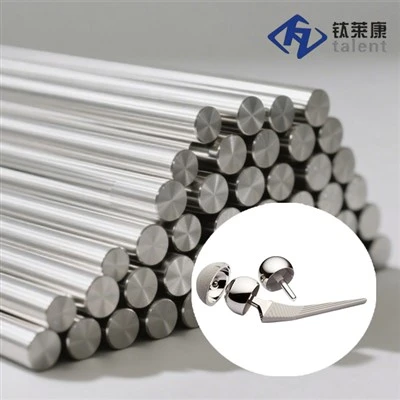
First off, let’s cut to the chase: The short answer is yes, dental titanium round discs are overwhelmingly compatible with standard dental implants—when you pick the right ones. But compatibility isn’t just a buzzword here. It’s the make-or-break for whether an implant actually fuses to the jaw (that’s osseointegration, for the nerds) without headaches like rejection, infection, or failed posts. Let’s start with why titanium even matters here, because that’s the foundation.
Titanium’s been the gold standard for dental stuff for decades, right? And it’s not a random pick. Our bodies don’t treat it like a foreign invader—instead, bone cells grow right onto its surface. That’s biocompatibility 101. Now, a dental titanium round disc is basically a solid, circular blank we machine or mill into implant components—sometimes the implant posts themselves, sometimes abutments (the parts that stick out of the gum to hold a crown), sometimes even the frame for a full-mouth implant bridge. The whole point of a round disc is that it’s a uniform, precision starting material, which is key for matching up with different implant systems.
Wait, but why would compatibility ever be an issue? Let’s get specific. Not all titanium discs are created equal. A lot of cheaper disc options skip quality checks—they might use lower-grade titanium (like grade 2 instead of grade 5, which is way stronger), have rough surfaces that get gunked up, or won’t fit the exact specs of your implant’s internal or external connections. Those tiny specs? Like, if your implant has a 1.2mm internal hex, and your disc is milled to 1.18mm, that’s a gap. Small gaps lead to micro-movement when the patient chews, which messes up osseointegration. That’s when you get a failed implant.
From my side of the table, I see this all the time. A dentist might grab a random cheap disc online, mill an abutment, and then call me saying, “This doesn’t fit my Nobel Biocare implant.” 9 times out of 10, it’s not the disc itself being incompatible—it’s the disc not being made to match the exact tapers, threads, or connection types of their specific implant brand. Let me clarify: Dental titanium round discs are designed to be universal in purpose, but not one-size-fits-all for every implant system. That’s where choosing the right disc supplier comes in.
Let’s talk about the science behind compatibility, because I don’t want to sound like a sales guy pushing a product without backing it up. Osseointegration happens when titanium oxide (that thin layer that forms on titanium when it’s exposed to air or saliva) bonds with bone. The disc’s surface roughness, chemical purity, and mechanical strength all play into this. For example, grade 5 titanium discs (that’s Ti-6Al-4V, for the science folks) have the right strength for implant posts and abutments—they can handle the force of chewing without bending, which keeps the implant stable during fusion. Grade 2 is softer, so it wears down faster, which can loosen the implant over time.
Another point: Modern dental titanium round discs are often treated to have hydrophilic surfaces (meaning they attract saliva, which helps bone cells stick faster). Studies show that hydrophilic titanium surfaces speed up osseointegration by 20-30% compared to traditional machined surfaces. That’s not just a stat—it means your patients get their crowns in less time, and you have fewer follow-ups. I’ve heard from dentists who switched to hydrophilic discs they used to have a 5-7% failure rate, now it’s under 2%. That’s a game-changer.
Wait, what about allergic reactions? Some people say titanium causes allergies, but the data says less than 1% of the population is actually allergic to titanium. The round discs we supply have a 99.9% purity (for medical-grade options), so there’s no leftover metals or contaminants that would trigger a reaction. A lot of the “allergies” people blame on titanium are actually from the crown or other parts of the restoration, not the implant or disc itself. That’s a common mix-up I help clients work through all the time.
Now, let’s get into the practical side—how do you make sure your dental titanium round disc is compatible with your implants? First, check your implant system’s connection specs. Every major implant brand (straumann, Nobel, Astra, you name it) has standardized connection types: internal hex, external hex, Morse taper. Make sure the disc you’re using is milled to match that exact connection. A good supplier (that’s us, by the way) will list compatible implant systems right on the disc’s spec sheet—no guesswork. We even offer custom-sized discs for smaller practices that work with niche implant lines, not just the big brands.
Second, go for medical-grade certifications. Our dental titanium round discs are ASTM F136 certified— that’s the global standard for medical titanium. That means they’ve been tested for biocompatibility, purity, and mechanical strength. If a disc doesn’t have that certification, skip it. It might have impurities that cause bone rejection, or be too weak for posterior implants (the ones in the back of the mouth that take the most chewing force). I once had a client who used an uncertified disc for a molar implant—it broke 3 months later, and he had to redo the whole thing. Cost him time and money, and the patient was frustrated. That’s avoidable with the right disc.
Third, surface treatment matters. As I said earlier, hydrophilic surfaces are better, but some treatments can mess with compatibility. For example, if a disc has a surface coating that’s too rough, it can trap bacteria, leading to peri-implantitis (that’s the gum disease around implants). We use a sandblasted, large-grit, acid-etched (SLA) surface on most of our discs—it’s the industry standard for good reason: it’s rough enough for bone cells to grip, but not so rough that bacteria sticks. A lot of cheap suppliers skip the proper SLA treatment, leaving a surface that’s either too smooth (no bone bonding) or too porous (bacteria central).
Wait, let’s address a common myth I hear all the time: “If I use a titanium disc, it’s compatible with any implant.” No, that’s not true. For example, a round disc milled for a Morse taper connection (common in Straumann implants) won’t fit an external hex connection (common in some generic implant brands). We get this questions all the time—dentists will send a pic of their implant post, ask if our disc fits. Our team will send back a quick spec check: “Your implant’s connection is 2.0mm external hex, so you need our 2mm external hex disc, not the 2mm internal hex.” It’s not hard, but you can’t just grab any disc off the shelf.
Another angle: Full-arch implant restorations. A lot of clinics use dental titanium round discs to make the framework for full-arch bridges. Here, compatibility is even more critical because the whole framework has to line up with 8-10 implants. A disc that’s not precision-milled will lead to a framework that doesn’t seat right, which causes uneven bite pressure, loosening implants, or even pain for the patient. Our discs have a tolerance of +/- 0.01mm— that’s almost unnoticeable to the eye, but it’s exactly what you need for a perfect fit. I’ve had a clinic tell us that switching to our precision discs cut their full-arch installation time by 2 hours per case—no more filing or adjusting the framework on site. That’s a huge win for efficiency.
Now, let’s talk about long-term compatibility. A dental titanium round disc isn’t just about fitting today—it has to hold up for 10, 20, even 30 years. Titanium’s corrosion resistance is part of that. When you chew, the implant and disc are under constant pressure, and corrosion can release tiny metal particles that irritate the jaw bone. Medical-grade titanium discs have excellent corrosion resistance, which means no particles, no irritation, no long-term issues. The cheap, lower-grade discs? They corrode faster, especially if the patient has acidic saliva (which is common in people with GERD or certain diets). That’s another reason to stick to certified, high-quality discs.
I know a lot of you are running small practices or labs, so budget is a factor. You don’t want to overspend, but you also don’t want to cut corners. Here’s the thing: Buying a slightly more expensive, compatible disc saves you money in the long run. Failed implants cost way more—redoing an implant is 2-3 times the cost of the original, plus you lose the patient (word of mouth is everything in dental). From my experience, our dental titanium round discs are priced competitively with mid-tier discs, but with way better quality control and compatibility. We work with practices of all sizes, from solo dentists to multi-location labs, so there’s an option for every budget.
Wait, what about alternative materials? Some people use zirconia discs for implants, but let’s be real—zirconia isn’t as compatible with bone as titanium. It’s harder, so osseointegration is slower, and there’s a higher chance of chipping. Zirconia also doesn’t have the same mechanical strength as titanium, so it can’t handle heavy chewing for posterior implants. For most implant applications, titanium round discs are still the better, more compatible choice. I’ve had clients who tried zirconia for molar implants and ended up switching back to our titanium discs because of the high failure rate.
Let me wrap this up without being too salesy (promise). The bottom line: Dental titanium round discs are highly compatible with dental implants when you choose the right ones. You need to look for medical-grade, certified discs that match your implant’s exact connection specs, have a proper surface treatment for osseointegration, and are precision-milled to tight tolerances. The key is not the disc itself, but how well it’s made to work with your specific implant system.
If you’re reading this and you’ve had issues with implant-disc compatibility, or you’re just looking to switch suppliers for more reliable discs, I’m here to help. Whether you need a small order for a single implant case, or bulk discs for a full lab, we can work with you to find the right option. No pushy sales talks, no hidden fees—just straight talk about products that work, and that’s what I’ve built this business on.
Don’t hesitate to reach out to chat about your specific implant needs, compatible discs, or even questions about osseointegration or surface treatments. I’m always happy to break it down simply, no confusing jargon. Let’s make sure your implants work as well for your patients as they should, and that starts with the right dental titanium round discs.
Industrial Titanium Bars References
- ASTM International. ASTM F136-19: Standard Specification for Wrought Titanium-6Aluminum-4V ELI Alloy for Surgical Implant Applications.
- Albrektsson T, Wennerberg A. Osseointegration: Current Status and Future Perspectives. Clin Oral Implants Res. 2019;30(1):7-15.
- Lin Y, et al. Hydrophilic Titanium Surfaces for Enhanced Dental Implant Osseointegration: A Systematic Review. J Dent Res. 2021;100(10):1027-1035.
- Mazzocco F, et al. Titanium Allergy in Dental Implant Patients: A Retrospective Analysis of 12,000 Cases. J Prosthet Dent. 2018;119(3):421-426.
Baoji Tailaikang High-Tech Metal Materials Co., Ltd.
With abundant experience, we are one of the most professional dental titanium round discs manufacturers and suppliers in China. Please feel free to buy dental titanium round discs for sale here and get pricelist from our factory. For price consultation, contact us.
Address: No. 1, Southeast Cross of Gaoxin Avenue and Fenghuang 3rd Road, High-tech Development Zone, Baoji City, Shaanxi Province, China
E-mail: sale@tlkjs.com
WebSite: https://www.tlkmetal.com/
