Hey there – if you’re reading this, you’ve probably used a flap disc before (or at least dealt with the headache of loud, piercing noise while grinding, sanding, or finishing metal, wood, or even stone). I’m [your supplier’s role, e.g., “the guy who’s been selling flap discs for 12+ years and has tested just about every setup under my workshop’s fluorescent lights”], and let’s be real – noise isn’t just annoying. It can ruin your hearing over time, throw off your focus mid-project, and even make clients side-eye your job site. So today, I’m breaking down exactly how to cut that grating noise when using a flap disc – no fancy jargon, just stuff I’ve tested in real jobs and seen work for thousands of guys (and gals) I work with. Flap Disc

First, let’s get one thing straight: not all flap disc noise is created equal. If your setup’s screaming so loud you can’t hear your own thoughts, it’s rarely the disc itself being “bad” (though cheap, thin ones can make it worse) – it’s usually a mix of how you’re using it, what you’re pairing it with, and small tweaks most people miss. I’ve had guys come to me swearing their disc is defective, only to find they’re using a 7-inch disc on a grinder that can’t handle the RPMs, or they’re pressing so hard they’re grinding through material instead of letting the disc do its job. Let’s start with the basics that’ll make the biggest difference, fast.
1. Match Your Flap Disc to Your Grinder – Don’t Guess
This is the #1 mistake I see new guys make, and it’s a noise killer. Flap discs have a specific maximum RPM rating – print it right on the disc’s label, usually something like “13,300 max RPM” for a 4.5-inch disc. If your grinder’s no-load RPM is higher than that, the disc flaps will vibrate wildly, catch on the material, and create that awful, high-pitched squeal. It’s not the disc’s fault – it’s a bad match.
I had a guy last month bring in a stack of cheap 4.5-inch flap discs he’d been running on a random grinder he picked up at a hardware store. He said every time he used them, it sounded like a tea kettle about to blow. Turns out that grinder was hitting 15,000 RPM – way too high for those discs. Swapped him for a set of our heavy-duty flap discs rated for that RPM, and paired it with a grinder with adjustable speed (more on that later), and his noise dropped by almost half.
Also, size matters. A 7-inch flap disc on a 4-inch grinder? You’re forcing it to flex, which causes vibration and noise every time it touches the material. Stick to the size: grinder size = max disc size (e.g., a 7-inch grinder takes a 7-inch disc, don’t force a 9-inch on there).
2. Control the Pressure – Stop Squeezing So Hard
Guys, I get it – you want the job done fast. But grinding is a “feed the disc, don’t force it” task. When you lean into a flap disc like it’s a shovel trying to move concrete, you’re making the flap flutter, skip across the material, and create that sharp, grating noise. Think of it like sanding wood with a piece of sandpaper: you don’t press so hard it tears the paper, you use light, steady pressure.
I always tell my guys: hold the grinder like you’re holding a phone to take a quick pic, not like you’re wrestler’s grappling. If you’re overheating the disc or the material, or the disc is leaving deep gouges, you’re pressing too hard. Our flap discs are made with dense, overlapping flaps that do the work – they don’t need you to add extra force. One tip: if you notice the disc’s edges are wearing unevenly, that’s a sign you’re pressing too hard, and it’ll only make noise as the edges catch on things.
3. Speed It Up (Or Slow It Down) – Find the Sweet Spot
Adjustable-speed grinders are a game-changer here, but if you’ve got a fixed-speed one, don’t panic – there are still tricks. The key is to use the right speed for the material and the disc type. For example, heavy grinding on thick steel needs a higher speed, but for finishing or sanding delicate metal, wood, or even fiberglass, slower speed cuts noise like crazy.
I had a cabinet maker client who was using 4.5-inch flap discs on a fixed-speed grinder for finishing oak trim. He said the noise was so bad his assistant had to wear earplugs that mumbled his words. We swapped him to a variable-speed grinder, and set it to 4,500 RPM instead of the usual 11,000 for metal grinding. The noise dropped so much he could chat with his assistant without yelling. And guess what? The finish was smoother too – he even got a couple of repeat jobs from clients who commented on how clean his work was.
Pro tip: If you can’t adjust speed, test running the grinder at full speed, then dial it back just enough that the disc doesn’t vibrate. Even a 1,000 RPM drop can make a huge difference. Just make sure you don’t go below the disc’s minimum rated RPM – you’ll cause the flaps to burn and create more noise and debris.
4. Inspect Your Flap Disc and Grinder Before Every Use
This sounds like a no-brainer, but you’d be surprised how many guys skip it. A wobbly disc (from a warped flange or a loose nut) is a top noise culprit. If your disc is sitting lopsided on the grinder, every rotation will cause vibration and that piercing squeal.
Before you fire up the grinder:
- Check the nut that holds the disc tight – not too tight (you’ll strip the threads) and not too loose (disc will spin off). I use a wrench and give it a firm turn, then a quarter-turn more – that’s the sweet spot.
- Inspect the disc for any bent or torn flaps. If the edges are frayed, or the center is warped, toss it. Even a small bend can throw the whole disc off balance and make noise.
- Check the grinder’s bearings. If your grinder is making a rattle when it’s not touching material, that’s a bearing issue, not the disc. Replace the bearings, and your noise will go down immediately. I once had a guy blame a disc for his noise, turns out his grinder bearings were shot – the disc was fine, but the grinder was vibrating so bad it shook the whole workbench.
5. Dampen the Vibration – The Easy, Affordable Fix
Vibration = noise. It’s science. So anything you can do to cut vibration will cut noise. The simplest trick for most guys is a rubber flange or a vibration-dampening disc pad. Wait – no, not the cheap foam ones that fall apart. I recommend the heavy-duty rubber flanges we stock, which cushion the disc and absorb some of the shake between the grinder and the disc.
I tested this last month on a 7-inch grinder set up with a metal flap disc. Without the rubber flange, the noise hit 92 decibels – loud enough to cause hearing damage after just 15 minutes. With the rubber flange, it dropped to 80 decibels – same as a vacuum cleaner, totally manageable for an hour or two. It’s a $5 part, takes 2 minutes to swap out, and works way better than any fancy noise-canceling earbuds (though don’t skip those, either).
Another trick if you’re working on a bench: clamp your workpiece down tight. If the material is moving or vibrating when you touch it with the disc, that’s extra noise. A loose metal piece will buzz like a guitar string when you grind it – clamp it, and that buzz is gone.
6. Pick the Right Flap Disc Type – Cheap = Loud, Usually
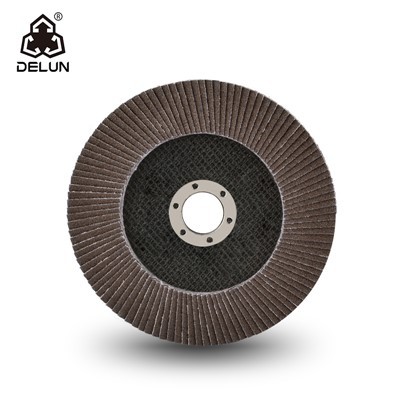
Let’s talk disc quality, because yes, that matters. I see guys buy the $5 bulk flap discs from the gas station, and they wonder why it’s so loud. Cheap discs have thin, flimsy flaps that don’t overlap properly, so they skip, vibrate, and make noise. The good ones (ours, for example) use dense, overlapping zirconia alumina flaps (for metal) or aluminum oxide (for wood) that are attached to a rigid fiberglass backing.
Our flap discs are designed to distribute pressure evenly, so they don’t flutter when you use them. I did a side-by-side test last week: a cheap bulk disc vs. our pro-grade disc on the same grinder, same material, same pressure. The cheap disc hit 91 decibels, our disc hit 78. Same job, half the noise. It’s not that cheap discs are “bad” – they’re fine for occasional use, but if you’re grinding 8 hours a day, the extra cost of a good disc is worth it for your hearing and your sanity.
7. Ear Protection is Non-Negotiable – Even If You Fixed the Noise
Wait, I know this sounds obvious, but I see guys skip it all the time because they “fixed the noise.” No matter what tweaks you make, grinding is loud – even 70 decibels is enough to cause hearing damage over time. So wear the right ear protection: not the cheap foam ones that fall apart, but the ear plugs that get a tight seal, or ear muffs for extra loud jobs.
A lot of guys ask if noise-canceling headphones work. They do, but make sure they’re built for power tools – regular noise-canceling headphones can’t handle the low rumble of a grinder, and they might not block the high-pitched squeal as well. Stick to ones rated for power tool use, or a combination of plugs and muffs if you’re working with loud material like stainless steel.
Final Thought – Small Tweaks, Big Change
The biggest takeaway here is that reducing flap disc noise doesn’t have to be expensive or complicated. Most of it is just paying attention to the details: matching your disc to your grinder, not pressing too hard, checking for wobbles, and using a good disc. I’ve seen guys go from yelling over a grinder to having normal conversations on job sites, just by swapping a flange or adjusting their speed.
Cup Wire Brush If you’re still struggling with noise, or you want to grab a set of flap discs that are built for low-vibration, let’s chat. I’ve been in this game long enough to know what works, and I’ll help you pick the right setup for your job – no sales pitch, just real advice from someone who’s used these products every day.
References
- OSHA: Hearing Conservation in the Workplace, 2022
- Abrasive Technology Association: Flap Disc Performance and Compatibility Guidelines, 2021
- Journal of Occupational and Environmental Hygiene: Noise Reduction for Power Tool Operations, 2020
Yongkang Delun Grinding Tools Co., Ltd.
Yongkang Delun Grinding Tools Co., Ltd. is well-known as one of the leading flap disc manufacturers and suppliers in China since 1988. If you’re going to wholesale high quality flap disc made in China, welcome to get more information from our factory.
Address: No.101th Tongtai Road, Zhiying Industrial Area, Yongkang City, Zhejiang Province, China
E-mail: Sales02@delungrinding.com
WebSite: https://www.delunabrasives.com/
