Hey everyone, thanks for stopping by my little corner of the web. I’m Jake, and I’ve been selling diesel forklifts for over 12 years now—handling everything from tiny 3,000 lb capacity units for small warehouses to heavy 10,000 lb monsters for construction sites. One of the most common questions I get from new customers isn’t about which model fits their daily operations—it’s about how the heck to get that big, loud machine from my yard to their dock. It’s not just “toss it on a truck and go” either; mess this up, and you could end up with a dented forklift, a messed-up trailer, or even a fine for violating road safety rules. Let me walk you through the steps I’ve refined over thousands of transports, because trust me, I’ve seen every mistake in the book. Diesel Forklift
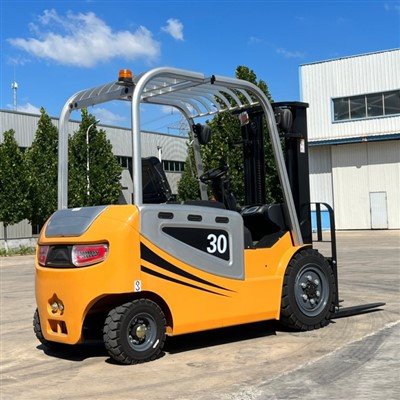
First off, before you even start thinking about trailers or straps, you need to do a quick pre-transport check on the forklift itself. This isn’t just a formality—diesel forklifts have specific quirks that gas or electric ones don’t. For starters, drain the fuel tank to only about 10% capacity. Full diesel tanks are heavy (a gallon of diesel is roughly 7 pounds, remember that math), and extra weight means higher transport costs, plus you’ve got a huge sloshing risk. I once had a customer skip this, and halfway to his site, the fuel sloshed forward, shifted the forklift’s center of gravity, and it almost toppled off the trailer. Not cool. Also, make sure the battery is secured if it’s a lead-acid model—diesel forklifts run on battery for the starter, and a loose battery bouncing around can fry the terminals or cause a short that sparks, which is a big no-no around diesel fumes. Oh, and lock the steering wheel! I don’t care if you’re moving it 10 miles or 100—if the steering jiggles mid-transport, the forklift can swing side to side and loosen your tie-downs. A quick steering wheel lock or a strong strap across the wheel works, and it takes 2 minutes flat.
Next up, picking the right trailer. This is where most first-timers go wrong. You can’t just grab a random flatbed; you need something with the right length, weight rating, and even features like ramps or a winch. Let’s break it down: first, calculate your forklift’s total weight. Let’s say you’ve got a 5,000 lb diesel forklift—add 1,000 lb for the operator’s compartment, forks, and fuel (even that 10% we talked about), so total is around 6,000 lb. Your trailer needs a weight rating at least 2,000 lb higher than that—always leave a buffer, because some roads have weight limits for different axle configurations, and extra buffer means you don’t get stuck at a weigh station. For smaller forklifts (under 6,000 lb), a single-axle flatbed works, but anything over that needs a tandem-axle. Also, make sure the trailer has a loading ramp—you don’t want to try driving a heavy forklift off the back of a flatbed with nothing but a pallet jack for support. I use heavy-duty aluminum ramps for all my transports; they’re light enough to handle alone, but strong enough to hold 12,000 lb no problem.
Once you’ve got the trailer hooked up, it’s time to load the forklift correctly. Center of gravity is everything here. For a diesel forklift, the heaviest part is the engine, which is in the back. So when driving it up the ramp, you need the forks facing forward, and the back of the forklift (where the engine is) as far back on the trailer as possible. Wait, let me repeat that: back heavy = stable. I’ve seen people flip the forklift around so forks are facing the cab, thinking that’s “balanced,” but no—you’re shifting all that engine weight forward, and if you hit a pothole, the front end can lift right off the trailer. Also, drive slow up the ramp—no flooring it. Take it at 1-2 mph, and keep the forks low, no higher than 6 inches off the trailer bed. High forks throw off the balance too. Once it’s on the trailer, don’t just park it and call it good—you need to chock the wheels. Front and back, both sides. That rubber chock thing? It’s not a gimmick. If your strap slips, the last thing you want is the forklift rolling while you’re driving. I keep a set of heavy-duty steel chocks in my transport truck for every single load, no exceptions.
Now the tie-downs—this is where mistakes get expensive. The DOT (Department of Transportation, for my US readers) has strict rules here, but even if you’re moving across state lines, cutting corners here is a bad idea. First, how many tie-downs do you need? For a forklift under 10,000 lb, you need at least two tie-downs, each rated for at least half the weight of the forklift. So for a 6,000 lb forklift, each tie-down needs to be 3,000 lb min. For anything over 10,000 lb, add a third tie-down. What kind of tie-downs? Never use rope or bungee cords. Use steel chains or heavy-duty polyester straps—polyester is better because it doesn’t stretch as much as chain, and it won’t scratch the forklift’s paint (which is a big deal if you’re selling a used one to a customer who cares about appearance). Attach the tie-downs to the forklift’s designated lifting points—look for those little metal rings on the frame, not the forks, not the cab. Those lifting points are engineered to hold the forklift’s weight, so tying to a random spot on the cab can crack the frame or pull the body panel off. Also, secure the straps tight, but not so tight that they bend the forklift’s frame. I use a ratchet strap tool that lets me adjust tension easily, and I always do a tug test—pull each strap once firmly to make sure it doesn’t slip.
Wait, there’s another thing with diesel forklifts: fumes. When you transport a running diesel forklift (even for loading), it gives off exhaust fumes that can build up in an enclosed space, but even on an open trailer, if you’re driving on the highway, those fumes can seep into the cab of your transport truck. Always turn the forklift off before you drive it up the ramp, and make sure it’s completely off during transport—no keys left in the ignition, no chance it could accidentally start. I once had a customer leave the key in a forklift he was hauling, and on a bumpy road, the key jiggled back to “on,” the engine started, and the exhaust got so bad in the driver’s cab that he had to pull over and wait for it to die. Not only that, but a running forklift uses more fuel, which would defeat the whole point of draining the tank earlier.
Now, what about shorter moves? Like if you’re moving a diesel forklift across town to another warehouse on your own, not long-distance. That’s simpler, but still has rules. For moves under 50 miles, you can use a pick-up truck with a flatbed, but only if the flatbed is rated for the forklift’s weight, and you have a brake controller on your pick-up—diesel forklifts are heavy, so they’ll make your pick-up stop way slower if you don’t have brakes designed for that load. Also, for local moves, check city road limits: some areas don’t allow vehicles over 10,000 lb on certain roads during rush hour, so avoid driving at 5 PM if you can. And if you’re driving on residential streets, watch for low-hanging power lines—forklifts have tall masts, so when the mast is up, you could hit a line and cause a blackout, or even get electrocuted. Always lower the mast completely before moving the forklift, no matter how short the trip.
I should also mention common mistakes I see customers make, because I’ve lived through all of these. Number one: ignoring weight limits on the trailer. I had a guy try to haul a 7,000 lb forklift on a 6,000 lb single-axle trailer. Halfway to his job site, the axle snapped, the forklift rolled off, and it cost him $15,000 in damage, plus he had to pay to have the trailer repaired. Don’t do that. Number two: not chocking the wheels. Another customer, moving his forklift in his own driveway, forgot to chock the rear wheels, and when he turned the key, the forklift rolled into his fence, dented it, and cracked the mast. Easy mistake, takes 30 seconds to fix. Number three: using the wrong tie-downs. I’ve seen people use paracord (yes, paracord) because they thought it was strong enough. Spoiler: a 1,000 lb paracord isn’t enough for a 5,000 lb forklift. You need actual transport-grade straps, and I always tell customers to buy them from a commercial truck supply store, not a hardware store—those are designed for heavy loads.
Now, if you’re hiring a professional transport company, what should you look for? Not all transport companies are built equal for heavy machinery. You want someone who specializes in forklifts and industrial equipment, not just regular car haulers. Ask for proof of insurance—they should have liability coverage that covers up to twice your forklift’s value, just in case something goes wrong. Also, ask for references from past forklift transports; if they can’t show you a customer who moved a diesel forklift recently, keep looking. Diesel forklifts are heavier and bulkier than cars, so a regular car hauler might not have the right trailer or experience to handle them. And get a written quote upfront—no hidden fees for weight permits or ramp rental. A lot of cheap transport companies will nickel and dime you on extras, so make sure everything is in writing before you book.
Wait, what about legal stuff? If you’re moving a forklift out of state, you might need a heavy equipment transport permit. Each state has different rules, but generally, any load over 8,000 lb or over 8 feet wide needs a permit, and you have to display those big “wide load” signs on the trailer. Also, some states require a pilot car for loads over a certain size, especially if you’re driving on two-lane roads. I always tell customers to check the DOT website for their state before booking a transport, because getting a ticket for no permit can cost more than the transport itself. I once had a customer who skipped the permit for a 9,000 lb forklift, and he got a $500 ticket in Ohio—way more than the permit cost, and it delayed his project for a day.
Let me wrap this up with a quick recap to make sure you don’t miss anything. Step 1: Prep the forklift—drain fuel to 10%, lock steering, secure battery, lower mast completely. Step 2: Pick the right trailer (weight rating 2k lb over forklift weight, ramps included). Step 3: Load the forklift centered, engine off, back heavy. Step 4: Chock wheels, secure with 2+ transport-rated tie-downs to designated frame points. Step 5: For long moves, check permits and “wide load” signs; for short moves, watch local road limits and brake controllers. Step 6: Hire a specialist if you don’t have the right gear.
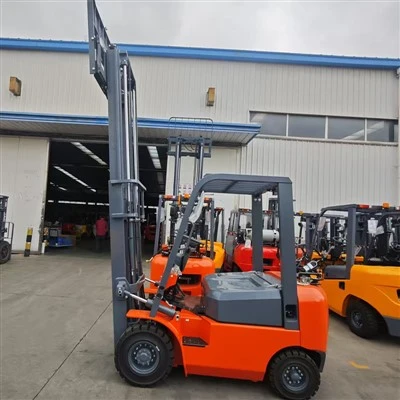
At the end of the day, transporting a diesel forklift isn’t rocket science, but it’s not something to wing either. I’ve been doing this long enough to know that a little prep goes a long way toward avoiding headaches, damage, and extra costs. If you’re in the market for a new diesel forklift, or you’re looking for help coordinating transport after you buy one, hit me up. I’ve got a fleet of my own transport drivers who handle forklift moves from coast to coast, and I can hook you up with the right trailer, the right permits, and the right setup to get your machine to your site safe and on time. Don’t risk ruining a big purchase because you skipped a step—reach out, and I’ll walk you through every part.
Warehouse Forklift References:
- U.S. Department of Transportation, Federal Motor Carrier Safety Administration. “Heavy Equipment Transport Guidelines.”
- Industrial Truck Association. “Diesel Forklift Handling and Safety Protocols.”
- National Association of Material Handling Equipment Distributors. “Best Practices for Industrial Equipment Transport.”
Qingdao Dawnshine Heavy Industry Co., Ltd.
As one of the most professional diesel forklift manufacturers and suppliers in China, we have world-leading production equipment and strong manufacturing capabilities. Welcome to wholesale discount diesel forklift in stock here and get quotation from our factory. For price consultation, contact us.
Address: South Side of Qiwang Road, Yueshan Village, Naoshan Economic Development Zone, Qingzhou City, Shandong Province, China
E-mail: laven.wang@china-dawnshine.com
WebSite: https://www.ds-forklift.com/
