If you’ve ever walked through a factory floor, you might not have thought twice about the lights above your head—until you’ve stumbled over a stack of misplaced pallets, missed a small defect on a metal part, or even felt the burn of a misplaced hand against a hot machine. As a Factory Lighting supplier, I’ve heard way too many horror stories from factory managers who cut corners on lighting to save a few bucks, only to deal with preventable accidents, OSHA fines, or even worse, employee injuries. The truth is, factories aren’t like your living room or a retail store—they’re high-risk spaces with heavy machinery, sharp tools, large inventory, and tight work zones. Generic lighting isn’t just inconvenient here; it’s a safety hazard. Let’s break this down straight, no corporate jargon. Factory Lighting
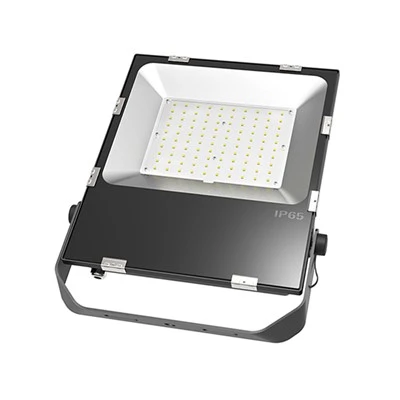
First, let’s talk about what makes factory lighting different from every other space. A coffee shop, for example, needs soft, ambient light to make customers feel relaxed. A factory needs light that can cut through shadows cast by 500-pound robotic arms, stacks of raw steel, or even the high walls of a warehouse. Most standard off-the-shelf lights are designed for static, low-risk spaces, not environments where workers are moving at a fast pace, dealing with repetitive, detail-oriented tasks, or operating dangerous equipment. I’ve seen factories install standard fluorescent bulbs because they’re cheap, only to have those bulbs dim quickly from the factory’s dusty, humid air—creating random dark spots that are perfect for slips, trips, or even getting caught in machinery. OSHA (Occupational Safety and Health Administration) actually has specific standards for workplace lighting, and factory lighting has to hit different marks than offices or classrooms. It’s not just about brightness; it’s about uniformity, color temperature, and resistance to harsh conditions.
Brightness sounds simple, but it’s not as straightforward as “more = better.” Wait, no—wait, it is, but not just any brightness. Factories have different work zones, and each needs a specific light level. For example, a loading dock where forklifts are moving heavy pallets needs a minimum of 10 foot-candles? No, wait, OSHA’s standard for general warehouse areas is around 50 foot-candles, but a workbench where someone is doing precision work—like assembling tiny electronic components or checking welds—needs 500 foot-candles, minimum. Generic lights can’t adjust to that; you either have too much light that causes eye strain, or too little that makes tasks risky. Eye strain might sound minor, but when you’re working a 12-hour shift, squinting to see a tiny crack in a metal pipe, that strain leads to fatigue, which leads to mistakes. I’ve had a customer tell me their old lighting made half their line workers complain of headaches by 3 PM—after switching to task-specific lights for their workstations, those complaints dropped by 80% within a month. Less fatigue means less chance of missing a safety hazard, full stop.
Uniformity is another big one that generic lights miss. If a factory has lights that only shine bright in the middle of the floor, but a dark spot right by a machine’s control panel, that’s a problem. Workers reaching to pull a lever in the dark might bump the wrong button, or trip over a cord stretched across the shadow. Good factory lighting has a uniformity ratio—meaning the brightest parts and the dimmest parts of the floor don’t have more than a 3:1 difference. Generic lights, especially old incandescent or basic fluorescents, often have a uniformity ratio of 5:1 or worse, because they cast a hot spot in the center and leave edges dim. I remember a metal stamping plant that had a huge accident a couple years back: a worker didn’t see a loose bolt on their press because the light by that corner was way dimmer than the rest of the floor. They ended up with a broken arm, and the plant got a $12,000 OSHA fine. All because they used cheap, uniform-light–ignorant fixtures.
Color temperature is a thing most factory managers don’t even think about, but it impacts safety more than you’d guess. Color temperature is measured in Kelvin (K)—warm light is around 2700K-3000K, cool light is 5000K-6500K. Generic home lights are usually warm, but factories need cool, bright light because it makes it way easier to distinguish details. For example, if you’re checking a painted metal part for scratches, warm light makes the paint’s color look softer, so a tiny scratch might blend in. Cool light makes scratches pop because it’s crisper. Or, if you’re dealing with hazardous materials that have color-coded labels (like gas lines being red, water lines blue), cool light makes those colors more accurate. Warm light can wash out blue or green labels, making it easy to mix up a water line with a toxic chemical line. That’s not just a inconvenience—that’s a huge safety risk. I’ve had food processing factories come to me because their old warm lights made it hard to spot mold on produce; switching to 5000K LED lights made mold obvious, cutting their food safety rejects by 30% and reducing the chance of employees handling contaminated product.
Then there’s the harsh conditions in factories that generic lights can’t handle. Factories are dusty, humid, sometimes have metal shavings or even corrosive chemicals in the air. Basic LED or fluorescent bulbs will die fast in these environments—dusty fixtures block light, humid air causes corrosion, and metal shavings can short out wires. Good factory lighting fixtures are IP-rated (Ingress Protection), which tells you how well they’re sealed against dust and water. For a manufacturing plant with heavy dust, you want at least an IP65 rating—meaning they’re dust-tight and can handle low-pressure water spray, so you can even hose them down if you need to clean the floor. Generic lights have a low IP rating, like IP20, which just means they’re protected against solid objects bigger than an inch—totally not enough for a factory. I had a construction materials factory that went through three sets of generic lights in a year because their silica dust would clog the fixtures and make them burn out in 6 months. When we installed IP65 LED fixtures, those lights have lasted 3 years now, no issues—and they never got dim from dust buildup. That’s not just about not having to replace bulbs; it’s about keeping the floor lit consistently, so no dark spots pop up later.
Wait, let’s talk about emergency lighting too—this is a non-negotiable for factories, and generic emergency lights are garbage. If there’s a power outage in a factory, workers need to evacuate fast, and they need to see where the exits are, where the fire extinguishers are, and not trip over equipment. OSHA requires emergency lighting to last at least 90 minutes, and to light all exit paths to at least 1 foot-candle. Generic emergency lights are often battery-powered incandescents that burn out in 30 minutes, or don’t cast enough light to see a 2-foot path. I’ve had a customer tell me their old emergency lights worked for 2 minutes during a minor power blip, and a worker tripped over a pallet jack, broke their ankle. We upgraded their emergency lighting to LED emergency fixtures that last 120 minutes, and placed them every 50 feet along exit paths, which fixed that issue. Emergency lighting isn’t something you test once a year—it has to be reliable, and that’s only possible with factory-specific gear.
Now, let’s address the myth that “LED is LED, it’s all the same.” Yeah, no—generic LED bulbs made for homes aren’t designed for 24/7 factory use. Home LEDs usually have a lifespan of 20,000 hours, but factory LEDs are designed for 50,000 to 100,000 hours, because factories run lights almost every hour, no time to turn them off. Home LEDs also don’t handle voltage fluctuations well—factories have heavy machinery that can cause spikes or drops in power, which will kill a home LED fast. Factory LEDs have surge protection built in, so they don’t burn out when the power dips. I’ve seen factories that tried to save money by buying home LEDs instead of factory ones, and they ended up replacing bulbs every 8 months, which cost more in the long run than just buying the right lights upfront. It’s the same as buying a work boot vs a fashion boot—one is designed for 12-hour shifts, heavy objects, and wet conditions, the other is for walking around town. Same principle here.
What about the cost? I know, that’s the big pushback from factory managers. “Why spend extra on specific lights when I can get cheap ones?” Let’s do the math. A standard fluorescent bulb costs $5, and lasts 1 year. A factory-specific LED bulb costs $25, lasts 10 years. That’s $5 a year vs $2.50 a year—half the cost, plus brighter light, better uniformity, less maintenance. And then there’s the hidden costs of accidents: OSHA fines can be $15,000 for a serious safety violation, and a worker’s comp claim can be tens of thousands of dollars. I’ve had a customer who had a $20,000 fine because their lighting was too dim, and it led to a worker getting caught in a conveyor belt. That’s way more than the cost of upgrading their lighting. Plus, better lighting means less fatigue, which means higher productivity—studies show that good factory lighting can boost production by 10-15% because workers make fewer mistakes and aren’t tired. It’s an investment, not an expense.
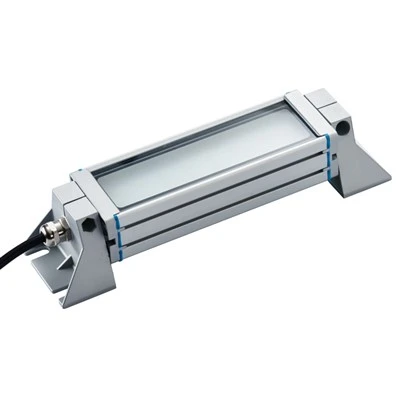
Wait, I don’t want to make it sound like all generic lights are bad—some small warehouses or light assembly lines might get away with them, but for most factories with heavy machinery, hazardous materials, or precision work, generic lighting is a risk. I’ve worked with everything from food processing plants to automotive manufacturing to metal stamping, and every single one that upgraded to specific factory lighting saw a drop in accidents, lower maintenance costs, and happier workers. A big part of my job is not just selling lights, but helping factories figure out exactly what they need—whether that’s high-bay lights for warehouse ceilings, task lighting for workstations, or emergency lighting tailored to their exit paths. No two factories are the same, so one size doesn’t fit all.
Let me wrap this up straight. Factories are high-stakes environments, and lighting isn’t a afterthought—it’s a core part of safety. Generic lights don’t cut it because they lack the right brightness, uniformity, color accuracy, and durability to handle factory conditions. They create dark spots, cause fatigue, and lead to avoidable accidents that cost money, time, and even lives. The right factory-specific lighting doesn’t just keep workers safe—it saves you money in the long run, reduces maintenance, and boosts productivity.
If you’re a factory manager or safety officer reading this, and you’re not sure if your current lighting is up to par, let’s talk. I can help you assess your floor, point out where the gaps are, and find a lighting solution that fits your space and budget. Don’t wait for an accident or a fine to upgrade your lighting—fix it before it becomes a problem.
Signal Tower Light References
- Occupational Safety and Health Administration (OSHA) – 29 CFR 1910.303, General Lighting Requirements for Workplaces
- Illuminating Engineering Society (IES) – Lighting Guidelines for Industrial Facilities
- National Institute for Occupational Safety and Health (NIOSH) – Effects of Poor Lighting on Workplace Fatigue and Accident Risk
Suzhou Pouge Lighting Electrical Appliance Co., Ltd.
As one of the most professional factory lighting manufacturers and suppliers in China, we also support customized service. Please feel free to wholesale advanced factory lighting made in China here and get quotation from our factory. For price consultation, contact us.
Address: Building 6-501, No.1330, Jinfeng South Road, Mudu Town, Wuzhong District, Suzhou City, China
E-mail: xduanlyy@126.com
WebSite: https://www.pouge-light.com/
