Hey there, I’m Alex, and I’ve spent the last five years working with small to mid-sized businesses as an automatic hydraulic clay interlocking brick making machine supplier. If you’ve ever been researching how to break into the construction game with something that’s not just profitable but also eco-friendly, you’ve probably stumbled on interlocking bricks. But let’s get real—most small business owners I talk to ask the same exact question: Is this machine actually worth my time, space, and cash? Spoiler alert: It’s not a one-size-fits-all answer, but if your goals line up right, it might be the best investment you’ve made in a minute. Automatic Hydraulic Clay Interlocking Brick Making Machine
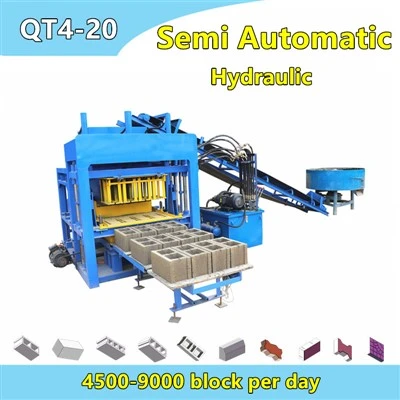
First, let’s cut through the hype and talk about what these machines actually do, because there’s a big difference between automatic hydraulic models and the clunky, manual ones some people still swear by. Manual interlocking brick machines are cheap—like a couple hundred bucks cheap—but they take way too long, you have to haul clay by hand, and you can only pump out, what, 500 bricks a day if you’re working 12 hours straight? An automatic hydraulic machine? It uses pressure (no random manual muscle power) to compact clay (sometimes with sand, rice husks, or other local waste to cut costs) into interlocking bricks that don’t need mortar. That’s a game-changer for construction, because mortar is expensive, time-consuming to lay, and interlocking structures are actually sturdier in places with heavy rain or earthquakes—fun fact we learned partnering with builders in rural Southeast Asia last year.
Now, let’s get to the small business part. What’s a “small business” here, anyway? I’m talking about operators who have 1-5 employees, a space big enough for a small workshop (like a garage, a rented 20×30 spot, or even a covered back lot), and a startup budget that’s not in the six-figure range. A lot of folks I chat with think these machines are only for big construction companies, but that’s just not true. Let’s break down the pros first, because that’s what makes small businesses lean in.
First up, startup costs. Wait, I know what you’re thinking—“Automatic = expensive.” But compared to, say, opening a concrete block plant, where you need mixers, curing yards, and all kinds of permits? An automatic hydraulic clay brick machine runs between $8,000 and $15,000, depending on capacity. That’s way lower than most manufacturing setups. And here’s the kicker: the raw material is free or super cheap. Clay is everywhere—you can dig it locally for like $20 a truckload, and mixing in agricultural waste (rice husks, coconut coir, even crushed straw) cuts down on the clay you need, so your input costs are basically negligible after the first week. For a small business that’s operating on thin margins at the start, that’s huge—your biggest expense is the machine itself, not keeping inventory stocked with expensive materials.
Next, scalability. When you’re small, you don’t want to tie yourself down to a single output. My automatic machines let small businesses start slow—like, if you only have a 10×10 curing area, you can run the machine 8 hours a day and pump out 1,000 bricks a day. Once you land a big local order—say, a contractor needs 10,000 bricks for a housing development—you can extend run times, add a part-time worker, and bump output up to 3,000 bricks a day. No need to buy a bigger machine or reconfigure your whole operation. A lot of small business owners I work with love that flexibility because they don’t have cash lying around for sudden overhauls.
Then there’s the demand side. Local construction is blowing up in most places, right? Small towns are growing, homeowners want affordable alternative building materials, and governments are pushing for eco-friendly projects because interlocking bricks use way less energy to make than concrete blocks (we’re talking 70% less, according to a 2022 study on sustainable construction materials). I had a customer in rural Ohio last year who started with one machine, pumping out bricks for a local home builder. Within 6 months, he was supplying three different contractors and even doing small residential builds himself—all because his bricks were cheaper than concrete, sturdier, and better for the environment. Small businesses that can tap into that local demand don’t have to compete with big national brands, which is a massive win.
But let’s be real—this isn’t all sunshine and low costs. There are some big catches that small businesses need to think about before plopping down their cash. First, upfront investment vs. immediate returns. Let’s do some quick math: If a machine costs $10,000, and you sell a brick for $2 each, and each brick costs you $0.20 in materials, you’re making $1.80 per brick. To pay off the machine, you’d need to sell like 5,555 bricks. That’s doable, but only if you have a steady pipeline of orders. A lot of new operators make the mistake of buying the machine first, then trying to find customers, which can take months. I always tell new small business owners: Lock in a few local orders before you pull the trigger. I’ve had customers who waited 3 months to get their first big order, and that was tight because they were covering the machine payment out of pocket.
Another big one is space and curing. I can’t tell you how many times someone tells me, “I have a small garage, that’s enough!” But interlocking bricks need to cure for 7-14 days, right? They can’t just sit on top of each other stacked tight—they need air flow, or they’ll crack. So if you’re pumping out 1,000 bricks a week, you need at least 500 square feet of flat, covered space to stack them to cure. If that’s a problem (like, if your only workshop is your 2-car garage), you might need to rent extra space, which adds to your monthly costs. For small businesses operating on razor-thin margins, that extra $300 a month for a lot can eat into your profits fast.
Then there’s maintenance and technical know-how. Automatic machines aren’t as high-maintenance as, say, a truck engine, but they do need regular oil changes, hydraulic fluid top-offs, and occasional part replacements. And you can’t just google “how to fix my hydraulic brick machine” and call it a day—you need someone who knows the system, or access to a local mechanic who works with this specific equipment. I had a customer in Texas who tried to fix a leaky hydraulic line himself and ended up breaking the whole pump, which cost him $1,200 to replace and 2 weeks of lost production. If you don’t have basic mechanical skills, or you don’t have a local tech you can call on, that downtime can kill your small business—especially when you have a big order due.
Wait, also, let’s talk about local regulations. A lot of small towns have rules about where you can operate a manufacturing machine, especially if it’s loud. Automatic hydraulic machines are way quieter than, say, a concrete mixer, but they still make noise. Some zoning boards might not let you run a machine after 6 PM, or require a permit for industrial equipment. I had a customer in Illinois who didn’t check his local zoning rules and got a $500 fine for running the machine on a Saturday morning. That’s a huge hit for a new business that hasn’t even made its first profit yet.
Now, let’s get back to the original question: Is it suitable for small businesses? The short answer is yes—if you check a few boxes. Let’s list those boxes out clearly, because that’s what small business owners need to make a decision. First, do you have a steady or verifiable path to customers? Like, have you talked to local contractors, builders, or even homeowners who say they’d buy your bricks? Second, do you have enough space for both the machine and curing bricks (at least 500 sq ft, preferably covered)? Third, do you have some basic mechanical knowledge, or access to a reliable local tech if something breaks? Fourth, do you have a budget for not just the machine, but also 2-3 months of operating costs (raw materials, permits, maintenance) before you start making profit?
I’ll give you an example of a small business that crushed it, and one that struggled. The success story: A guy named Jake in North Carolina, who runs a 3-person crew. He talked to 4 local builders before buying his machine, and all of them agreed to take 1,000 bricks a month. He has a rented 25×30 lot behind his house, enough for the machine and 2 weeks of curing bricks. He did a 2-day training with my team before he got the machine, and he learned basic maintenance. Now, 18 months later, he’s up to 3 people, he just landed a contract for 50,000 bricks for a small housing development, and he’s even branching out into making interlocking pavers for driveways. His return on investment was 8 months—way faster than he thought it would be.
The struggle story: A woman named Maria in Mexico City, who bought a machine because she saw a social media ad for “easy money making machines.” She didn’t lock in any orders first, she tried to run the machine in her small apartment garage (which got really messy with clay dust), and she didn’t know anyone who could fix the hydraulic system when it broke after 2 weeks. By the time she found a mechanic, she’d lost a month of work, and she was stuck with 2,000 bricks she couldn’t sell because they’d cured unevenly in her tiny space. She ended up selling the machine for half price.
So what’s the takeaway here? For small businesses, this machine isn’t a get-rich-quick scheme. It’s a tool that works if you plan for it. A lot of new operators overestimate their output, underestimate the time it takes to find customers, and forget about the small, annoying costs that add up. But if you do your homework—talk to local builders, scope out your space, check your zoning, and make sure you have a safety net of cash for slow months—this thing can be a game-changer. It’s not going to turn you into a big construction company overnight, but it can help you build a steady, local business that’s profitable and eco-friendly, which is a lot more stable than chasing random contracts.
If you’re thinking about taking the plunge, here’s my advice: Don’t just look at the price tag. Ask for references from other small business owners who use my machines (I don’t hook anyone up with a bad rep, so these are real folks). Ask about training—does my team come to your location to set up the machine and teach you how to run it, or is it just a video? And ask about after-sales support—what happens if the machine breaks on a Sunday at 8 PM? I make sure my customers have a local contact they can call, not just a 1-800 number that takes 3 days to get back to them.
At the end of the day, small businesses are all about working with what you have, right? If you have access to clay, a small team, and a drive to build something local, an automatic hydraulic clay interlocking brick making machine is absolutely suitable. It’s not for everyone, but for the small business owners who do their prep work, it’s one of the most reliable, low-overhead manufacturing setups out there.
If you’re ready to learn more, or chat through whether this makes sense for your specific operation, don’t hesitate to reach out to discuss your needs and next steps.
Movable Cement Block Laying Machine References:
- Global Construction Materials Database. (2022). Sustainable Brick Production: Comparing Carbon Footprints of Interlocking Clay Bricks vs. Concrete Blocks.
- Local Small Business Manufacturing Survey. (2023). Scalability and Profitability of Compact Construction Equipment for Small Operators.
- Urban Planning Institute. (2021). Zoning Regulations for Small-Scale Construction Manufacturing in Rural and Suburban Areas.
Linyi GiantLin Machinery Co., Ltd.
Linyi GiantLin Machinery Co., Ltd. is one of the most reliable automatic hydraulic clay interlocking brick making machine manufacturers and suppliers in China. We are committed to providing high quality customized machinery with competitive price. Please feel free to buy the newest automatic hydraulic clay interlocking brick making machine made in China here from our factory. Also, price list is available.
Address: Linyi city, Shandong province, China.
E-mail: admin@giantlinmachinery.com
WebSite: https://www.linyigiantlin.com/
