If you’ve ever walked past a machine that heated a metal bolt in seconds without a flame, or watched a forge operator pull a red-hot part out of a coil without touching it, you’ve seen induction heating in action. As someone who’s been supplying induction heating machines for over a decade, I still get asked the same question a lot: “How does this even work, no torch, no water, no contact?” It’s not magic, but it feels like it sometimes—so let’s break it down, plain and simple, no overly technical jargon, and maybe a couple of things even the folks who’ve used our machines for years might not have known. Induction Heating Machine
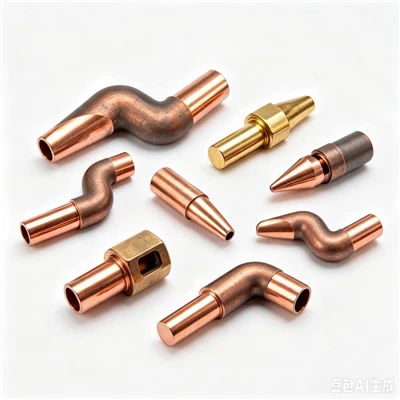
First, let’s start with the basics you probably remember from high school physics, but let’s skip the boring textbook version. Induction heating relies on two core electrical ideas: electromagnetic induction and Joule heating. Wait, don’t zone out—stick with me, I’ll tie this directly to why our machines work the way they do. Let’s set a common scenario, like heating a steel rod to bend it for a car part: when you run electricity through a coil of copper wire (that’s the “induction coil” part), that creates a magnetic field around the coil. If you set the steel rod inside that coil, not touching any part of the machine at all, the magnetic field doesn’t just sit there—it interacts with the metal. That interaction is where the heat comes from, and it happens because of two separate effects that work together, let’s call them Eddy Currents and Hysteresis Losses.
Eddy Currents are the big one people hear about first. Think of the metal rod (or whatever part you’re heating) as a closed loop of wire. The changing magnetic field from the induction coil cuts through that loop, just like spinning a wire inside a magnet to make electricity in a generator. Only here, we’re not making electricity to power a light bulb—we’re making it circulate inside the metal itself. That’s a loop of electricity moving through the metal, which has some electrical resistance (all metals do, even good ones like copper or steel). When electricity flows through a resistant material, it generates heat—those are Joule losses, right? The same thing that makes a toaster element glow red. For induction heating, the faster you flip the direction of the electricity running through the coil, the faster the magnetic field flips, so the eddy currents in the metal get bigger, and the heat gets hotter. That’s why our machines let you dial in the frequency: low frequency for big, thick parts like steel pipes, high frequency for tiny things like welding small metal pins. Makes sense, right?
Then there’s Hysteresis Losses, which only happens with magnetic metals like steel, iron, or nickel—aluminum and copper don’t get this part, that’s why we have to pick the right machine for the job. Magnetic metals have little tiny magnetic domains inside them, like mini bar magnets. When a magnetic field flips back and forth, those domains have to spin around to line up with the new direction of the field. That spinning creates friction inside the metal, and friction equals heat. No wonder steel heats up way faster than copper in the same coil—it’s getting heat from both eddy currents and hysteresis, while copper only gets eddy current heat. That’s why we always tell new customers: if you’re heating non-ferrous metals, you don’t need as much power as you would for the same size steel part.
Wait, let’s clear up a common myth here: people always think the coil gets hot, right? No, not usually. The induction coil is made of copper, and we run really high frequencies through it—wait, no, actually, we also cool it, because even though it doesn’t generate as much heat as the part, the electrical resistance in the coil does make some heat. We use water-cooled coils for almost every machine we sell, because if the coil gets too hot, it can melt, and you’ve got a mess on your hands. That’s a small detail, but it’s why our machines come with standard cooling kits, not an afterthought.
Now, how does the machine control all this? You don’t just plug a coil into the wall and expect it to heat metal, that’s a fire hazard and a waste of power. The core of any induction heating machine is the power supply—most of the ones we sell are solid-state now, not the old vacuum tube ones that were big and finicky. Let’s break that down step by step: first, the power supply takes the regular alternating current (AC) from your outlet, which is 50 or 60 hertz (Hz), way too slow for good induction heating. It converts that to direct current (DC), then flips it back to AC at whatever frequency you need—from 1 kHz for thick parts up to 1 MHz for tiny, precise jobs. That’s the inverter part, and the better the inverter, the more efficiently the machine works. We use IGBT inverters (Insulated-Gate Bipolar Transistors, in case you care) because they’re way more efficient than the old SCR ones, so you spend less on electricity and less on repairs down the line.
Another thing a lot of customers don’t realize: induction heating is super precise. If you need to heat just the end of a steel rod, not the whole thing, you adjust the coil size and the frequency. The magnetic field is strongest closest to the coil, so if you use a coil that’s just the right size for the end of the rod, the eddy currents get concentrated there, not spread out. That’s called the “skin effect”—oh, right, I forgot that term earlier. The skin effect is why eddy currents don’t spread evenly through the metal; they stay close to the surface, more or less. Higher frequencies make the eddy currents even closer to the surface, which is perfect for surface hardening, like making a gear’s wear surface hard without making the whole gear brittle. Lower frequencies let the eddy currents penetrate deeper, which is for heating thick parts like forging a large shaft. That’s why we have a range of machines, not one-size-fits-all—we can match the frequency and power to exactly what your part needs.
Let’s talk about some real-world uses to make this concrete, because theories are great, but induction heating solves problems most other methods can’t. Take brazing a copper pipe to a brass fitting—with a torch, you have to heat the whole pipe, which can warp the plastic fittings nearby, or waste gas. Induction heating heats only the joint, so it’s fast, no flame, no risk of burning nearby parts. Or annealing a steel part to make it less brittle—induction lets you heat it evenly and cool it at a controlled rate, way faster than a furnace, so it fits right into your production line without waiting hours for the furnace to heat up and cool down. Even for melting small metals, like gold or silver for jewelry, induction works because you can put the metal inside a crucible inside the coil, and it heats without any contact, so no contamination from a torch or furnace.
Now, let’s get to a part that matters when you’re buying a machine: efficiency. How much power you put in vs. how much heat you get in the part. Old induction machines were around 50% efficient, meaning half the power went to waste as heat. The solid-state machines we supply are 85% to 95% efficient, which adds up over months and years of production. That’s not just a sales pitch—that’s lower utility bills for you, less stress on your electrical system, and less downtime from overheating parts. We’ve had customers tell us they saved enough on electricity in the first year to cover most of the machine’s cost, which is a big deal for small to mid-sized shops.
Wait, are there any downsides? Nothing’s perfect. Induction heating only works on conductive materials, so you can’t heat plastic or glass with it. And it works best when the part is sitting right in the coil—offset it too much, and the heat drops off. But those are small trade-offs compared to the benefits: no open flame, so safer for shops with lots of flammable materials; precise heat, so less scrap parts; fast cycle times, so higher production rates. We also offer custom coils for just about any part—if you need to heat a weirdly shaped valve or a small pin, we can build a coil that fits exactly, no need to make do with a one-size coil that doesn’t work well.
I’ve been in this game long enough to see a lot of induction machines come and go, but the working principle hasn’t changed in decades—we just make it better, smaller, more efficient, and easier to use. When a customer first calls us, they often say, “I tried a machine from X brand and it didn’t work for my parts,” and 9 times out of 10, it’s because the frequency or power was wrong, not because the principle is broken. That’s why we spend time asking questions: what material are you heating? What size is the part? Do you need to heat the whole part, just the surface, or just a small section? Those details matter more than any fancy tech spec on a website.
So, to wrap this up in plain terms: induction heating works by using a coil to make a magnetic field, which creates electric currents inside your metal part, those currents generate heat because of electrical resistance, and the amount of heat, where it goes, and how fast it happens is controlled by the frequency of the current you run through the coil, and how much power you put in. No contact, no flame, super precise, and way more efficient than most old heating methods.
Projection Welding Machines If you’re tired of dealing with inconsistent heat, wasteful energy, or downtime from unreliable heating equipment, we’ve got machines sized for every job—from small bench-top units for a 1-person jewelry shop to big industrial systems for forging plants. We don’t do one-size-fits-all, because we know your parts and needs are unique. Reach out to our team to talk through your project, get a recommendation, or even a test run with a sample part.
References
- Davies, E. J., & Simpson, P. T. (1979). Induction Heating Handbook. McGraw-Hill.
- Zinn, S., & Semiatin, S. L. (1988). Elements of Induction Heating: Design, Control, and Applications. ASM International.
- The Induction Heating Association. (2022). "Basic Principles of Induction Heating" Industry Guidelines.
Dongguan Huineng Welding Equipment Co., Ltd.
We are one of the most experienced induction heating machine manufacturers and suppliers in China. With a professional production team, we offer a wide range of products with superior quality. Please feel free to buy customized induction heating machine at competitive price from our factory.
Address: 530 Guantai Road, Xitou Village, Houjie Town, Dongguan City, Guangdong Province
E-mail: fengshanggang75@126.com
WebSite: https://www.huinengwelder.com/
