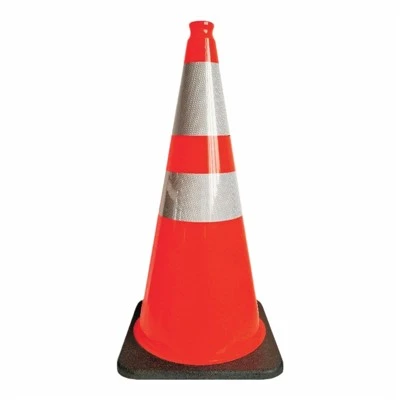
If you’ve ever stood on the curb during a small-town parade, watching floats weave around a corner, marchers stay in line, and kids darting between bleachers, you might not have noticed the bright orange traffic cones that hold the whole chaos together. As a supplier of these cones, I’ve spent years driving to parade routes at 5 a.m., helping event coordinators figure out exactly how many cones they need, and troubleshooting last-minute issues like wind tipping them over or a parade route that shifted overnight. It’s not just about setting out a bunch of orange plastic triangles; it’s about balancing safety, flow, and that unspoken order that makes every parade feel fun, not stressful. Today, I want to walk you through how I work with event organizers to use our orange traffic cones for parade routes—stuff I’ve learned from 12 years of doing this, not just from a manual. Orange Traffic Cones
First, before we even touch a cone, we start with route mapping, and this is the part most people skip. Parades aren’t random; they have start points (usually a side street with enough space for the band to line up), a main route through downtown, and an end point where everyone can disperse without blocking traffic. When an organizer calls me a month out, the first thing we do is get a copy of their official route map—no Google Maps pins, no rough sketches—and mark every critical spot where cones will be non-negotiable. Let’s break down those spots.
The first big zone is the staging area, where all the units line up an hour before the parade starts. This is usually a side street or a parking lot, and if you don’t mark it with cones, you get everything from parked cars (which block band trucks) to families setting up coolers right where the high school marching band needs to step. For staging, I recommend using 18-inch heavy-duty cones, not the smaller 12-inch ones. Why? Staging areas are often gravel or uneven asphalt, so lighter cones get knocked over by a stray wind gust or a volunteer hauling a table. I tell organizers to space these staging cones every 3 feet along the edges of the lane—close enough that no band member or float driver strays into a car spot, but far enough that a group of kids won’t trip over a line of them when they’re warming up. I always remind them to add an extra 10% of cones here, just in case a few get dragged to get a better view of the parade and go missing.
Next, we move to the main parade route, and this is where most people mess up spacing. A common mistake I see is organizers putting cones every 10 feet along the entire route, which wastes half the cones and doesn’t actually control traffic. Parades have different needs in different parts of the route. For example, straightaways on wide main streets—you can space cones every 50 feet here, because there’s no risk of a float veering when the road is 40 feet wide and straight. The key is that the space between cones on a straightaway should be less than the length of the longest float in the parade. If your longest float is 30 feet, 50-foot gaps work because the cone will be visible to the driver long before they reach the next one. But on turns? That’s where you need to shrink the gaps to 20 feet, max. Turns are the trickiest part of a parade route—float drivers are usually volunteers, not professional truckers, and even a small turn can make a 40-foot float swing wide. I once worked a small-town parade where the organizer used 50-foot gaps on a right turn, and the high school’s giant superhero float swung into the opposite lane, almost hitting a family that had set up chairs there. We’ve never made that mistake again; turns get extra cones, no exceptions.
Crosswalks and intersections are another critical zone. Most parades have to share the road with regular traffic during setup or cleanup, but the parade itself usually closes streets to cars. Still, pedestrians don’t always get the memo, and parade units—especially horses or marching bands with big bass drums—need clear space to cross side streets. At crosswalks that run parallel to the parade route, I tell organizers to use a mix of cones and traffic flags, but place cones every 15 feet along the crosswalk edge. At actual intersections where the parade crosses a main road, we add double rows of cones on both sides of the crosswalk, and we always put a “traffic cone person” there to hold up a hand signal if a car tries to sneak through (even if the street is supposed to be closed). Last year, I had an event in a small suburb where a dad drove his minivan through a parade intersection because he thought the street was only closed for 10 minutes—our double row of cones stopped him before he hit the color guard marching across, and he apologized once he saw his mistake. It’s a small detail, but those double rows are non-negotiable for intersections.
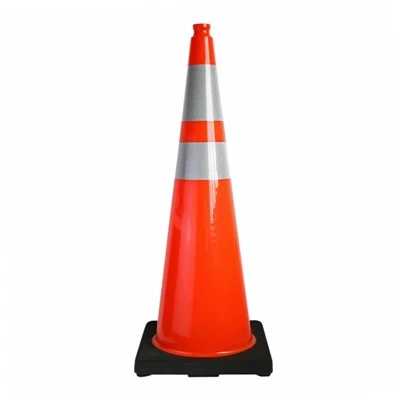
Now, we get to the stuff that happens when the parade is actually running: maintaining the cones. Cones don’t just sit there all day—they get knocked over by a toddler chasing a balloon, a band member dropping a baton, or a float’s side mirror catching a cone’s base. I always tell organizers to assign two “cone runners” to walk the route during the parade. Their job is to pick up fallen cones and re-set them immediately, so the next unit doesn’t hit a gap in the line. We also have a trick for windy days: if a forecast calls for 20+ mph winds, we use weighted cone bases, not the standard plastic bases. Our weighted cones are filled with sand or water, and they’re designed to tip over on impact but not blow away in a storm. Last spring, a parade in Chicago had a gust of wind that picked up regular 18-inch cones and rolled them into the street—our weighted cones stayed in place, and we didn’t have any cones causing a traffic hazard for the few cars that were still moving on adjacent streets. I always ask organizers about the weather forecast when they book, and if it’s going to be even a little windy, I push for the weighted bases, even if they cost a few extra dollars. No one wants to spend a parade chasing a dozen rolling orange cones.
Storage and cleanup is another part that a lot of event coordinators overlook. After the parade ends, you have to take all those cones down, and if you do it wrong, you’ll have cones scattered around town for weeks, or worse, a cone left on a side street that causes a car crash. I give every customer a free reusable carry bag for every 50 cones they buy, so they can stack them neatly after the parade, instead of leaving them in a heap on the curb. I also remind them to assign a cleanup lead to walk the entire route twice after the last unit passes—once right after the parade ends, and again an hour later, just in case a cone got pushed into a gutter or under a bench. Last summer, a customer forgot to do a second walkthrough, and we got a call three days later from a local police department saying a cone had been found in a bike lane, and they wanted to know who owned it. We offered to come pick up the leftover cones and take them to our warehouse, which saved the event organizer a headache, and that’s the kind of service I strive for as a supplier, not just a cone seller.
I know some people think orange traffic cones are just a commodity—you grab a handful from the local hardware store, set them out, and go. But after 12 years of working with parades big and small, I can tell you that’s not true. A cone that’s spaced wrong can ruin a parade, a cone that’s too light can become a hazard, and skipping the cleanup step can leave a mess for the whole community. We don’t just sell cones; we help people plan for the unexpected, whether that’s a last-minute turn in the route or a sudden gust of wind that blows through.
If you’re planning a parade, big or small, and you’re not sure how many cones you need, or what kind will work best for your route, I’m here to help. I’ve worked with everything from 10-unit neighborhood parades to 100-unit holiday parades in downtown areas, and I can walk you through every step of the process, from route mapping to cleanup. The last thing you want on parade day is to be running to the store for extra cones, or worrying about a hazard that could have been avoided with a little planning. Reach out to us to discuss your upcoming parade route needs—we’re ready to help make your parade safe, fun, and smooth from start to finish.
Orange Traffic Cones References
- Federal Highway Administration. (2020). Manual on Uniform Traffic Control Devices (MUTCD) for Roadways. U.S. Department of Transportation.
- National Association of Event Coordinators. (2021). Guide to Traffic Control for Community Events and Parades. NECA Publications.
- Local Government Commission. (2019). Safe Pedestrian and Parade Route Planning for Small Towns and Suburbs. LGC Technical Report Series.
Taizhou Savimold Co., Ltd.
We are one of the most experienced orange traffic cones manufacturers and suppliers in China. With a professional production team, we offer a wide range of products with superior quality. Please feel free to buy customized orange traffic cones at competitive price from our factory. Welcome to contact us for quotation.
Address: No.227, Xindajie, Xinqiao Town, Luqiao District, Taizhou City, Zhejiang Province
E-mail: tzsavi@163.com
WebSite: https://www.smttraffic.com/
