If you’ve ever stood in a busy office, a sprawling warehouse, or a multi-floor retail space troubleshooting a dropped wireless device connection, you’ve probably asked a common question: what’s the maximum distance a wireless controller can maintain a stable link with access points (APs)? As a wireless controller supplier that’s worked with thousands of businesses over the past decade, I can tell you the answer isn’t a simple number—it depends on far more than just radio waves. Let’s break down the science, the real-world variables, and what that means for your network design. Wireless Controller

First, let’s ground this in basic wireless technology. A wireless controller acts as the central “brain” of a modern Wi-Fi network, coordinating all connected APs, managing traffic, and ensuring seamless roaming for devices like laptops, phones, and IoT sensors. The distance between the controller and its APs depends on two distinct communication paths: the backhaul link (between the controller and each AP) and the client-facing link (between APs and end devices). For our work as a controller supplier, we focus almost entirely on the backhaul, because that’s the path that directly impacts network uptime—drop a client connection, you can reorient a device; drop a backhaul link between controller and AP, and that entire AP goes offline, no matter how close it is to users.
The maximum backhaul distance isn’t set by a hard rule, but by the underlying protocol used for controller-AP communication. Most enterprise-grade wireless controllers use either Ethernet-over-IP (EoIP) or a proprietary tunneling protocol specific to the controller brand, but many modern setups also rely on fiber optical links for extended distance. Wait—fiber, you ask? That’s right. Unlike traditional copper Ethernet, which has a maximum segment length of 100 meters (about 328 feet) for standard Cat5e/Cat6 cables, fiber can carry signals for kilometers without degradation. For our line of controllers, when paired with single-mode fiber transceivers, we routinely support backhaul distances up to 10 kilometers (over 6 miles) — and even up to 40 kilometers (25 miles) with specialized long-haul transceivers. But that’s the upper limit for wired backhaul, which is still the most reliable option for controller-AP links.
Of course, not every site can run fiber. In older office buildings or temporary event spaces, businesses often use a wireless backhaul between the controller and AP, skipping copper or fiber entirely. Here, the distance is much shorter, and governed by the same rules as any Wi-Fi link: frequency band, power output, interference, and line of sight (LOS). For 2.4 GHz Wi-Fi (the older, longer-range band), a point-to-point wireless backhaul between a controller and AP can reach up to 1.5 kilometers (almost 1 mile) if there’s an unobstructed LOS path. 5 GHz, by contrast, has higher throughput but shorter range, topping out at around 800 meters (half a mile) for clear LOS. And 6 GHz Wi-Fi, the latest enterprise band, has even higher throughput but the shortest range, with a maximum backhaul distance of roughly 400 meters (1,300 feet) in optimal conditions.
But here’s the catch: those numbers are ideal. Most real-world networks don’t have perfect LOS, and interference is everywhere. Concrete walls, metal beams, even thick foliage can cut range by 30% or more. In a warehouse stacked with steel racks, for example, a 1-kilometer wireless backhaul might drop to just 200 meters (650 feet) because of signal absorption and reflection. That’s why our team works closely with clients during network design to audit their site’s specific obstacles before recommending a backhaul setup.
Another often-overlooked factor is the controller’s power output. As a supplier, we build our controllers to comply with global regulatory limits—FCC in the U.S., ETSI in the EU, and others—that cap radio power at 1000 mW (1W) for most unlicensed bands. Cranking power beyond that isn’t just illegal; it causes extreme interference with nearby networks and can damage sensitive AP hardware. That means we can’t just “turn up the volume” to extend distance—we have to balance power with compliance and coexistence, which is a big part of what makes our controllers stand out for mixed-use environments like shared office spaces or manufacturing plants.
Let’s also talk about what happens when distance is too great. A weak backhaul link doesn’t just slow down the network—it can trigger “roaming failures,” where a client device disconnects from one AP and can’t connect to the next because the controller’s signal is too weak to coordinate the handoff. In a retail store, that means a sales associate’s tablet drops mid-transaction. In a hospital, it means a nurse’s vital signs monitor cuts out. That’s why our controllers include built-in signal monitoring tools that alert network admins when an AP is approaching the edge of its backhaul distance—often before the user even notices an issue.
Wait, should we clear up a common myth? Some people think the maximum controller-AP distance is the same as the distance between a router and a home Wi-Fi device. That’s not true at all. Home Wi-Fi routers are standalone units that handle backhaul and client links in one, but enterprise wireless controllers are designed to manage multiple APs across large areas, so their backhaul links are optimized for stability, not just range. For example, a home router might have a 150-foot range, but a wireless controller-AP pair on a fiber backhaul can connect across a campus campus campus — wait, let’s correct that: a campus spanning multiple buildings, connected via fiber links, no problem.
Another variable: the number of APs. When you connect 10, 20, or even 100 APs to a single controller, the backhaul traffic gets denser. That means even if you have a fiber link that can carry 10 kilometers, if you’re streaming 4K video across 50 IoT cameras plus 200 employee devices, you might need to shorten the distance slightly to avoid latency. Our controllers prioritize traffic automatically, so even in high-density environments, they can adjust backhaul signals to maintain stable links without sacrificing range.
Let’s look at some real client examples to put this in perspective. Last year, a national logistics client reached out to us because they needed to connect 12 APs across a 50-acre distribution center, with their main controller located in the corporate office 2 miles away. We designed a fiber backhaul setup with our long-haul transceivers, which worked perfectly—no dropped links, even with the steel warehouse walls and tall stacks of pallets blocking some signal paths. On the flip side, a small café in downtown Chicago wanted to add 3 APs across two floors, but couldn’t run fiber because of historic building wiring. We recommended a point-to-point 5 GHz wireless backhaul, which worked at 350 feet (well under the 800-meter ideal limit) and gave them the stability they needed for their customer Wi-Fi.
So, to answer the core question: there’s no universal maximum distance. The sweet spot for most enterprise wireless controller deployments is between 100 meters (copper Ethernet backhaul) and 10 kilometers (fiber backhaul), with wireless backhaul ranges falling between 200 meters (obstructed 2.4 GHz) and 1.5 kilometers (clear LOS 2.4 GHz). The real goal isn’t to stretch distance as far as possible, but to find a balance between range, throughput, and interference that fits your specific space.
If you’re planning a new network or troubleshooting a dropped connection, don’t rely on generic numbers—work with a supplier that can audit your site’s obstacles, traffic needs, and regulatory requirements to pick the right backhaul and controller setup. For our part, we’ve spent years refining our controller hardware and backhaul tools to adapt to every kind of space, from small offices to large industrial sites to multi-campus facilities.
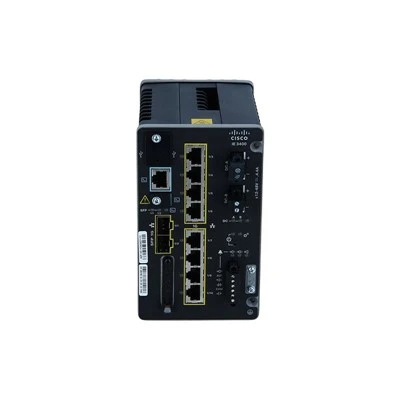
If you have questions about wireless controller range, need a custom network design for your space, or want to explore our line of enterprise solutions, feel free to reach out to our team for a consultation. We’re here to help you build a network that’s stable, scalable, and tailored to your needs.
Firewalls for Aruba References
- IEEE 802.11 Standard for Wireless LAN Medium Access Control (MAC) and Physical Layer (PHY) Specifications
- Telecommunications Industry Association (TIA) Standard for Commercial Building Fiber Optic Cabling
- Federal Communications Commission (FCC) Part 15 Rules for Unlicensed Wireless Devices
- ETSI EN 300 328 Standard for Short Range Devices Operating in the 2.4 GHz Frequency Band
AITI Tech Limited
AITI Tech Limited is one of the most professional wireless controler manufacturers and suppliers in China for over 20 years, featured by quality products and low price. Welcome to buy bulk discount wireless controler in stock here from our factory. If you have any enquiry about pricelist, please feel free to email us.
Address: 6F, Haogong Building, Yannan Road, Futian District, Shenzhen, China
E-mail: kelly@hkaiti.com
WebSite: https://www.hkaiti.com/
