If you’re reading this, chances are you’ve been staring at a dead lead acid battery—your car’s been sitting too long, your boat’s not ready for the lake, or that backup battery for your solar setup won’t hold a charge—and your go-to charger’s just… not working. As someone who’s spent the last 8 years building and testing lead acid battery chargers (yep, that’s me, part of the team that’s actually on the supply side, not some random tech bro online), I’ve seen this exact frustration a hundred times. Most people jump straight to buying a new charger, or worse, panicking that their battery’s toast, when 9 times out of 10, the fix’s way simpler than you think. Lead Acid Battery Charger

Let’s cut the jargon here—no “deep cycle charging protocols” or “specific gravity thresholds” right off the bat. We’ll break this down step by step, like I’m walking you through it over a coffee at the trade show last month.
First thing: stop blaming the charger. I know, that’s the first thing you do when a gadget breaks, but hear me out. Lead acid batteries and their chargers are a team—one bad link usually makes the whole thing glitch. Let’s start with the basics, because you’d be surprised how many times this is the root cause.
First, check the power source. This sounds stupid, but I’ve had customers come to us with a charger that won’t turn on, and it was just a faulty wall outlet. Try plugging something else into that socket—your phone charger, a lamp. If that doesn’t work, check the circuit breaker or fuse for that outlet. Also, if you’re using an extension cord, make sure it’s rated for the charger’s power. Most lead acid chargers are 12V, but some higher-output ones (for big deep cycle batteries on RVs) need a 14-gauge cord minimum. Use a thin 16-gauge, and you’re dropping voltage before it even hits the charger—so it’ll “work” half the time, or not at all. I’ve seen a customer burn out a $200 charger just because he used a old garden extension cord. Ouch.
Next, check the connections. This is another big one. The charger’s clamps or terminals—are they clean? Corroded? Loose? Lead acid batteries put out a lot of current, so even a tiny bit of rust or a half-tight clamp can kill the connection. Grab a wire brush (not a metal file, you don’t want to scrape too much lead off the terminal) and scrub the positive and negative posts on the battery until they’re bright silver. Do the same to the inside of the charger’s clamps. Tighten the clamps down—they should be secure, but don’t wrench them so hard you crack the battery case. Pro tip: if you’re having trouble telling which is positive vs negative, the clamp with the red rubber is positive, black is negative. Don’t mix them up—reverse charging can fry both the charger and the battery, and that’s a mistake no one wants to fix.
If those two checks didn’t do it, let’s test if the charger’s actually the problem, or if it’s the battery. Most people skip this step, and it’s a game-changer. Grab a multimeter (you can pick one up at any hardware store for $10, no fancy one needed). Set it to DC voltage. Touch the red probe to the battery’s positive terminal, black to negative. What do you see? If it’s a 12V lead acid battery, it should read around 12.6V when fully charged. If it’s below 12V, that means the battery’s already discharged, so the charger might not be able to kick on—some chargers have a “low voltage cutoff” to protect themselves. Wait, no—wait, let’s adjust that: if your battery reads under 11.8V, it’s deeply discharged, and many basic chargers won’t charge it because they think it’s bad. That’s not the charger’s fault, that’s a battery that sat unused too long.
Now, test the charger itself, without the battery. Make sure the charger’s unplugged first, obviously. Disconnect the clamps, plug the charger into a known good outlet. Set your multimeter to DC, touch the red and black probes to the charger’s output prongs (the part you connect to the clamps, inside the rubber). If it’s a 12V charger, you should see around 14-14.8V when it’s running. If you see 0V, the charger’s dead. If you see less than 13V, it’s not putting out enough to charge the battery.
Wait, but what if it works sometimes? Like, the charger lights up, but never actually finishes charging? That’s another super common issue. Lead acid batteries (especially the flooded type, which are the most common) generate gas when charging, and over time, the vents can get clogged. If the vents are blocked, the battery can’t release pressure, so it won’t charge properly—sometimes it’ll get hot, sometimes it’ll just refuse to top off. If it’s a flooded battery, unscrew the cell caps (be careful—don’t lean over it, the gas is flammable) and make sure they’re not clogged with dirt or residue. For sealed AGM or gel batteries, they don’t have caps, so this issue might be a internal sulfation instead—more on that in a sec.
Let’s talk about sulfation, because that’s the #1 reason chargers stop working on older batteries, or chargers that are just past their prime. What’s sulfation? When a lead acid battery sits discharged for too long, lead sulfate crystals build up on the plates—they’re like little rocks that harden, so the battery can’t hold charge, and the charger can’t get a current through. Now, if you have a charger that has a “desulfation mode” (you’ll see that on mid-tier chargers, not the super cheap $20 ones), that’s exactly what it’s for. It sends a tiny pulse of high voltage to break down those crystals. If your charger doesn’t have that mode, you can use a dedicated desulfator, but if you’re on a budget, sometimes a slow charge over 24-48 hours will help too. Wait, but don’t try to jump a deeply discharged battery with a fast charger—you’ll just cook it. Fast chargers are for top-ups, not reviving dead batteries.
Now, let’s get to the part that’s actually our lane as a charger supplier. A lot of people buy super cheap chargers off Amazon, and they break within 6 months. I’m not here to bash cheap stuff—if you’re just charging a small motorcycle battery once a month, a $15 charger works. But if you’re charging big deep cycle batteries for an RV, or a golf cart, or a solar backup system, the cheap ones cut corners. They don’t have thermal protection, they don’t regulate voltage properly, and they’ll die early. Let’s say you did all the checks, and you confirmed the charger is actually bad. What went wrong? Probably one of two things: either you bought a charger that’s underpowered for your battery, or it’s just low quality.
Wait, let’s make that clear: charger size matters. A 2A charger for a motorcycle battery will never charge a 100Ah deep cycle battery. That’s like trying to fill a swimming pool with a garden hose. You need a charger that’s 10-15% of the battery’s amp hour rating. So a 100Ah battery needs a 10-15A charger. Simple math, but so many people miss that. If you use an underpowered charger, it’ll run 24/7, overheat, and burn out in no time.
Another common mistake: using a automotive charger on a deep cycle battery. Automotive chargers are designed to charge a starting battery quickly, which is great for cars, but deep cycle batteries need a slower, more steady charge. Using an automotive charger on a deep cycle will shorten its life, and can also mess up the charger. We get this all the time—customers come to us with a broken automotive charger, and they were using it for their RV’s house battery. Oops.
Now, let’s walk through what to do step by step, like a checklist you can print out and keep by your charger. No skipping steps, I promise:
- Power Check: Test your outlet with another device. If it’s dead, fix that first—reset the breaker, replace the fuse. If using an extension cord, make sure it’s 14-gauge or thicker.
- Connection Check: Scrub all terminals (battery posts, charger clamps) clean. Tighten clamps, make sure red is +, black is -, no crosswiring.
- Battery Test: Use a multimeter to check battery voltage. If under 12V, it’s discharged—let it sit for an hour, test again. If it’s under 11.8V, it’s deeply discharged, basic chargers won’t work here.
- Charger Test: Plug the charger into a known good outlet, test its output with a multimeter. If no voltage, or voltage way too low, charger is bad.
- Vent/Desulfation Check: For flooded batteries, clear cell vents. If it’s an older battery, look for sulfation—if your charger has desulfation mode, use it.
- Check Compatibility: Is your charger the right amperage for your battery? Is it made for lead acid (not lithium, that’s a whole different ballgame)?
Wait, let’s add a quick note about lithium-ion, because some people mix them up. Our chargers are exclusively for lead acid (flooded, AGM, gel), so if you’re using a lithium battery, this whole guide doesn’t apply—lithium chargers have different protocols. If you have a lead acid, keep reading.
Now, if you did all that, and still nothing? Let’s say you tried all the checks, confirmed the charger is bad, and your battery is fine (you tested it with another charger and it works). Then it’s time to get a new charger. But don’t just grab the first one you see. Look for a charger that’s rated for your battery type: flooded, AGM, or gel. Look for thermal protection—this stops the charger from overheating if it’s in a hot garage or near the battery. Look for a warranty—we offer a 2-year warranty on all our chargers, because we know they’re built to last, not just throw away after a few uses. The cheap ones often have 30-day warranties, which is a red flag.
Another tip: if your charger is for a big battery (like a 200Ah deep cycle for an RV), a smart charger is worth the extra money. Smart chargers do all the work for you—they adjust voltage based on the battery’s state, switch to float mode once it’s full, and won’t overcharge. Overcharging is another big reason chargers break, and also a reason batteries die early. A lot of cheap chargers keep pumping voltage even after the battery is full, which wears out the charger’s internals fast.
Wait, I should share a quick customer story to make this real. Last year, a guy came to our booth at the RV show, super frustrated. He had a 12V RV battery, his $20 Amazon charger wasn’t working, he’d already bought two new batteries in 6 months, and he was ready to swear off lead acid entirely. We walked him through the steps: first, his outlet was in a storage area that had a faulty GFCI—turns out the outlet was tripped, not the charger. When he tested that, it worked. But he told us he’d been using a 2A charger for his 100Ah battery, which was way too small. We recommended a 10A smart charger, explained the sizing, and he bought one. A month later, he emailed us saying his battery’s been great, the charger works, and he’s not about to switch to lithium. That’s the kind of thing that makes this job worth it—we’re not just selling parts, we’re helping people fix their stuff without wasting money.
Now, let’s address the elephant in the room: is it ever worth fixing an old charger? Unless it’s a super high-end industrial charger, probably not. The parts to fix it are usually more expensive than a new mid-tier charger. And if it’s cheap, it’s probably not worth the hassle. But if it’s a family heirloom charger that your dad gave you, and it has sentimental value? You can take it to a local electronics repair shop, but be ready to pay $50+ for a repair, which is almost the cost of a new basic charger. Save that for the good stuff.
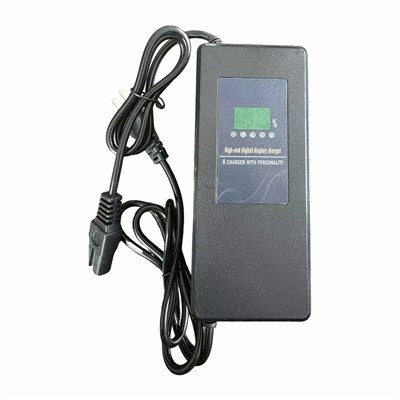
Last quick do’s and don’ts to wrap this up:
Do: Disconnect the charger when the battery is fully charged. Even smart chargers are better than nothing, but leaving a charger plugged in 24/7 long-term will wear it out.
Do: Store chargers in a cool, dry place. Humidity and heat are the enemy of electronics—don’t leave your charger in the trunk of your car in summer, for example.
Don’t: Use a charger for a lithium battery on lead acid, or vice versa. That’s a surefire way to break either.
Don’t: Jump start a deeply discharged battery with a fast charger. It can cause the battery to outgas, which is not only bad for the battery, it’s a fire hazard.
Lithium Battery Charger If you’ve run through all these steps, confirmed your current charger is no good, and you need a replacement that’s built for lead acid batteries—we’ve got you covered. Our chargers are tested for safety, sized to match all common lead acid battery types, and come with a warranty that actually stands behind the product. No gimmicks, no cheap cuts, just chargers that work when you need them, whether that’s for your car, boat, RV, or solar setup. Reach out to connect, and we can help you pick the right charger for your specific battery, no matter the size or type.
References
- Kalogirou, S.A. (2014). Solar Energy Engineering: Processes and Systems (2nd ed.). Academic Press.
- Linden, D., & Reddy, T.B. (2002). Handbook of Batteries (3rd ed.). McGraw-Hill.
- US Department of Energy. (2021). Lead-Acid Battery Basics for Renewable Energy Systems. Office of Energy Efficiency & Renewable Energy.
- Battery University. (2023). Lead-Acid Battery Charging Fundamentals. Cadex Electronics Inc.
- International Electrotechnical Commission. (2020). IEC 60335-2-29: Safety of Battery Chargers for Automotive Applications.
Tianchang Hengze Technology Co., Ltd.
With abundant experience, we are one of the most professional lead acid battery charger manufacturers and suppliers in China. Please rest assured to buy bulk lead acid battery charger made in China here from our factory. If you have any enquiry about quotation, please feel free to email us.
Address: No. 8 Sanxing Road, Qinlan Town Industrial Park, Tianchang City, Chuzhou City, Anhui Province, P.R. China
E-mail: 604894957@qq.com
WebSite: https://www.hengzebc.com/
