If you’ve spent any time working with power transformers—whether as a maintenance technician, a plant engineer, or a project manager at an energy utility—you know transformer oil is more than just a lubricant. It’s the backbone of your transformer’s insulation and cooling systems, and its condition directly impacts asset reliability, safety, and the lifespan of some of your most critical equipment. That’s why, as a supplier of transformer oil testers, I get dozens of calls every week from technicians who run tests and then stare at a printed report, thinking, “What do all these numbers actually mean?” Transformer Oil Tester
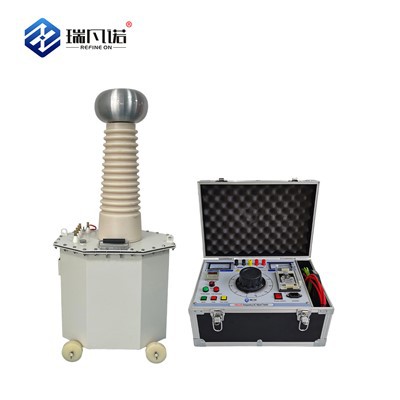
Today, I want to break down how to interpret those test results, not as a textbook exercise, but from the perspective of someone who’s sold hundreds of testers to teams that rely on those results to keep power grids running. I’ll explain the most common tests we see, what red flags to watch for, and how to turn raw data into actionable decisions that prevent unplanned outages.
First, let’s start with the core context: transformer oil isn’t just mineral oil (or natural ester, for newer, more sustainable units) straight from a drum. Over time, it degrades. Heat from the transformer’s core and windings breaks down oil molecules, moisture seeps in through gaskets, and conductive contaminants (like tiny metal particles) build up over years of operation. All of these things show up on your tester’s printout, and each test targets a specific type of contamination.
Dielectric Strength (Breakdown Voltage) – The Most Critical First Check
The first test almost every transformer oil tester runs is dielectric strength, often called BDV (breakdown voltage). This measures the oil’s ability to resist an electrical arc. Think of it as the oil’s “insulation power”—the higher the BDV, the better it prevents electrical faults in the transformer.
For mineral oil, the industry standard threshold is 30 kV minimum for in-service transformers, and 35 kV for new oil right from the drum. If your tester returns a BDV reading below 30 kV, that’s a non-negotiable red flag. Why? A low BDV means even small voltage spikes (which are common on grids during storms or equipment switching) can punch through the oil, causing a short circuit.
I remember a call last year from a utility in the Pacific Northwest. Their tester showed a BDV of 22 kV on a 15-year-old transformer feeding a rural subdivision. The technician I spoke to said he’d seen results that low before but waited a month to filter the oil. Two weeks later, the transformer blew, taking out power for 1,200 homes for 8 hours. That’s the risk of ignoring BDV results below threshold.
If your BDV is low, don’t just top off oil—filter it. A good transformer oil tester won’t just give you a single reading; it will run multiple tests (usually 5) and give an average. If one test is 25 kV and the other four are 32 kV, that’s a sign of localized contamination, not bad oil overall. That tells you to check the transformer’s breather gasket, which might be letting moisture in in small bursts, rather than doing a full oil change.
Moisture Content – The Silent Degrader
Moisture is the number one enemy of transformer oil, even more so than heavy metals or sludge. A small amount of moisture (like 10 ppm) can lower BDV by 5 kV, and at 50 ppm, you’re looking at a BDV drop of 15 kV or more. Our testers measure moisture both in parts per million (ppm) and as a percentage of saturation, which is a handy bonus because saturation lets you compare oil moisture levels regardless of oil type or temperature.
For mineral oil, the acceptable moisture limit is less than 30 ppm for transformers under 100 kV, and less than 20 ppm for units over 200 kV. If you’re working with natural ester oil (used in transformers near sensitive environments, like downtown areas or wetlands), the threshold is much higher—around 1,000 ppm—because ester molecules bind with moisture differently than mineral oil.
A common mistake I see is technicians only checking moisture when BDV is low. But even if BDV is above 30 kV, a moisture reading of 25 ppm in a high-voltage transformer is a problem. Moisture breaks down oil’s insulating properties over time, accelerating oxidation and forming sludge that can clog cooling ducts. We once supplied a tester to a refinery that caught 28 ppm moisture in a transformer that had run at 32 kV BDV for a year. They filtered the oil and prevented a 10-day shutdown that would have cost them $2 million. That’s the kind of result that makes our testers worth the investment.
Acid Number – The Marker of Oil Degradation
As transformer oil oxidizes, it forms organic acids. The acid number (measured in mg KOH/g) is a direct measure of how much acid is present, which tells you how old or degraded your oil is. New mineral oil has an acid number of less than 0.01 mg KOH/g. In-service transformers should have a number below 0.2 mg KOH/g. If it hits 0.5, that’s a sign the oil is in its late stages of life, and you should plan for a full oil change or transformer replacement within 12 months.
Acid number is tricky to interpret because it doesn’t just come from moisture—heat, overloads, and even tiny leaks in the transformer’s core can accelerate acid formation. Last quarter, a utility technician sent in a report showing an acid number of 0.4 mg KOH/g with a BDV of 32 kV and moisture of 18 ppm. That told us the problem wasn’t moisture, it was heat from an overloaded transformer. They upgraded the transformer’s load capacity instead of filtering oil, which saved them from another 18 months of premature degradation.
Also, if your acid number is spiking quickly (like 0.1 increase in 6 months), that’s a red flag for something abnormal—like a faulty cooling system or a leak that’s letting oxygen in. Our higher-end testers track this trend over time, which is why many utilities buy our equipment to monitor long-term oil health, not just run one-off tests.
Interfacial Tension (IFT) – The Cleanness Metric
Interfacial tension measures how well oil repels water. New transformer oil has an IFT of around 40 dynes/cm. In-service oil should stay above 25 dynes/cm. If it drops below 20 dynes/cm, that means the oil is contaminated with polar contaminants (like sludge or dissolved acids), and it’s time to filter or replace.
IFT works hand in hand with acid number. For example, if your acid number is 0.3 and IFT is 22, that’s a double confirmation of degraded oil. If acid number is 0.1 and IFT is 28, you might just need a light filter, not a full change. I always tell technicians to look at IFT alongside other results, not in isolation. I’ve seen transformers pass BDV and moisture tests but fail IFT, and when we investigated, we found sludge clogging the cooling fans—something the other tests didn’t pick up until IFT revealed it.
Dissolved Gas Analysis (DGA) – The Advanced Diagnostic Tool
If your transformer oil tester can run DGA, you’re looking at one of the most powerful diagnostic tools for predicting faults before they become catastrophic. DGA measures seven combustible gases dissolved in oil: hydrogen, methane, ethane, ethylene, acetylene, carbon monoxide, and carbon dioxide.
Each gas tells you a different type of fault:
- Acetylene alone means arcing (a dangerous electrical discharge) inside the transformer. If you see even a trace of acetylene over 1 ppm, shut down the transformer immediately.
- Methane and ethane point to overheating (thermal faults) around 300-700°C, which is common from loose connections or overloaded windings.
- Carbon monoxide and high carbon dioxide mean paper insulation (the solid insulation around windings) is breaking down, a sign of long-term overheating.
A few years ago, a wind farm in Texas called us in because their tester showed 3 ppm of acetylene in a transformer oil sample. We helped them interpret the result—acetylene is almost always a sign of a fault, not normal degradation. They shut down the unit and found a loose connection in the high-voltage winding that was arcing. If they’d waited another month, the transformer would have failed, taking half the wind farm offline during peak wind season.
DGA is not a test you run on every small distribution transformer, but for high-voltage units (above 69 kV) or transformers in critical locations (hospitals, data centers, substations), it’s non-negotiable. That’s why our transformer oil testers come with a built-in DGA module option, so you don’t have to send samples off to a lab to get those results.
Common Pitfalls to Avoid When Interpreting Results
Now, let’s talk about mistakes I see technicians make all the time that lead to bad decisions.
First, don’t ignore the sample itself. If your technician takes a sample from the top of the transformer, that might not be representative. Sludge and water settle at the bottom, so if you only draw from the top, you could get a false reading of good oil. A good sample should be drawn from both the top and bottom, or from a mid-point tap if your transformer has one. Our testers include sample guide kits that walk you through proper sampling, which eliminates a lot of interpretation errors before you even run a test.
Second, don’t compare readings to outdated standards. A lot of old manuals say 25 kV is acceptable, but modern utilities now use 30 kV as the minimum because grids run at higher voltages and transformers are more loaded than they were 20 years ago. If your transformer oil tester has a built-in standard update, you’ll always be working with the latest thresholds, which is a feature many of our competitors don’t offer.
Third, don’t rely on a single test. A low BDV could be from moisture, acid, or sludge. If you only run BDV, you won’t know which one to fix. That’s why we design our testers to run multiple core tests (BDV, moisture, acid number, IFT) in one session, so you have all the data to pinpoint the problem in 15 minutes, not an hour.
Turning Results into Actionable Steps
Let’s wrap this up with a quick cheat sheet for common scenarios:
- BDV < 30 kV, Moisture > 20 ppm: Filter the oil and check the transformer’s breather gasket for leaks.
- Acid Number > 0.2, IFT < 25 dynes/cm: Plan for a full oil change or deep filter within 6 months.
- Trace Acetylene > 1 ppm: Immediately schedule a shutdown for DGA follow-up and fault repair.
- All results within thresholds: Schedule a retest every 6 months, especially for transformers over 10 years old.
If you’re still not sure about your results, that’s what our team is here for. As a transformer oil tester supplier, we don’t just sell equipment—we offer support to help you interpret those numbers correctly. Whether you’re a small utility with a handful of transformers or a large industrial plant with a fleet, we can help you choose a tester that fits your needs, plus provide free guidance on analyzing results to prevent outages.
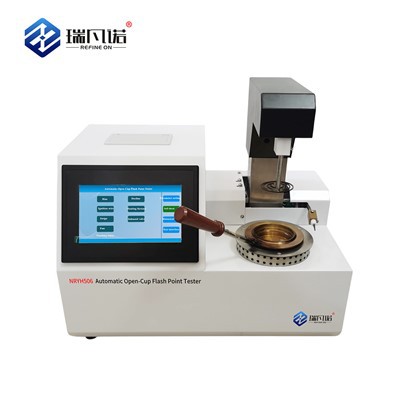
If you’re ready to upgrade your testing setup, troubleshoot current results, or learn more about how our testers can make your diagnostic process faster and more accurate, reach out to our team to start a conversation. We’re here to support your work, not just sell you a machine.
References
SF6 Analyzer IEEE Guide for Mineral Insulating Oil Used in Transformers and Other Electrical Equipment.
IEC 60156:2018, Insulating liquids – Determination of the breakdown voltage at power frequency – Test method.
NPR 57, Interpretation of Gas Analysis Data for Transformers and Other Oil-Filled Equipment.
ASTM D3313, Standard Test Method for Interfacial Tension of Petroleum Products by the Du Noüy Ring Method.
ASTM D1533, Standard Test Method for Water in Insulating Liquids by Coulometric Karl Fischer Titration.
Refine On (Hebei) Electric Power Technology Co., Ltd.
Refine On (Hebei) Electric Power Technology Co., Ltd. is one of the most reliable transformer oil tester manufacturers and suppliers in China, also supports customized service. Please feel free to wholesale advanced transformer oil tester at competitive price from our factory. Contact us for quotation.
Address: Building 13, Liandong U Valley, No.64, Jing SAN South Street, Economic Development Zone, Mancheng District, Baoding City, China
E-mail: victor@transformer-test.com
WebSite: https://www.transformer-test.com/
