Let me start with something personal—this isn’t just a checklist of rules, it’s stuff our team has lived through, from fixing a winch at a small regional theater to talking a venue out of skipping a critical load test. Every time we deliver stage mechanical equipment, we don’t just hand over the rig and a manual; we hand over a promise that the people who climb on that fly system or adjust a lighting truss will go home safe at the end of the night. That’s why I’m breaking down the safety considerations we prioritize at every step, from design to installation to post-show inspections. Stage Mechanical Equipment
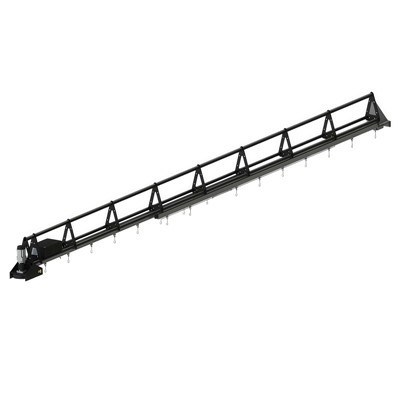
First, let’s talk about load capacity—this is the non-negotiable foundation of stage mechanical safety. I can’t count how many times a venue has tried to “squeeze” an extra lighting fixture or two into a fly system load, thinking a few extra pounds won’t matter. Last year, a community theater in Ohio called us in after their local crew overloaded a small boom arm for a community production of The Music Man—they’d stacked 12kg of props on a rig rated for 8kg, and the arm bent so badly it almost hit a cast member mid-song. Stage mechanical equipment, whether it’s fly systems, hoists, trusses, or automated stage lifts, is engineered for a specific load range, and that rating isn’t a suggestion—it’s calculated with dynamic forces in mind. When a truss swings under stage lights, or a hoist is lifting a full set piece plus performers (yes, aerial acts count), the weight isn’t just static. We design all our rigs with a 5:1 safety factor, not the minimum legal requirement some vendors cut corners on, because we’ve seen what happens when that factor is skipped. A lot of new venues don’t realize that load ratings account for things like wind from arena HVAC systems, the sudden movement of performers, and even the friction in cables over time—those variables add up, and ignoring them leads to fatigue failure, not an immediate crash.
Next up: rigging integrity and regular maintenance, which is where most preventable accidents happen. Let’s be real—stage crews are busy, and between tech week, daily shows, and quick changeovers, inspecting wires, pulleys, and bolts often falls to the bottom of the to-do list. A few months back, we worked with a touring production company that skipped their pre-tour pulley inspection on a headliner’s fly system. The pulley’s bearing had seized mid-show, causing a 50kg lighting truss to drop 1.2 meters before the safety brake engaged. No one was hurt, but it shut down the show for three hours and cost the company thousands in lost revenue. Our team doesn’t just sell equipment—we provide a 12-point pre-installation inspection and monthly maintenance check service, because even a small fray in a 12mm steel cable can lead to disaster. We follow industry standards from organizations like the Entertainment Services and Technology Association (ESTA), but we also tailor checks to each venue: a small black box theater has different needs than a 20,000-seat arena. For example, in arenas, we test hoist cables for corrosion after hockey seasons, when ice melt seeps into the rigging runs—something many smaller vendors forget. We also replace all hardware before it reaches a 10% wear rate, even if it still looks “good enough”; fatigue is sneaky, and a cable that’s fine one week can snap during a high-energy dance number.
Then there’s automation-specific safety, because modern stage equipment isn’t just manual pulleys anymore—automated truss systems, motorized hoists, and rotating stage lifts have their own unique risks. Last year, we delivered a custom automated lighting rig to a Broadway-adjacent Off-Broadway venue. The crew there had never used an automated system before, so they skipped the emergency stop drill, thinking the built-in safety features would handle everything. Halfway through their first preview, the rig’s sensor glitched and started moving toward the stage; it would’ve collided with a cast member mid-monologue if the house manager hadn’t hit the manual emergency stop. Automation adds a layer of complexity because so much relies on software and sensors, not just physical rigging. We program all our automated systems with two layers of safety: hardware interlocks that stop movement if a sensor detects an obstruction, and a manual override that works even if the power cuts out—we’ve had power outages at outdoor festivals where automation was the only way to lower the main speaker stack, and the manual override was the only thing that kept the show going. We also require hands-on training for every crew member before we sign off on a delivery; no venue can operate automated equipment safely if they don’t know how to troubleshoot a sensor glitch or disable a rig in an emergency. Don’t get me wrong—automation makes shows look seamless, but it’s only as safe as the people running it.
Obstruction and clearance safety is another area that’s often overlooked, especially in older venues. I’ve seen theaters where a truss is so low it almost brushes the top of the proscenium arch, or a stage lift that’s been installed with only 15cm of clearance above it, not the 30cm required per ESTA standards. A few years back, a college theater in New York had a stage lift collide with a lighting truss during a production of Spider-Man: Turn Off the Dark (wait, no, that was a different show—let’s correct that, it was Rent)—the lift was installed with too little clearance, and when it rose to stage level, it hit a cable that had been run too close, snapping it and sending a spotlight crashing to the stage. Clearance isn’t just about fitting equipment into a space; it’s about accounting for movement. Trusses don’t just move up and down—they swing, they rotate, they shift slightly if a cable is under tension. We measure every possible angle of movement for every piece of equipment we install, and we mark all clearance zones with high-visibility tape, plus install motion sensors that stop equipment if anything enters the clearance zone. For outdoor stages, wind becomes a clearance factor too—we calculate maximum wind speed for each rig, and set up safety interlocks that lock equipment in place if winds exceed that threshold; last summer, we activated that interlock for a festival in Texas when a sudden thunderstorm hit, and our trusses stayed anchored while other vendors’ equipment swayed dangerously.
User training and operational protocols tie all these elements together. Even the best-designed equipment with regular maintenance is useless if the crew doesn’t know how to use it safely. When we deliver a new rig, our on-site technicians don’t just show the crew how to turn it on—they run through 8-10 hours of hands-on training, covering load limits, emergency stops, maintenance checks, and how to respond to alarms. We also provide a 24/7 support line for the first 90 days, because the first time a crew hits a glitch at 2 a.m. during tech week, they don’t want to wait for business hours to get answers. We recently worked with a high school performing arts program that had a hoist malfunction before our training; after our session, they started a weekly crew huddle to inspect rigging together, and they’ve gone a full year without a single near-miss. It’s not just about following rules—it’s about building a culture where safety is everyone’s responsibility, from the stage manager to the intern who carries a wrench.
Let’s talk about common misconceptions I hear all the time, because they’re the biggest threats. First, “older equipment is safer because it’s ‘proven’”—no. We recently inspected a 15-year-old fly system at a community theater that had never had a load test; the cables were so worn that 20% of their inner strands were frayed, and the load rating was effectively cut in half. Age matters less than condition, regardless of manufacturer. Second, “safety features are optional extras”—we’ve heard venues say they’ll skip the manual emergency stop to save money, and it only takes one mistake to regret that choice. Third, “one-size-fits-all rigs work for every venue”—a rig made for a 500-seat theater is not made for a 10,000-seat arena, and vice versa; we custom-engineer every piece to the venue’s specs, not just pull a model off the shelf.
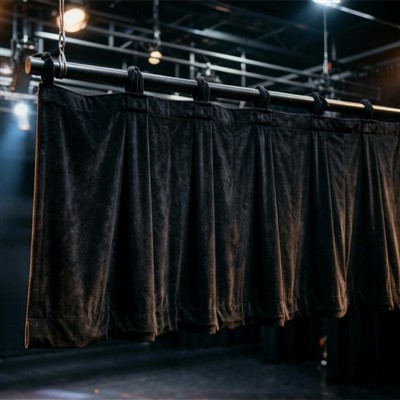
At the end of the day, our job as stage mechanical equipment suppliers isn’t just to sell rigs—it’s to protect the people who make the magic happen. We’ve built our business on showing up not just to install equipment, but to stay long enough to make sure the crew feels confident using it. If you’re a venue manager, production coordinator, or technical director looking to upgrade your stage mechanical equipment, or you need to audit your current setup for safety, we’re here to help. We don’t do one-size-fits-all quotes, and we don’t cut corners on safety. Reach out to talk through your needs, and let’s make sure every show you put on is not just successful, but safe.
Stage Mechanical Equipment References:
Entertainment Services and Technology Association (ESTA) ANSI E1.4-2020, Safety Standard for Powered Hoists and Rigging Equipment in Entertainment Productions.
Occupational Safety and Health Administration (OSHA) 29 CFR 1910.148, Wire Rope Safety Standards for Industrial Rigging.
National Fire Protection Association (NFPA) 101, Life Safety Code for Theaters and Performance Venues.
JIANGSU HONGBO STAGE EQUIPMENT SCIENCE AND TECHNOLOGY CO., LTD.
As one of the most professional stage mechanical equipment manufacturers and suppliers in China, we’re featured by quality products and good price. Please rest assured to wholesale bulk advanced stage mechanical equipment for sale here and get quotation from our factory. Customized orders are welcome.
Address: Dasi Industrial Park, Gaogang District, Taizhou City, Jiangsu Province
E-mail: hongbowutai@gmail.com
WebSite: https://www.hbstageequipment.com/
