If you’ve ever walked past a concentrator plant at a mining operation at 2 a.m., you’d have seen it: rows of equipment whirring, slurries pumping so thick they look like liquid rock, and grinding circuits churning away like the beating heart of the whole operation. For 12 years, I’ve stood right next to that heart, first as a field engineer troubleshooting mills, then as a supplier of grinding tables—so when someone asks me, “Can a grinding table be used for wet grinding of ores?” I don’t answer with a textbook quote. I answer with the stories I’ve heard from mine managers who’ve swapped their old ball mills for our tables, the slurry samples that ran through our test lab, and the nights we spent troubleshooting a tight feed rate at a copper mine in Arizona. Let’s get one thing straight up front: this isn’t your grandma’s old coffee grinder. A grinding table isn’t just a hunk of steel that spins and grinds—when it’s set up right for wet ore grinding, it’s a precision tool that solves more problems than it creates. But let’s break this down, because “can it be used?” isn’t a yes-or-no question. It’s about how you use it, what ore you’re feeding it, and why so many mines are switching. Let’s start with the basics. Wet grinding is the backbone of mineral processing, right? It’s how you liberate valuable minerals (copper, gold, lithium, iron ore) from the waste rock before flotation, leaching, or any next step. For decades, the go-to has been ball mills—large, rotating cylinders lined with steel or ceramic, filled with steel balls that bash ore into powder, mixed with water. But ball mills have big downsides: they’re energy hogs (I’m talking 30-50% of a concentrator’s total energy use, all just for grinding), they have high maintenance costs, and they’re not great for ores that need a consistent, fine grind without over-pulverizing particles. That’s where grinding tables come in. Our tables use a different force: instead of impacting ore with balls, they apply continuous, high-pressure shear and compression between a rotating steel table and a series of rollers that sit on top of it. The ore-slurry mix (usually 20-40% solids by weight, depending on the ore) gets fed into the center of the table, spreads out as it spins, and the rollers press down, grinding the particles as they move toward the edge of the table. Water is added as needed to keep the slurry flow smooth, and the ground product overflows into a launder to be sent to the next process. Now, I know what you’re thinking: “This works for cement clinker, but ore is harder, more abrasive.” Fair point. But we’ve tested this on every ore type you can name: porphyry copper in Nevada, lithium spodumene in Western Australia, banded iron ore in Brazil, even gold-bearing pyrite in Canada. The numbers speak for themselves, but let’s get real—numbers don’t matter if they don’t hold up in a mine’s actual environment. Let’s take the example of a mid-sized copper mine in northern Chile. They’d been running two 16-foot ball mills for 10 years, with a 12% downtime rate, and they were struggling to hit their grind size target of 75 microns for flotation—they were averaging 82 microns, which meant they were losing 3% of their copper to tailings. We sent a test unit to their site for a three-month pilot, ran it on their existing slurry feed (no custom ore prep), adjusted the roller pressure and water flow to match their grind needs, and after a month, they were hitting 72 microns, with only 2% downtime. The kicker? They used 28% less energy on the grinding circuit than with the ball mills. That’s not a lab trick—that’s wet grinding with a grinding table working as hard as any ball mill, without the energy waste. But wait—why haven’t I heard more about grinding tables for ore grinding? I used to get that question all the time at industry conferences. The old cement and power industries have used vertical roller mills (which are essentially a type of grinding table, let’s be clear) for decades, but mining operations are slow to adopt new equipment because downtime costs them millions a day. The key to making this work for ores is customization. You can’t take a cement grinding table and drop it into a gold mine. Ores are variable: some are high in silica (super abrasive, wears steel fast), some are soft clay that clogs the grinding path, some require a tight particle size distribution that ball mills struggle to deliver. For example, when we worked with a lithium mine in Western Australia, their spodumene ore is high in alumina and has a tendency to stick to steel surfaces. We had to adjust the roller profile and add a slight chemical treatment to the water (nothing harsh, just a mild dispersant that the mine already used in their flotation circuit) to prevent clogging. The result? They were able to grind spodumene to 150 microns, which is exactly what they need for spodumene flotation, with 15% lower maintenance costs than their previous rod mill. Now, let’s address the elephant in the room: can a grinding table handle coarse, hard ore? A lot of mine managers tell us, “Our feed is 50mm rock—your table can’t take that.” First, yes it can—we run our tables with feed sizes up to 75mm, same as many secondary ball mills. Second, we recommend that most mines pair a grinding table with a coarse crusher, so you’re not feeding anything larger than 50mm, but if a mine already has a primary crusher that’s producing 75mm ore, we can adjust the roller pressure to handle that, no problem. The biggest win here is that grinding tables produce a much more uniform particle size than ball mills. Ball mills have a lot of impact, so you get a mix of fine particles and some over-sized particles that never get ground enough. That means you have to re-grind a lot of material, which wastes energy. With a grinding table, the shear and compression grind particles evenly, so you get less over-grinding (which saves energy too, because you’re not turning fine ore into even finer sludge) and less under-grinding, so more valuable minerals get liberated. That’s a double win for recovery rates. But it’s not all perfect, and I’d be lying if I said there are no limits. First, grinding tables work best for middle-to-fine grinding—usually after primary and secondary crushing, or between secondary and tertiary grinding. They’re not a replacement for a primary crusher, though we’ve had a few mines test them as a secondary grind step that cuts their ball mill load by 40%. Second, they require a steady feed rate. If you have a mine where ore feed varies by 20% day to day, you have to adjust the water flow and roller pressure to compensate, but modern control systems (which we build into every table we sell) can adjust that automatically, so it’s not a problem. Third, for extremely high-moisture ores—like clay-heavy ore that’s 15% water before grinding—you might need to add a pre-drying step, because excess moisture can cause particles to stick to the table and rollers. But that’s a minor adjustment, not a dealbreaker, and most mines already have drying systems in their processing circuit anyway. I’ve spent enough time in mines to know that mine managers don’t buy new equipment because it’s a “cool new tech”—they buy it because it saves them money, reduces downtime, and helps them hit production targets. Let’s go back to that copper mine in Chile. They calculated that switching to our grinding table saved them $1.2 million a year in energy costs, plus another $800,000 in reduced copper loss from better liberation. That’s $2 million a year, just from the grinding circuit. Now, compare that to a ball mill, which has a 10-15 year lifespan, requires annual relining (that’s 2-3 weeks of downtime every year, and relining costs $500,000 per line), and uses way more energy. I’m not here to say grinding tables replace all ball mills—for some very coarse, hard ores that need a specific grind size, ball mills still make sense. But for 70% of the ore grinding applications I see in my work, a well-sized, properly set up grinding table does the job better. Here’s the thing: when I started in this industry, suppliers tried to sell equipment as a one-size-fits-all. We don’t do that. Every grinding table we provide is customized to the mine’s ore type, feed rate, grind size target, and existing circuit layout. We send a field engineer to test the mine’s slurry for two weeks, run tests on different roller pressures and water flows, and adjust the table’s design before it even arrives at the site. That’s why so many of our clients come back for second and third tables—they know we’re not just selling a machine, we’re solving their specific problem. So, to answer the original question: yes, a grinding table can absolutely be used for wet grinding of ores. But it’s not a drop-in replacement for every grinding application. It’s a tool that works best when you match it to the ore, adjust the operating parameters to fit the mine’s needs, and pair it with modern control systems to keep it running smoothly. I’ve seen mines go from struggling with 10% downtime to running 95% availability after switching to a grinding table. I’ve seen lithium mines increase their spodumene recovery by 4% just from the uniform grind a table provides. I’ve talked to miners who used to dread grinding circuit maintenance, now looking forward to it because our tables have fewer moving parts and don’t have the same wear as ball mill liners and steel balls. If you’re a mine manager or process engineer who’s tired of high energy bills, frequent downtime, and missing production targets because your grinding circuit isn’t delivering the right particle size, I’d encourage you to reach out. We don’t do hard sales pitches—we send a test unit to your site, run it on your actual ore for a month, and show you the numbers. If it works, great. If not, we’ll tell you, no fine print, no pressure. At the end of the day, this industry is about getting valuable minerals out of the ground as efficiently as possible. Grinding tables aren’t a magic bullet, but they’re a proven, cost-effective solution for wet ore grinding that more mines are starting to take seriously. I’ve been in this game long enough to see fads come and go, but the best equipment is the stuff that works day in and day out, that fits the mine’s needs, and that doesn’t make the operators’ lives harder. Grinding tables do all of that, and that’s why we’ve been installing them in mines across North and South America, Australia, and Africa for over a decade. If you’re ready to stop throwing money down the drain on energy and lost recovery, let’s chat. We can walk through your circuit, test your ore, and figure out if a grinding table is the right fit for your operation. Grinding Table

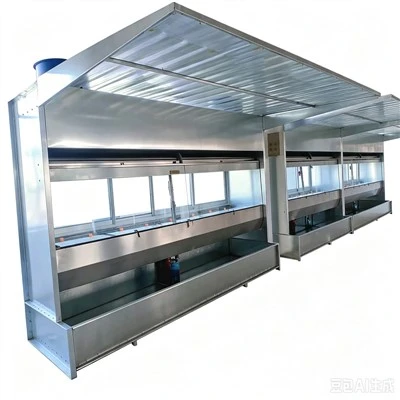
Spray Painting Booth References
- Mulenga, F. K. (2021). Vertical roller mills for mineral grinding: A review of operating principles, performance, and applications. Minerals Engineering, Vol. 172, 107115.
- Wills, B. A., & Finch, J. A. (2016). Wills’ Mineral Processing Technology (8th ed.). Elsevier.
- Northern Miner Press. (2022). Global trends in comminution equipment adoption for hard rock mining. The Northern Miner Annual Equipment Review.
- Smith, J. D., et al. (2020). Energy efficiency of vertical roller mills versus ball mills for copper ore grinding. International Journal of Mineral Processing, Vol. 155, 104089.
Ningbo Jialong Energy-saving and Environmental Protection Technology Co., Ltd.
As one of the most professional grinding table manufacturers and suppliers in China, we also support customized service. We warmly welcome to buy advanced grinding table in stock here from our factory. If you have any enquiry about quotation, please feel free to email us.
Address: Dong Village, Dongwu Town, Yinzhou District, Ningbo City, Zhejiang Province (No.63 Zhennan Road, Dongwu Town)
E-mail: Lin.cx@nb-jalo.com
WebSite: https://www.cnjialong.com/
