If you’ve ever relied on butterfly valves to control flow in your process system—whether you’re handling water treatment chemicals, food and beverage ingredients, oil and gas slurries, or pharmaceutical powders—you’ve probably run into that frustrating, familiar problem: a valve that won’t budge when you need it to. As a butterfly valve supplier who’s fielded hundreds of these questions from plant operators, maintenance teams, and engineers over the past 12 years, I can tell you this isn’t a “user error” myth or a random glitch. It’s almost always a predictable, solvable issue rooted in how butterfly valves work, their environment, or how they’re maintained. Let’s break down exactly what causes a butterfly valve to stick, no fancy jargon required, because I’ve seen this problem derail more production shifts than I can count. Butterfly Valve
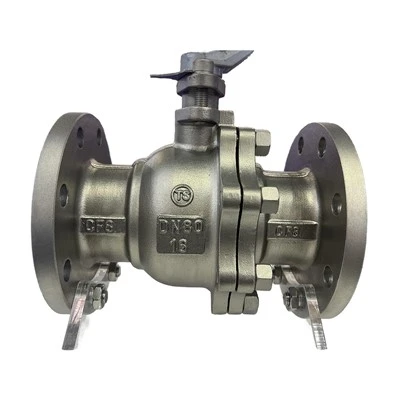
First, it helps to remember how a basic butterfly valve operates: a disc mounted on a central shaft sits inside the valve body, and turning that shaft (usually with an actuator, handwheel, or gear assembly) spins the disc to adjust flow from fully closed to fully open. The only contact point between this moving part and the static body is the seat—usually a rubber, plastic, or metal liner molded or fitted inside the valve. That single point of contact is where almost every sticking issue starts, which is why I always tell new customers: the seat isn’t just a seal, it’s the gatekeeper of your valve’s movement.
Let’s start with the most common cause, especially in industrial settings: seat material degradation and compression set. I once worked with a water treatment plant operator who called me in the middle of a night shift because their valve controlling chlorine injection was stuck half-open. When we pulled the valve, we found the EPDM seat had been in constant contact with the disc for seven years, and the rubber had permanently deformed into the shape of the disc. Compression set, for those who don’t work with elastomers every day, is what happens when a flexible material gets squeezed in the same spot for too long—its molecular structure doesn’t bounce back. The disc literally got “stuck” in the molded indentation of the seat, and without regular exercise (more on that later), this becomes a permanent bond. The kicker? EPDM is great for many applications, but if your valve is designed to be closed for extended periods—say, a bypass line that only operates once a quarter—this is a near-certain risk. We now recommend extending seat life by switching to a harder material like Buna-N or PTFE for static service valves, and adding an annual quarter-turn to prevent that compression set from setting in.
Next, foreign material intrusion—this is the second most common culprit, and it’s one that’s often hard to spot until you disassemble the valve. I had a customer in the food and beverage industry a few years back who dealt with a stuck valve on their milk transfer line. When they pulled it apart, there were tiny curd particles (protein from pasteurized milk) wedged between the disc edge and the seat, plus a few pieces of pipe scale that had broken off during a routine line flush. Butterfly valves have a very narrow clearance between the disc and seat—usually less than a millimeter—and any solid particle larger than that can wedge itself in the gap. The worst part? These particles can be microscopic at first. A friend who works in oil and gas told me their stuck valve on a crude oil line was caused by sand grains that were so small they got through their line filters, but were just big enough to jam the disc halfway. This issue is extra common when handling abrasive media, or when your line isn’t properly filtered. I always recommend installing inline strainers matched to your valve’s disc-seat clearance, and scheduling quarterly disassembly checks for lines handling slurries or granular materials. It’s a small step that saves hundreds in downtime.
Then there’s shaft and disc corrosion, a problem that’s unique to the materials your valve is made of and the media it’s exposed to. Let’s be clear: butterfly valve shafts are not indestructible. When you pair a carbon steel shaft with corrosive media like saltwater or acidic chemicals, pitting corrosion can form on the shaft surface. That pitting creates tiny ridges where the shaft passes through the valve’s stem packing, which is the rubber or graphite material that seals the stem to prevent leakage. Over time, those ridges catch on the packing, and when you try to turn the shaft, it doesn’t spin—it sticks. I saw a perfect example of this in a coastal power plant, where their butterfly valves for seawater cooling had carbon steel shafts that corroded so badly, the valve wouldn’t move during a scheduled shutdown. The solution there wasn’t just replacing the shaft—we switched to 316 stainless steel shafts and graphite packing, which is far more resistant to saltwater corrosion, and that problem never came back. Disc corrosion is another side of this: if your disc is coated or made of a material that doesn’t match your media, it can rust or degrade at the edges, adding extra friction against the seat that makes the valve stick when you try to move it.
Don’t overlook packing and stem friction, even if corrosion isn’t an issue. A lot of plant teams over-tighten stem packing to stop leaks, especially in systems with high pressure. When you crimp the packing too tight around the shaft, it creates unnecessary friction that makes turning the shaft hard—so hard that it feels stuck. I’ve seen operators crank on handwheels or over-actuate butterfly valves, and actually end up bending the disc or breaking the actuator because they didn’t realize over-tightened packing was the issue. The fix here is simple: use a packing wrench to adjust the packing gland nuts, turning them just enough to stop leaks while leaving the shaft with a small amount of smooth, easy movement. For high-cycle valves, we also recommend low-friction PTFE packing, which reduces this friction without sacrificing seal integrity.
Another underdiscussed cause is thermal expansion mismatch. This is when the valve, disc, and seat all expand at different rates when you’re handling hot media, like steam or hot process water, and they bind together. I once worked with a chemical manufacturer that had a valve for their hot acid transfer line that stuck every time they opened it after a weekend shutdown. The valve’s body was cast iron, the disc was stainless steel, and the seat was PTFE—each material expands at a different rate when heated to 300 degrees Fahrenheit. By Monday morning, when the plant started up, the disc had expanded faster than the seat and body, creating a tight bind. The solution here was twofold: we adjusted the seat material to a PTFE grade that’s rated for high temperatures, and we added a small amount of lubrication (a food-grade or oil-compatible lubricant, depending on the application) to the disc edge, which eliminated the thermal binding. Just note: you should only use lubricants approved for your process media—never use a generic grease on a valve handling food or pharmaceuticals, that’s a quick way to get a contaminated batch.
Finally, let’s talk about lack of regular exercise. I can’t tell you how many times a week I hear from customers who say, “We only use this valve once a year, so why does it stick?” The truth is, even the best designed butterfly valves need to be turned periodically to keep the moving parts from seizing up. I once worked with a municipal water utility that had a backup valve for a fire hydrant line, which hadn’t been turned in 10 years. When they finally tested it for a fire drill, it was completely stuck—all because the seat and disc had fused together from sitting in the same position for a decade. We now recommend a simple rule for any valve that’s not in constant use: turn it a quarter turn every three months, and fully open or close it once a year, to keep the disc from bonding to the seat. It takes 60 seconds, and it prevents a 48-hour production shutdown.

Now, after 12 years as a butterfly valve supplier, I’ll tell you this: most sticking issues aren’t failures of the valve itself—they’re failures of understanding how the valve interacts with its environment. The good news is that nearly every one of these causes has a straightforward, cost-effective fix. Whether you’re dealing with compression set from static service, foreign particles jamming the disc, corrosion from corrosive media, over-tightened packing, thermal expansion, or just a neglected valve that never gets used, there’s a solution tailored to your application. If you’re dealing with a stuck butterfly valve right now, or you want to put a preventative plan in place to avoid downtime, feel free to reach out to our team to discuss your specific system needs. We can help you audit your current valves, recommend material upgrades, and create a maintenance schedule that keeps your valves moving—no more mid-shift headaches.
Diaphragm Valves References:
- Butterfly Valve Design and Application Guide, American Water Works Association, 2019.
- Elastomer Compression Set Testing and Specifications, ASTM International, D395-21.
- Corrosion Control for Industrial Valves, National Association of Corrosion Engineers, 2020.
- Butterfly Valve Maintenance Best Practices, Pump Industry Association, 2021.
- Thermal Expansion Mismatch in Process Valves, Journal of Process Mechanical Engineering, Vol. 235, No. 4, 2021.
Yancheng Suhao Valve Industry Co., Ltd.
We are one of the most experienced butterfly valve manufacturers and suppliers in China, specialized in providing high quality customized service. Please feel free to wholesale durable butterfly valve in stock here from our factory. Also, quotation is available.
Address: No.33, Huashan Road, Economic Development Zone, Funing County, Jiangsu Province
E-mail: Support@suhao.net
WebSite: https://www.suhaoind.com/
