Let’s cut to the chase: if you’re a manufacturer, engineer, or even a hobbyist looking to get parts machined, you’ve probably stared at a 5-axis CNC quote and thought, “Wait, that’s way pricier than my 3-axis quote.” I get it—when I first started in the machining game 12 years ago, I thought the same thing. Back then, 5-axis was this exotic, fancy tech only for aerospace or luxury car guys. But now? It’s become a go-to for a ton of industries, and the “more expensive” question is way more nuanced than it seems. 5-Axis CNC Machining
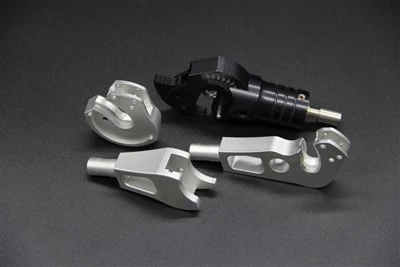
As someone who’s run a 5-axis CNC shop for almost a decade, I’ve fielded this question from every type of customer: a small shop making custom bike parts, a medical device engineer needing precision implants, even a aerospace guy building a satellite component. Let’s break this down—no corporate jargon, just real talk about why 5-axis costs what it does, when it’s actually a deal, and when traditional 3- or 4-axis might still make sense.
First, let’s get the basics straight. Traditional machining (let’s lump 3-axis and 4-axis here, since they’re the most common “traditional” alternatives) works by holding your part stationary on a table, then moving a cutting tool along X, Y, and Z axes (for 3-axis) or rotating one axis (for 4-axis). 5-axis, though, adds two more axes—usually A and B, which tilt the part or the tool. That means instead of re-clamping a part 3, 4, or even 10 times to get all sides machined, you can do the whole thing in one setup. That’s the core difference, and it’s where the cost debate starts.
So why does 5-axis feel pricier upfront? Let’s look at the hard costs. First, the machines themselves. A good 3-axis CNC mill might run you $50k to $150k. A 5-axis? Start at $200k, and for high-precision models that can handle aerospace-grade titanium or medical-grade stainless steel, you’re looking at $500k to over $1M. That’s a huge capital investment for a shop, and we pass some of that on to customers—obviously. But it’s not just the machine. We also need specialized software. 3-axis uses basic CAM (computer-aided manufacturing) software that’s relatively affordable. 5-axis? You need CAD/CAM programs that can generate toolpaths for that tilting motion, avoid collisions between the tool, part, and machine, and calculate those complex angles. That software can run $10k+ a year per license, vs. a few hundred for basic 3-axis tools.
Then there’s labor. 5-axis machining isn’t something a newbie can pick up. Our operators don’t just push a button—they have to program the toolpaths, tweak tilt angles to avoid chatter, troubleshoot collision risks that don’t exist in 3-axis, and check for precision that’s often within 0.001 inches or less. A skilled 3-axis machinist makes good money, but a good 5-axis operator? We pay them 20-30% more, easy. That’s baked into the quote too.
Wait, but hold on—this is the part most people miss. The upfront sticker price is just one side of the ledger. Let’s talk about hidden costs of traditional machining that 5-axis eliminates. Let’s take a real example: a customer came to us last year needing a custom aluminum drone arm. They’d been getting quotes from a 3-axis shop, and their total part cost was $180 per unit. When they brought it to us, our 5-axis quote was $165. How’d that happen?
The 3-axis guy explained it: they had to clamp the part four times to machine all sides. Each clamp setup takes time—locking the part down, zeroing the axes, checking for runout, inspecting alignment. For that drone arm, that’s 4 separate setups, 2 hours per setup, plus time to move the part between machines (they outsource the secondary ops) and inspect each side. That added up to extra labor, more risk of error, and even more material waste from misalignment.
With 5-axis? One setup. We load the part once, program the tool to tilt as needed, machine all sides in 90 minutes total. No re-clamping, no secondary ops, way less chance of a misaligned part getting scrapped. The customer ended up saving 8% per unit, and their lead time dropped from 2 weeks to 3 days. That’s the “cheap” part of 5-axis no one tells you about.
Another angle: part complexity. If your part has undercuts, angled features, or intricate contours, 5-axis isn’t just a “nice to have”—it’s the only way to make it right. A few years back, a jewelry designer came to us wanting custom titanium pendants with 3D carved details on all sides. Traditional machining would’ve required hand-finishing each pendant to smooth the undercuts, which would’ve cost $300 per piece, taken a week, and still had inconsistent quality. We did it in 5-axis: one setup, perfect toolpath, consistent every time, for $120 per pendant. Way lower cost, way better quality.
Don’t get me wrong—5-axis isn’t always cheaper. If you’re making a simple, flat part—like a bracket that only needs holes drilled along one side or a basic plate—5-axis is overkill. You’ll pay for the extra machine time, the complex programming, and it’s just not worth it. In that case, traditional 3-axis is going to be faster, cheaper, and easier. The sweet spot for 5-axis is parts that have multiple features on different planes, tight tolerances, or complex geometry that can’t be done in one setup.
Another thing people don’t talk about: waste. Traditional machining often requires holding the part with vises, clamps, or custom fixtures for each setup. Each fixture can weigh a lot, take up space, and waste material. 5-axis lets you use fixtures that are way smaller, or even hold the part on a vacuum chuck for simpler setups. For a company making 10,000 parts a year, that adds up to thousands of dollars in saved material costs over time. And less scrap—because when you don’t re-clamp a part, you don’t risk dropping it, bending it, or misaligning it so bad it’s ruined. We’ve had customers go from a 15% scrap rate with 3-axis to less than 2% with 5-axis—that’s a huge win for their bottom line.
Wait, let’s address the elephant in the room: lead times. A lot of people think 5-axis has longer lead times because the programming is harder, but that’s only if you’re doing it wrong. When you have a good setup, 5-axis can actually cut lead times. Let’s take a medical part—say, a custom bone plate for orthopedic surgery. These need to fit perfectly, have multiple holes at different angles, and be sterilizable. A 3-axis shop would need to mill the main plate, drill holes one by one, deburr each edge, inspect each side—2 weeks minimum. We can do the whole thing, from raw material to finished part, in 3 days. No re-clamping, no back-and-forth between machines, just one continuous process. For a surgeon who needs a prototype fast, that’s invaluable—and often worth a little extra cost, because the delay would set back the whole surgical trial.
So let’s wrap this up. Is 5-axis more expensive than traditional machining? The short answer is: it depends. Upfront, the per-part price might be higher for simple parts, but when you factor in all the hidden costs of traditional machining—multiple setups, fixtures, scrap, lead time, post-processing—5-axis often ends up being cheaper. For complex, high-tolerance parts, it’s not just a cost saver—it’s the only way to make the part correctly at any price.
I’ve seen customers who come to us thinking 5-axis is a luxury, and leave realizing it’s an investment that saves them thousands over time. We’ve also had customers with super simple parts who go with 3-axis, and that’s totally fine. The key is knowing when one makes sense over the other.
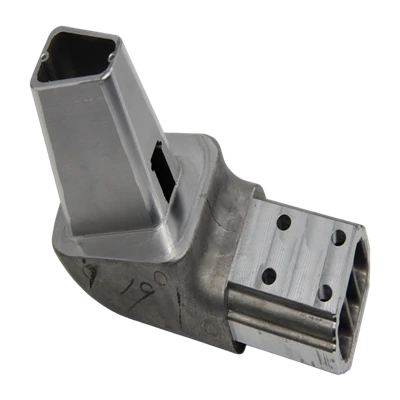
If you’re not sure which is right for your part—whether it’s a prototype, a small run, or a full production lot—hit us up for a quote. We don’t do one-size-fits-all pricing; we’ll break down the costs, the tradeoffs, and help you pick the method that works best for your budget and timeline. No sales pitch, no hidden fees, just straight talk about what your part needs.
5-Axis CNC Machining References
- “5-Axis Machining: Cost Benefits and Applications,” Modern Machine Shop, 2022
- “Comparative Analysis of 3-Axis vs. 5-Axis CNC Machining for Complex Geometries,” Journal of Manufacturing Processes, Vol. 48, 2020
- “Capital Cost and Operational Efficiency of CNC Machining Systems,” SME (Society of Manufacturing Engineers), 2021
- “Reducing Scrap Rates with 5-Axis Machining in Medical Manufacturing,” Medical Design & Outsourcing, 2023
Shenzhen Multi-Wins Precision Technology Co., Ltd.
As one of the most professional 5-axis CNC machining manufacturers and suppliers in China, we have world-leading production equipment and strong manufacturing capabilities. Please feel free to buy customized 5-axis CNC machining made in China here from our factory. Also, quotation is available.
Address: 1 Phase, Yi’an City Central Garden, Longfei Avenue, Longgang District, Shenzhen, GD, China. 518100
E-mail: info@multi-wins.com
WebSite: https://www.multi-wins.com/
