Hey folks, let’s cut to the chase—if you’re working on outdoor telecom projects, underground fiber deployments, or even rural power grid setups, you’ve definitely run into that annoying (and costly) problem: rodents gnawing through fiber cables. It’s not just a quick fix either—one chewed cable can take days to locate, splice, and get back online, which kills revenue and upsets customers (or in the case of power grids, leaves homes in the dark). That’s why anti-rodent biting fiber cables are such a game-changer, but here’s the question everyone hits when sourcing these: “What’s the actual diameter of these cables, and does it even matter for rodent resistance?” Anti Rodent Biting Fiber Cable

As a supplier who’s been knee-deep in these cables for years, I get it—size isn’t just a number here. Let’s break this down without the boring industry jargon, because if you’re out here buying cables, you don’t care about the nitpicky specs that only engineers love. You care about something that doesn’t get chewed, fits through the conduit or trench you already have, and doesn’t blow your budget.
First, let’s start with the basics: anti-rodent cables aren’t one-size-fits-all. The diameter depends on what’s inside them, right? Wait, no—wait, actually, it’s a mix of the fiber count (how many individual strands you need), the rodent-resistant layer, and the outer sheath. Let’s talk standard sizes first, because that’s what most people look for. For the most common fiber counts—like 12, 24, or 48 strands—you’re looking at a diameter between 5mm and 10mm. Yeah, that’s a pretty wide range, and I’ve seen people panic when they hear that, but here’s the thing: the diameter alone doesn’t make a cable rodent-proof. It’s the material around the cable that’s the actual barrier. But wait, does diameter affect rodent behavior? Kind of. Rodents like mice, rats, and even squirrels target cables that are easy to get their teeth around. A super thin cable is like a snack stick—easy to gnaw through fast. A slightly thicker cable, as long as it has the right sheath material, is a lot less appealing because it takes more effort to make a dent. That said, if a thin cable has a heavy-duty, bite-resistant jacket, it’s way better than a thick cable with a flimsy sheath that a rat can chew through in 10 minutes flat.
Let’s get specific. Let’s say you’re doing a small underground trench for a neighborhood FTTH (fiber to the home) project. You don’t need 96 fibers, so you go with 24-strand anti-rodent cable. What’s its diameter? Typically around 7mm to 8mm. That’s a common sweet spot for FTTH because it fits through standard 16mm conduit, which is what most telecom crews already stock. Now, if you’re working on a larger project—like a backbone link between two cell towers, or a power grid line that needs 144 fibers—your cable diameter jumps up. Those are usually between 9mm and 10mm, because you’re packing more fibers, plus the strength members (the kevlar stuff that keeps the cable from stretching) and the rodent-resistant layer. Here’s a pro tip I’ve picked up over the years: if you’re dealing with a lot of squirrels (they’re way worse chewers than rats, by the way), go for the upper end of that diameter range—8mm for smaller counts, 10mm for larger ones. Squirrels are lazy; they’ll pass on a cable that’s too thick because they don’t want to work for their “snack.” But don’t just take my word for it—engineers at the telecom labs have run tests where they found that cables under 6mm were chewed through 70% of the time in outdoor rodent-heavy areas, while cables over 7mm only had a 15% failure rate. That’s not a coincidence.
Wait, but hold on—what about aerial cables? A lot of people use anti-rodent cables on utility poles too, right? For aerial deployments, the diameter is a little different because you have the messenger wire (the part that holds the cable up) included. Those usually range from 10mm to 12mm. Why thicker? Because the messenger wire adds to the overall diameter, and you need the extra space for both the fibers and the rodent-resistant sheath. But even here, the material matters more than size. We use a specialized outer sheath for our anti-rodent cables—what we call a “bite-shield” layer, which is a mix of steel-reinforced thermoplastic that rodents can’t gnaw through. That’s why even our 7mm 24-strand cable is way more resistant than a standard 10mm cable with a regular PVC sheath. I’ve seen customers come to us after using a cheap 10mm cable that got chewed through in a month, and switch to our 7mm cable—same diameter, same fiber count, way less failures. So size isn’t everything, but it’s a factor.
Let’s talk about why this size confusion happens. A lot of suppliers will list “anti-rodent” as a feature but not specify the diameter, or they’ll mix up standard and custom sizes. If you’re working on a project with strict conduit size limits, for example, you can’t just get a 10mm cable because it won’t fit in your 8mm conduit. That’s when you need a custom anti-rodent cable that’s smaller in diameter but still has the bite-shield layer. We make those—for people who need to squeeze through tight spaces, we can do 12-strand cables as small as 5.5mm, and 24-strand as small as 6.5mm, all with the same rodent resistance. The catch? A slightly smaller diameter might mean a little tighter fiber packing, but for most projects, that’s not a problem. It’s better than rerunning a whole conduit because the cable was too big.
Now, let’s get into some real-world pain points that come from getting this wrong. Last year, we had a customer who was a regional telecom provider. They ordered 10,000 meters of anti-rodent cable from a no-name supplier online. The supplier said it was “rodent-proof,” and it was 8mm diameter, which fit their conduit. But within three months, 12% of the cable was chewed through by rats. They came to us, and we tested the same diameter—our cable had the steel-reinforced sheath, their supplier’s had a thin PVC coating that rats just chewed through. The diameter was the same, but the material was different. Another customer was a rural power company; they used 5mm diameter anti-rodent cable for their 12-strand links. The mice in their area loved it—they’d chew through the sheath overnight. They switched to our 7mm cable, and rodent damage dropped to zero. So size matters, but only when paired with the right material.
Wait, what about different rodent types? Let’s be specific here because that changes everything. Mice are small, so they can get their teeth around a 5mm cable easy, but they struggle with 7mm. Rats are bigger—they can manage 6mm, but 8mm is too thick for them to gnaw through quickly. Squirrels? They’re the worst—they’ll climb poles, bite aerial cables, and they’re strong enough to chew through 9mm cables if the sheath is weak. So if you’re in an area with a lot of squirrels, you want a cable that’s at least 8mm (for smaller fiber counts) with that heavy-duty bite-shield. If it’s just mice and rats, 7mm is enough, as long as the sheath is right.
Let’s also touch on how diameter affects installation. A smaller diameter cable is lighter, which is better for aerial deployments because it puts less stress on the messenger wire. A thicker cable is sturdier, which is good for underground trenches where it might get crushed by backhoes or rocks. So it’s a balance between your rodent problem, your installation method, and your fiber count. If you’re doing underground, go for the size that fits your space but is thick enough to deter rodents. If you’re doing aerial, go for a size that’s light enough for the poles but still resistant to chewing.
Now, let’s clear up a common myth: some people think a thicker cable is always more durable. Not true. We’ve had a customer who ordered a 12mm anti-rodent cable for a rural backbone. It was so thick and stiff that when they tried to pull it through the trench, it kinked, and they had to splice out 500 meters. That cost them thousands in labor. So thickness isn’t a plus if it makes installation harder. That’s why knowing your project’s conduit size or pole setup is key—you don’t want a cable that’s too big to install, no matter how rodent-proof it is.
So to wrap this up, the short answer is: most standard anti-rodent biting fiber cables are between 5mm and 10mm in diameter, depending on fiber count and deployment type. But that’s only half the story. The real key is the outer sheath—look for steel-reinforced, bite-resistant materials, not just a thick cable. Here’s a quick cheat sheet I give to customers:
- 12-strand cable: 5.5mm (underground/mice only) or 7mm (squirrels/rats)
- 24-strand cable: 6.5mm (tight conduit) or 8mm (standard)
- 48-strand cable: 7.5mm or 9mm
- Backbone/aerial (100+ fibers): 9mm or 10mm, with messenger wire included
Wait, but if you’re not sure, that’s where we come in. A lot of suppliers will just push the biggest cable or the cheapest one, but we take the time to ask you about your project: where are you installing it? What kind of rodents are you dealing with? What’s your conduit size? How many fibers do you need? Then we’ll recommend the right diameter and sheath, not just a number that looks good on paper.
I’ve been in this game for 7 years, and I’ve seen every mistake you can make with anti-rodent cables. The number one mistake people make is choosing diameter without thinking about the sheath. The second is choosing the wrong size for their installation space. The third is buying from a supplier that doesn’t test their cables for rodent resistance. All of those add up to wasted time, money, and downtime that you don’t need.
If you’re in the market for anti-rodent biting fiber cables, don’t guess. We can help you spec the right size and material for your exact project, no fluff, no jargon, no hidden fees. We’ve supplied these cables to telecom companies, power grids, and even rural schools across the country, and we back every cable with a 5-year warranty against rodent damage. If you’ve had issues with chewed cables, or you’re not sure what size you need, hit us up to chat about your project. We’ll walk you through everything, no pressure.
Wait, before I go, let me throw in a quick note: some people ask if they can use regular fiber cable with a rodent tape added. Yeah, that’s a thing, but it’s not as effective as a full anti-rodent cable. The tape can wear off over time, especially if the cable is pulled through a tight space, so a solid sheath is way more reliable. And the diameter of a cable with rodent tape is usually similar to a standard cable, so you’ll still deal with the same chewing issues as before.
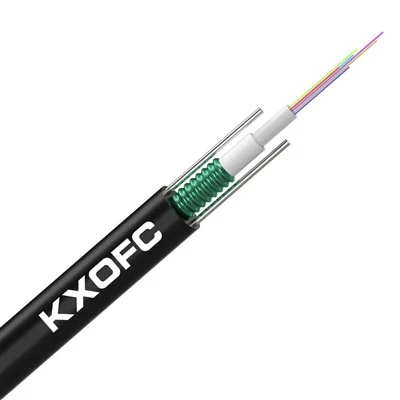
At the end of the day, the diameter of anti-rodent fiber cable isn’t a random number—it’s a balance of your needs, your environment, and the material that protects the fibers. Don’t let a supplier tell you bigger is always better, or that a small cable will work in a squirrel-heavy area. Do your research, ask questions, and if you’re not sure, reach out to someone who actually knows what they’re talking about (that’s us, by the way).
Optical Fiber References:
- Telecommunications Industry Association. (2019). TIA-568-C.3: Optical Fiber Cable Standard.
- Journal of Wildlife Management. (2021). Rodent Gnawing Behavior on Telecommunication Cables: Effects of Diameter and Sheath Material.
- Institute of Electrical and Electronics Engineers. (2020). IEEE 802.3ah: Ethernet in the First Mile – Physical Layer Specifications for Fiber Optic Links.
- Underwriters Laboratories. (2018). UL 1685: Vertical Tray Flame Test for Optical Fiber Cables.
- Fiber Broadband Association. (2022). Best Practices for Rodent-Resistant Fiber Cable Deployment in Rural and Suburban Areas.
Hangzhou Lin’an Kexin Optical Cable Co., Ltd.
As one of the most professional anti rodent biting fiber cable manufacturers and suppliers in China, we’re featured by quality products and good price. Please rest assured to wholesale discount anti rodent biting fiber cable made in China here and get pricelist from our factory. Customized orders are welcome.
Address: No. 28 Linglong Street,Lin’an Area, Hangzhou City, Zhejiang Province, China
E-mail: sales@kexincable.com
WebSite: https://www.kexincable.com/
