Hey everyone, Transformer Oil Purifier
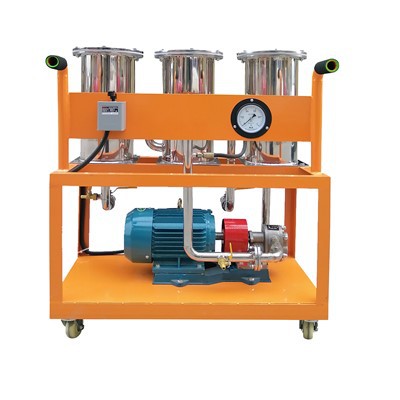
If you’re running a transformer oil purifier business—like me—you know that post-purification water content checks aren’t just a box-ticking exercise. They’re the make-or-break step that tells you if your machine actually did its job, and if the oil you’re sending out to clients is safe enough to keep their transformers humming for years. I’ve seen too many suppliers cut corners here, and trust me, it bites back: transformer failures from leftover water lead to lost revenue, bad reviews, and way more work than just getting the measurement right the first time. Today, I’m breaking down how to actually measure water content in transformer oil after purification—no fancy jargon, just stuff that works in real workshops, not textbooks.
First, let’s get one thing straight: water in transformer oil is a sneaky problem. It doesn’t just hang around as free water (the kind you can see, like little droplets or a cloudy film) — most of the time, it’s dissolved. Dissolved water is invisible, and it messes with the oil’s dielectric strength, which is what keeps electricity from leaking where it shouldn’t. After you run your transformer oil purifier, you’re targeting two things: getting total water content down to the manufacturer’s specs (usually 20-30 ppm for new oil, a bit higher for used but purified oil) and making sure the free water is totally gone, because that’s the quick path to corrosion and arcing.
Now, let’s talk about the methods I actually use with my team and share with our clients. I’m skipping the super old stuff like the Karl Fischer titration (wait, no—wait, I’ll get to that, but let’s start with the one most workshops can actually afford and use on the spot). Oh right, the visual test is a myth if you’re relying on it post-purification. Cloudiness means maybe a little free water, but if it’s clear, that doesn’t mean zero water. Don’t do that.
The go-to tool we recommend for on-site checks after purification is a portable Karl Fischer (KF) titrator. Wait, let’s break that down simply. KF works because it reacts only with water, no other gunk in the oil. The portable ones are small enough to throw in your truck after a purification run, so you can test right on location instead of hauling oil back to a lab. Here’s the trick to doing it right post-purification, because that’s when most people mess up. First, you have to grab the sample properly. If you just stick a cup into the oil outlet right after the purifier, you’ll get a sample that’s been aerated, and aeration can pick up atmospheric water which will throw your numbers off. So, we teach our clients to purge the sampling line for 2-3 minutes first—let the fresh, hot oil (hot oil holds less dissolved water, by the way, that’s why your purifier uses heat) flow through the line before you collect a sealed sample in an air-tight vial. No air bubbles, no spills.
Then, when you run the KF test, you have to make sure the oil sample is prepped correctly. Purified oil is usually cleaner than raw oil, but there might still be tiny traces of remaining particulates that can interfere with the KF reaction, so we filter the sample through a 0.45 micron filter before testing. Also, don’t let the sample sit around—test it within an hour. Hot purified oil will start absorbing moisture from the air if you leave it open, so time is of the essence. The number you’re looking for: total water content should be below 30 ppm for most transformers, and if it’s above that, you just need to run the purifier for a little longer—nothing fancy.
But wait, what if you don’t have a portable KF titrator for small jobs or field checks? That’s where the dielectric breakdown voltage (BDV) tester comes in. A lot of people don’t know this, but BDV is actually a good secondary check for water content post-purification. Because water lowers BDV—pure new oil has a BDV of around 70 kV, and if water’s at 30 ppm, it’s usually around 50 kV or higher. Wait, no, let me get that right: if water is above 50 ppm, BDV drops hard. So post-purification, if your BDV reading is above 50 kV (for standard transformers), that’s a sign water content is low enough. But here’s the catch: BDV can be affected by other stuff too, like particulates in the oil, so it’s not as precise as KF. It’s more of a quick pass/fail tool. We tell our clients: if you need an exact number (for compliance reports, for example), use KF. If you just want to make sure the oil isn’t garbage, BDV works.
Another method I’ve been using more lately, especially for clients who do a lot of on-site purification jobs, is the water-in-oil sensor. These are small, probe-like tools you insert directly into the oil stream right after the purifier, so you get real-time readings without collecting samples. That’s a game-changer because you don’t have to stop the purification process to test—you can adjust the purifier’s settings on the fly if the water content is still too high. Like, if the sensor says 45 ppm mid-purification, you can turn up the vacuum a little (most good transformer oil purifiers use vacuum dehydration, right?) and get it down in 10 minutes instead of running the whole cycle longer than needed. The only downside is that these sensors need to be calibrated every 6 months, otherwise they drift and give you wrong numbers. We include calibration instructions with every purifier we sell, so our clients don’t have to guess there.
Now, let’s talk about common mistakes I see all the time, because even if you use the right tool, if you mess up the steps, you’ll get bad data. First: sample contamination. Like I said earlier, if you don’t purge the line, you’re testing air moisture, not the purified oil. I had a client last quarter who thought his purifier was broken because his readings kept coming in at 50 ppm, and it turned out he was collecting samples from the same line he used to dump raw oil, so there was cross-contamination. Dumb mistake, easy to fix. Second: not accounting for oil temperature. Dissolved water in oil changes with temperature—hot oil holds more water than cold oil, so if you test a hot sample right after purification, the reading might be a little higher than it would be once the oil cools down to operating temp. We tell our clients to let the sample cool to 25°C (room temp) before testing, unless you’re using a real-time sensor, which is adjusted for temp automatically. Third: waiting too long to test. Purified oil is super hygroscopic—it will suck water out of the air like a sponge if you leave it open. I’ve had samples come in that were left sitting on a workbench for 2 hours, and their water content doubled. Don’t do that.
Wait, let’s circle back to why this matters for someone like me, a transformer oil purifier supplier. The post-purification water content test isn’t just for making sure your client’s transformer is safe—it’s also a way to prove your purifier works. When a client buys our purifier, we don’t just sell them a machine and walk away. We give them a calibration guide for their KF titrators or water sensors, we teach them how to take good samples, and we offer on-site training if they need it. Last month, I helped a small utility company fix their post-purification testing process—they were using the wrong sample size for their KF titrator, so their numbers were off, and they thought the purifier was underperforming. After we adjusted their sample size, their readings were spot on, and they cut their purification time by 15% because they weren’t over-running the machine anymore. That’s the kind of win we care about.
Also, let’s talk about compliance. A lot of transformers are regulated by industry standards—like IEC 60422 or ASTM D3487—which set exact limits for water content in purified mineral oil. Those standards require that you test total water content, not just free water, so that’s why KF or the real-time sensors are non-negotiable if you have to meet those specs. If you’re sending oil to a facility that’s part of the grid, they’ll ask for test results, so having accurate post-purification water content data is non-negotiable. Cutting corners here can get your client fined, or worse, their transformer failing.
Another thing: what do you do if the water content is too high after purification? Don’t panic. First, check your purifier’s settings—make sure the vacuum level is right, the oil temperature is set to 60-70°C (that’s the sweet spot for dehydration), and you’re not overloading the purifier (running too much oil through it at once). If all that checks out, run the purification cycle again, maybe add a little vacuum time. If you’re using a portable purifier on site, sometimes running the oil through twice will get the water down to spec. I’ve had clients where the first run got them to 40 ppm, the second run got them to 22 ppm, which is perfect.
Wait, I should mention that if you’re dealing with natural ester oil (some newer transformers use that instead of mineral oil), the testing is a little different. Natural esters hold more water than mineral oil, so their target is higher—usually under 100 ppm post-purification. The same tools work, but you have to adjust the KF reagent to handle ester oil, so make sure your titrator is set for that, or you’ll get wrong numbers. We actually update our testing guides for clients who buy our purifiers with ester oil compatibility, so that’s covered too.
Now, let’s get to the part where I actually talk about what we do as a supplier, because that’s why I’m writing this. When you invest in a transformer oil purifier, you’re not just buying a metal box that heats and vacuums oil—you’re buying a partner that knows how to get the job done right, including the post-purification testing. We don’t just sell machines; we give you all the tools and knowledge to measure water content correctly, so you can trust your results, keep your clients happy, and avoid costly mistakes. If you’re tired of guessing if your purified oil is good enough, if you’re tired of bad test results making you look bad, reach out to us. We can help you pick the right testing tool for your operation, train your team on proper sampling and testing, and make sure your transformer oil is exactly where it needs to be after purification. No jargon, no hidden fees, just real solutions for real people working with transformers.
At the end of the day, measuring water content post-purification isn’t rocket science, but it does require attention to detail. The worst thing you can do is skip it or cut corners on sample collection or testing method. Whether you’re using a portable KF titrator, a BDV tester, or a real-time water sensor, follow the steps, don’t skip the sampling purge, test within the time limit, and you’ll get accurate numbers every time. That’s how you make sure your purifier is doing its job, your clients are safe, and your business runs smoothly.

If you have questions about testing methods, or if you’re in the market for a transformer oil purifier that’s built to get consistent results, don’t hesitate to reach out. We’re here to help.
Portable Oil Purifier References:
- ASTM D3487, Standard Specification for Mineral Insulating Oil for Electrical Equipment
- IEC 60422, Mineral Insulating Oils in Electrical Equipment – Guide for Maintenance and Diagnosis
- IEEE C57.106, Guide for Acceptance and Maintenance of Insulating Oil in Equipment
Chongqing TOP Oil Purifier Co., Ltd.
Chongqing TOP Oil Purifier Co., Ltd. is one of the most experienced transformer oil purifier manufacturers and suppliers in China. Please rest assured to buy CE approved transformer oil purifier made in China here from our factory. We also accept customized orders.
Address: No.1, Jianlong North Rd, Jiulongpo District, Chongqing, China
E-mail: sales@topoilpurifier.com
WebSite: https://www.xboilpurifier.com/
